
Welcome to Modern Agriculture!

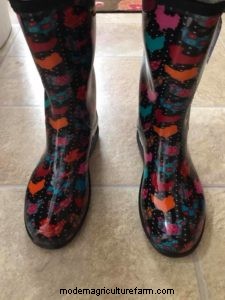
The most important role in chicken keeping is to protect yourself while also protecting your flock. Coop cleaning safely is a must! Poultry, such as chickens, ducks, and turkeys can carry Salmonella among other harmful bacteria. You can easily protect yourself and your home with a pair gloves and rubber boots that you only use in the coop and never wear in the house. The right gear will keep both your coop and your home clean.
How you clean your coop and what you wear matter. But so does how often. If possible, you should clean out your coop/s weekly. Waterers and feeders should be cleaned with bleach (no more than a 5% solution) weekly as well. However, duck waterers and feeders will need to be cleaned daily. Ducks are simply messy eaters who constantly contaminate their water with their feed.
Scrape the roosting bars monthly to keep manure from piling up. Add clean bedding regularly to both laying boxes and the floor of the coop. If you have an ill chicken or are in the midst of a muddy season, bedding may need to be replaced daily.
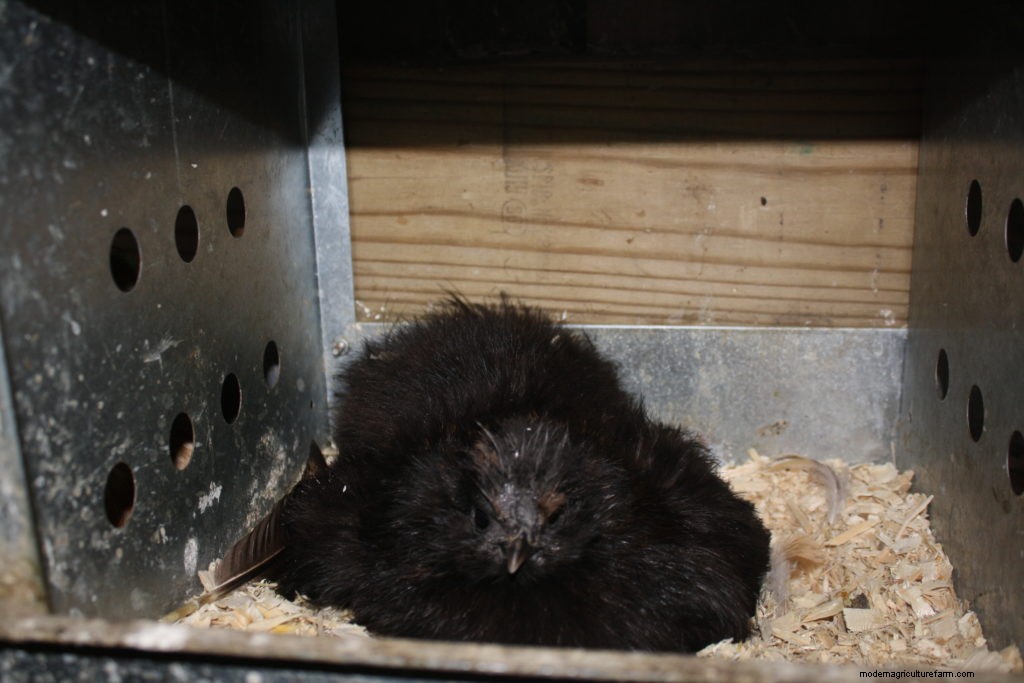
Deep-clean, semi-annual sanitization sessions are a great idea. Consider it spring and fall cleaning of the coop. Get out your rain gear ‘cause this is gonna get messy! When I deep-clean, I remove everything from the coop and pressure wash all the roosts, nesting boxes, walls, floors, and even the ceiling. Then bleaching all possible surfaces to kill as many germs as possible. (Now be careful! Everything is wet and slippery; don’t fall and make an already poopy task poopier, “pun intended”.)
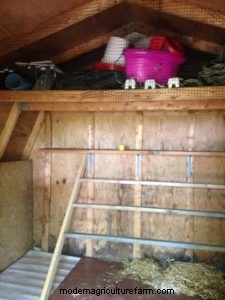
Ok, everything is all cleaned, now what? Once the coop is all dry I place calcium carbonate (agricultural lime or gardening lime) and Diatomaceous Earth (DE) on the floor to deal with odors and keep down mites. I also apply DE at the bottom of the nesting boxes before I replace the bedding. Hang the clean roost bars and BAM a sparkling clean coop you shall have.
Carrie Miller has a do-it yourself website/blog that is full of fun chicken projects. Her family is raising all-natural chickens with no antibiotics, no medications and no pesticides in Kinsman, Ohio. You can find her at Miller Micro Farm or follow her on Facebook, Instagram, or Twitter

