
Welcome to Modern Agriculture!

How does a chicken get clean? By getting dirty!
-Advertisement-Flinging around dirt to get clean seems counterintuitive, but Mother Nature knows what She’s doing. Dust bathing is an instinctive activity for many animals, including some mammals and many types of birds like sparrows, ostriches, and most game birds. Dust bathing is so prevalent among some species that it changes the actual landscape, like buffalo wallows created by years of dirt-rolling bison.
Chickens aren’t fond of getting wet – there’s good reason for the saying “madder than a wet hen”! – so dust bathing is essential for their cleanliness and good health. Dust bathing removes excess oils and keeps feathers in top condition, while discouraging parasites.
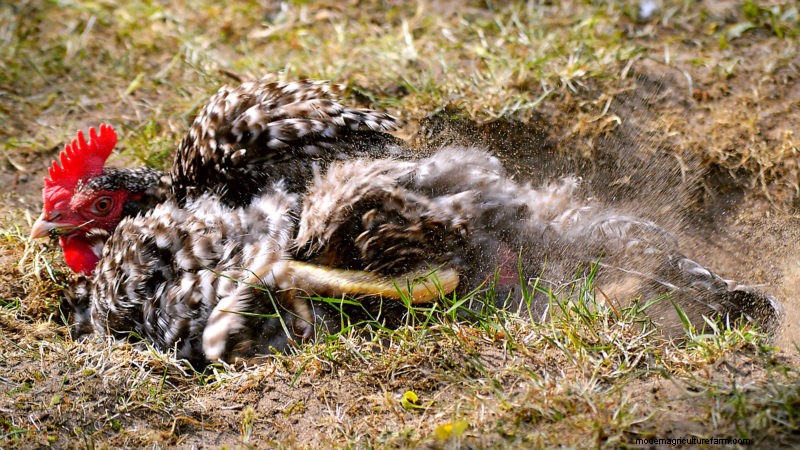
Hens use their wings to scatter dirt all over themselves.
Most bird species follow the same behavior pattern when bathing. The bird will crouch low, then wriggle vigorously and flap their wings. Dirt is loosened and sent airborne, and the bird will stretch out a wing to “catch” it, allowing the dirt to work its way into the feathers and down to the skin. Dust-to-skin contact is important; both to eliminate mites and other ectoparasites, and to get a good scratch on any itchy parts. Afterwards the bird will preen to distribute oils down the feather shafts.
Dust bathing in chickens starts when chicks are only a few days old. Chicks hatched with their mother hen will imitate her bathing behaviors. Encourage early activity by providing the chicks with a small pan of sand to practice with, ensuring it is shallow enough for the chicks to get into and out of.
Dust bathing is a great boredom buster and an important social activity. Bored chickens can become destructive to their environment or each other. Dust bathing is a great distraction and may quickly become your flock’s favorite activity. Bathing together can strengthen social bonds, so it’s important that your bath is big enough to accommodate a few or several chickens, if you have more than one. It’s just like girl time at the spa.
The bathing instinct is strongly ingrained in chickens. Caged chickens without access to loose dirt will often display “sham” dust-bathing behavior, crouching and flinging even if there is no dirt to fling.
And it’s not just girls who like their spa treatments! Roosters also enjoy and require regular dust baths. Social pecking order comes into play here; the alpha rooster will bathe first and then others will take their turns. Some of the boys may get stage fright and refuse to bathe in front of an audience.
People use everything from simple dirt or sand to a complex recipe of ingredients when deciding what to put in their dust bath.
Two important parts to dust bath material – there should be fine dust particles, which are absorbent and have insecticidal properties; and there needs to be coarser, grittier material, because that’s what makes it feel so good to scratch! Avoid clays that can become compacted and hard.
-Advertisement-You will want to be able to remove debris or droppings out of the dust bath occasionally, without having to empty and refill it. A cat litter scoop or small rake works like a charm for light housekeeping.
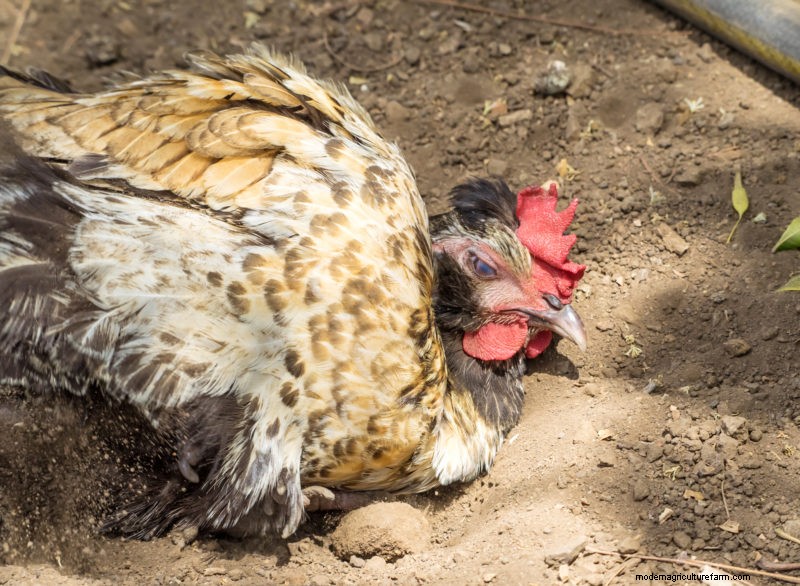
You may consider moving the location of your dust bath seasonally. In the cooler months, place it in a sunny spot, sheltered out of the wind, to encourage use. Birds enjoy the combined pleasures of both a sunbath and a dust bath. From late spring to early fall when the temperatures are warmer, placing the dust bath in a shady spot can help your flock cool off. Chickens like to refresh themselves in cool soil or sand when the temperatures rise.
No matter where you position your dust bath, it should always be countersunk or secured in the ground it should be easily accessible for birds to get into and out of, and drainage holes are crucial especially if the bath is exposed to the elements or likely to get rained on. You will want to avoid placing the bath too close to food and water sources, as flinging dirt is messy business! Likewise, avoid droppings in the bath by placing away from roosting areas.
If chickens are free-ranged, some folks allow their birds to choose their own bathing spot – or spots. A natural depression in the ground might be enough to encourage bathing behavior. As mentioned above, seasonality may come into play if your flock chooses their own. If your flock likes an area for bathing, run with it – figuratively speaking, of course! You can enhance the area by sectioning with lumber, digging the depression deeper, and/or adding dust bathing materials such as sand, peat moss, or diatomaceous earth.
Your bath should be large enough to hold at least 2 or 3 chickens comfortably. You don’t need your hens getting territorial and squabbling for space! The bath should be deep enough to hold six inches of dusting material, plus at least 4 inches of headspace to the top of the container.
There are so many options for dust bath containers. It can be as rustic or as fancy as your heart (and budget) desire! Some of the most popular include:
Chickens will usually take to dirt like the proverbial duck to water; but if they don’t, there are a few things you can do to egg them on:
If you discover mites or other parasites are physically present, you may need to manually dust your birds until they figure out the dust bath for themselves.
Let’s talk a little more now about using diatomaceous earth in your dust bath. There is a lot of conflicting information about DE out there, so this may help clear things up:
This article was sponsored by Absorbent Products Ltd.
We produce diatomaceous earth from ancient freshwater lakebeds in eastern Oregon and the British Columbia’s Interior Plateau. Our DE’s are used internationally in commercial poultry and animal feed, for agricultural purposes, in lawn and garden, with companion pets and for backyard poultry care. We produce a variety of DE products that are food-grade, OMRI Listed, and Generally Recognized as Safe. Our Fresh Coop Dust Bath contains diatomaceous with a perfect variety of particle sizes for grit and absorbency and was developed through years of working with commercial organic poultry producers, and of course backyard chicken enthusiasts just like you!
Thank you and have fun with your flock!
-Advertisement-

