
Welcome to Modern Agriculture!

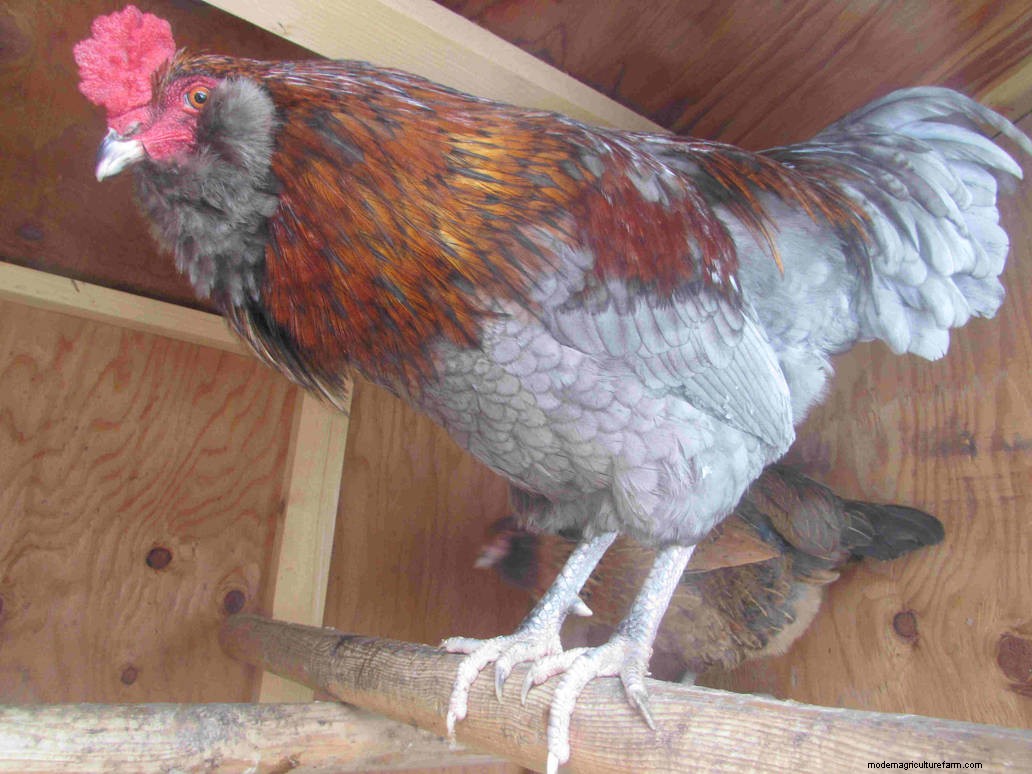
Olive Egger Rooster (Photo by Louis Stevens-Fish)
Roosters. Time to give them a chance. Everyone has an opinion on them. Some love the classic image of a handsomely plumed boy strutting around the barnyard while others will get out the stew pot as soon as they hear the first strangled crows from the most recent batch of chicks. The problem with roosters is, you don’t need them to make eggs. They’re extra. Just a bit of extra ornamentation that eats your feed and your bottom line, and worse, they can be loud and aggressive. So what’s the point of keeping a rooster?
I’ve had a few roosters since I first started keeping chickens, and while a rooster might not fit into everyone’s plans, I’m here to make the case for them.
So, what does a rooster do, other than eat, poop, and fight? Well, the obvious answer is mate with hens, but that might not be a good enough reason to keep a couple in your flock. While a fertilized egg is no different than an unfertilized one in taste, it can decrease the shelf life–up to two weeks according to some estimates I’ve found. And even if you do want new baby chicks on demand, you still won’t get them unless you have a broody hen willing to set them, or an incubator. Does a rooster bring anything else to the table? Yes, a lot of things, as it turns out.
Chickens are social animals. They need a flock to be happy and thrive, and this is where roosters begin to play an integral role. Part of being in a flock is knowing your place in the pecking order. It’s called that because that’s how hens enforce their social standing: pecking any other chickens lower than them. It’s harsh, but them’s the breaks. Usually, if a new bird is introduced or an old one taken away, there will be a bit of scuffling as hens try to suss out if the new order is going to change or stay the same. It can get brutal; chickens are known to resort to cannibalism in some cases though that’s far more common in a flock that is over-crowded, bored or stressed. Occasionally, you can just get a bad egg with a mean streak.
One thing I have observed with a flock that has a rooster, compared to a rooster-less flock, is that the pecking is a lot less severe, and of shorter duration. Just recently I had to introduce a very young pullet into my established laying flock much sooner than I had intended due to an extreme cold snap in the weather. I couldn’t leave her in the out-grown coop with no one to keep her warm when overnight lows were dipping into the negatives numbers. So into the big coop with all the older hens she went. And while she did get pecked sometimes while feeding, I observed her huddled with my Olive Egger boy most of the time. The older girls would walk over and inspect, but none of them would try to peck her so long as the rooster was watching. And they had settled quite happily within a couple days- much faster than I have observed in rooster-less flocks. The rooster appears to play an important role in flock social dynamics, keeping everything orderly and allowing no more infighting among the hens than necessary.
They’re also good providers. A rooster will forage food and call the hens over for any tasty treats he finds, and he’ll do this for chicks as well! Often he will stand and observe, politely waiting his turn, all while keeping an eye out for any trouble.
Of course they don’t just protect the flock from internal strife; they defend the flock from outside forces as well. Roosters have different calls for when they spot a predator, if the threat is coming from the ground or the sky. Something hawk shaped will get the alarm for an aerial attack, telling the rest of the flock to get under cover, while a fuzzy body creeping along the ground will trigger a warning to fly up and scatter into the trees. In the worst case scenario, a rooster will fight back, either fending off the threat with those very sharp spurs, or even sacrificing himself to give his flock a chance to get away.
Roosters are more than pretty faces with an attitude. I firmly believe that a good rooster is worth the price in feed. He completes the flock dynamic, fulfilling valuable social roles in keeping order and protecting the vulnerable. If given the opportunity, I will always choose to keep at least one rooster, and I think it may be high time more people reconsider that stew pot.
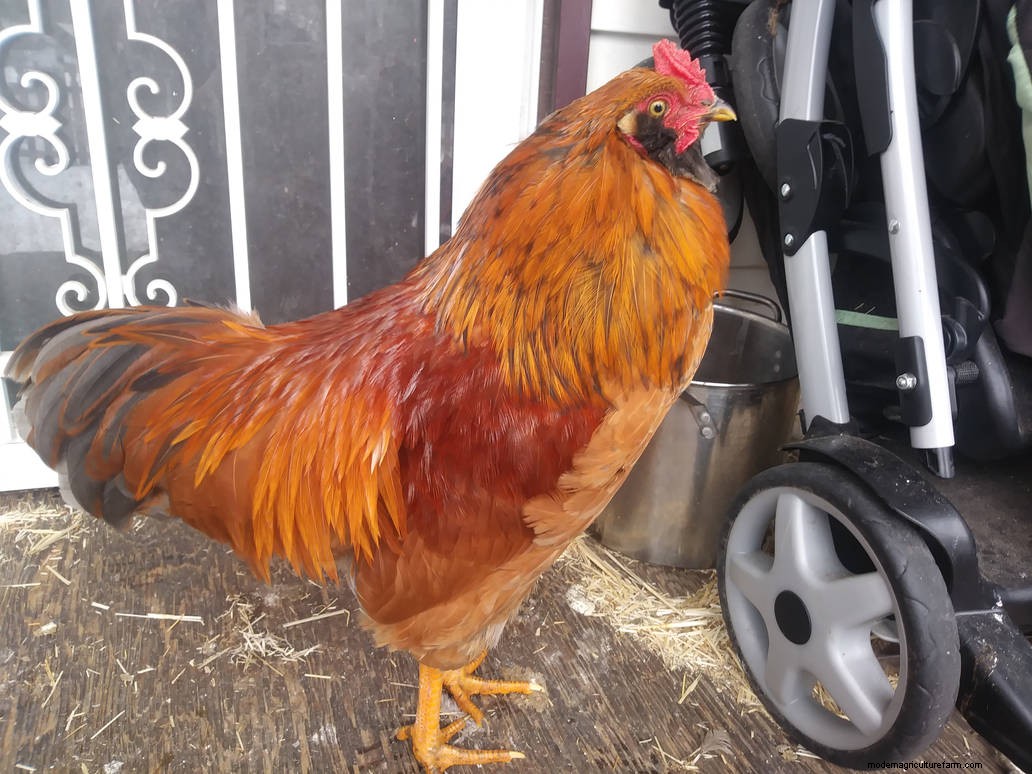
What a gorgeous boy (Photo by Louis Stevens-Fish)
(Though being pretty certainly doesn’t hurt).
Louis Stevens-Fish Bio: Our chicken flock is mixed; two Easter Eggers, a Barred Rock, an Austrlorp and one Olive Egger rooster that was of course the only survivor out of a straight run of three I bought back in March. I’ve kept Welsummers, Cuckoo Marans, Wyandottes, Orpingtons and other EEs and of all of them I think the EEs are my favorite. I love their fluffy faces, they’re the friendliest of birds, and my most consistent, and prolific layers. My older EE hen was the first to start laying this year, right on February 1st when it was still mostly dark and cold as the arctic!


