
Welcome to Modern Agriculture!

From protecting to continuing tradition, Bruce Ingram walks us through excellent reasons to keep a rooster as part of your flock.
Roosters absolutely fascinate me. Yes, I know hens and their eggs and/or meat are the reasons many folks raise chickens. But roosters add passion, personality, and, well, paternity, to any flock. Here are reasons to consider owning a rooster or two– provided local ordinances allow one where you live.
No one drives or walks down our driveway without our two heritage Rhode Island Red roosters, Don and Friday, crowing. In fact, I believe that five-year-old Don can even distinguish my wife Elaine’s and my cars from those of strangers. For example, if he sees one of us drive down his driveway, he only crows once, letting us know that he’s on the job. If a strange vehicle travels past him, he emits a thunderous volley of screeches.
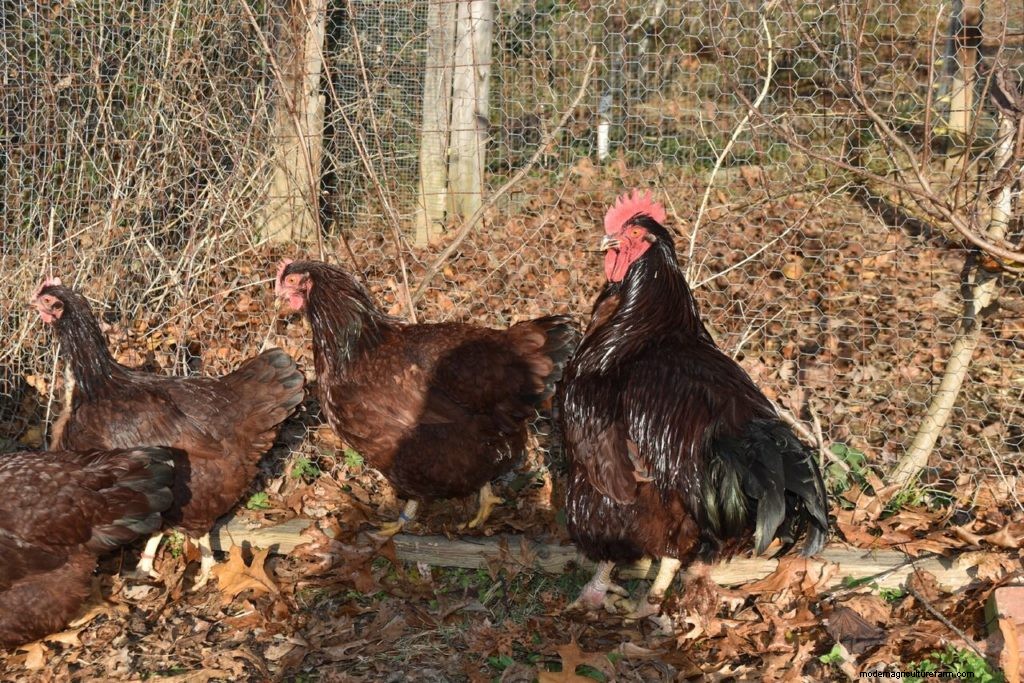
Don watching over his flock, ever ready to give the alarm.
Conversely, Friday, barely past the cockerel stage, crows indiscriminately non-stop at anything that passes down the driveway. In any event, we always know when someone has come to visit us.
We live in a rural part of Southwest Virginia, and every morning we awake to the sounds of our two roosters crowing. In fact, as soon as we turn the light on in our bedrooms, both boys erupt from their respective henhouses. It’s as if they are communicating that if you folks have arisen, it’s time for us to rise and shine, too. When we go outside to release, feed, and water our birds, we can hear roos up and down our valley greeting the dawn.
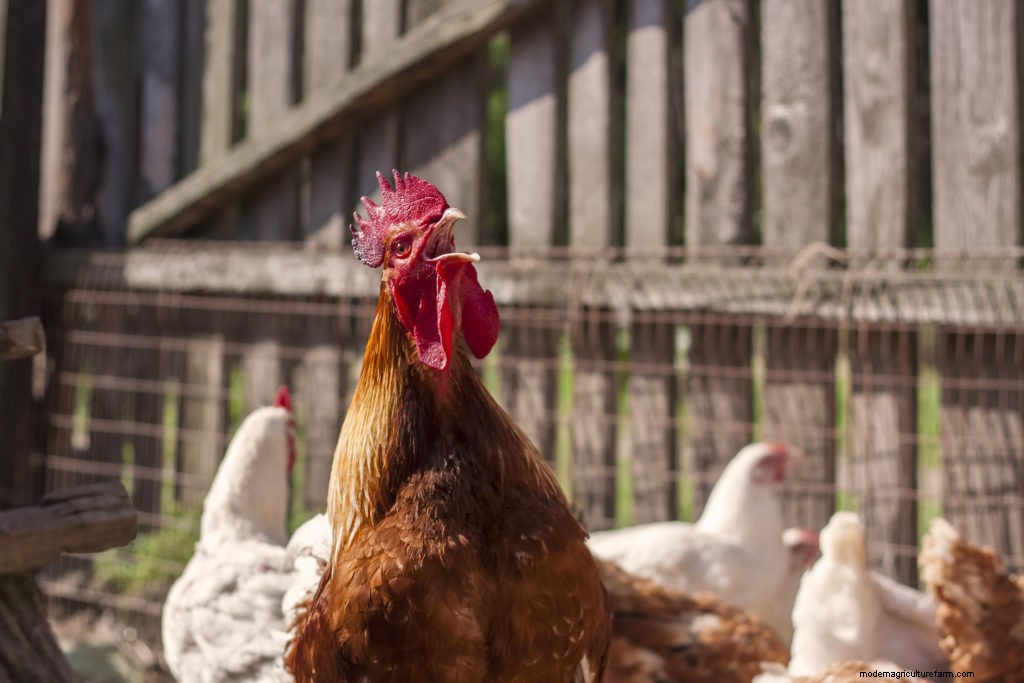
Rooster crowing. Adobe images.
I know some folks despise a rooster’s signature sound, believing it is nothing more than sleep-disturbing hullabaloo. And, yes, there will be days when your rooster first crows at 3:00 A.M. for reasons known only to him. However, I believe that the pre-dawn sounds of multiple roosters crowing across a valley signify all is right with the world and a new day, with all its glory and possibilities, is about to begin. Furthermore, these outbursts celebrate the joy of living in Rural America.
A quality rooster typically provides stability and order to a flock. Hens, by nature, are contentious creatures, always looking to move up the pecking order – or send a fellow flock mate cascading downward in the scheme of things. But a superior cock will sagely end any ruckus before it spirals out of control.
For example, on numerous occasions I have witnessed two hens squaring off over some perceived offense. And I’ve then observed Don move toward the two birds and emit loud clucking. This typically ends the brouhaha. I’ve often wondered if this type of intervention is instinctive. Does a rooster inherently know that loud noise emanating from a flock can draw predators?
Now, I’m not claiming that a roo will end all kerfuffles among contentious females, but the males, especially the older ones, do seem to have a calming influence.
Simply stated, a high-quality rooster would give his life to protect his flock. I have witnessed Don, as well as his numerous predecessors, giving the alarm note at bears, hawks, wild turkeys, squirrels, black snakes, garter snakes, toads, and butterflies. Granted, a considerable chasm exists between a bear and a butterfly and the threats that each presents, but I’ve observed our various cocks crowing and/or giving the evil eye to all these creatures and more.
Of course, even the bravest, biggest rooster is no match for any creature raccoon-size or larger. But one of the strongest instincts of a cock is to protect his flock – or go down flapping. Your flock will be safer if one of these bad boys is keeping an eagle eye out for… well… eagles.
The alarm call can be either a high-pitched scream or shriek or boisterous clucks that are non-stop. The former danger note is typically given when a rooster spots an owl, hawk, or other airborne predator. For example, the first time I heard this sound was a number of years ago. Elaine and I had released our flock into the backyard, and the birds were contentedly foraging. Suddenly, our rooster shrieked and every hen ran into a thicket adjoining our yard. And there they stayed for over 30 minutes. The birds only returned to the yard when the rooster came out of hiding and the hens followed.
Roosters emit the repetitive clucks when non-flying creatures invade the yard. From our experience, the rooster may or may not be the first to emit the sound, but his voice will definitely be the loudest once a predator is sighted. Also of note is that you can expect to hear this alarm note several times a day. A butterfly inside the run once sent our birds into a conniption. So expect some false alarms when you hear the ground-bound predator sighting.
The presence of a rooster helps us understand how chickens behave and interact with each other. For example, we’ve had roosters that had favorite hens and did most of their mating with the chosen few. We’ve raised roosters who fought with their hens, who bullied their flock, who were intimidated by their hens, and one bloke, Bobby, who showed no interest in mating with them. Every single one of these males was fascinating to watch, learn from, and interact with. Simply stated, if you want to truly understand chickens, you need a rooster.
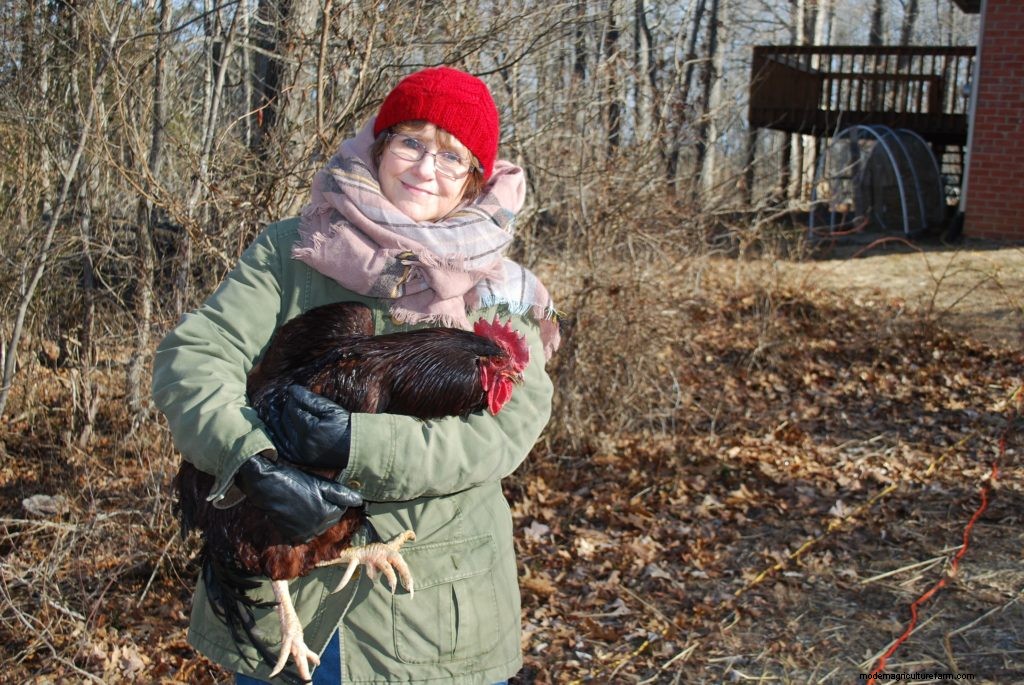
Want to see a show that will be better than anything you could buy a ticket for? Then throw some food item into a run with a rooster and watch and listen to the old boy emitting the food cluck. I describe this sound as a loud, enthusiastic cluck that sends every hen within an enclosure rambling as fast as they can toward the rooster. He, meanwhile, is standing over said treat, picking it up and dropping it or letting the hens take it right out of his mouth.
This display of chivalry is both amazing and fascinating to observe. We just know that deep down, the rooster wants to keep – and eat – that tidbit for himself, but he willingly shares it with his hens. I’ve had roosters, Don is one of them, who seems perfectly content to give the said treat to his ladies and expect nothing in return. Other males tried to mount the hens as soon as they stooped down to grab the offered food. Whatever a rooster’s motives are, hark to the sounds of one of these guys food clucking and prepare to enjoy the show.
Even more pleasurable to observe is a rooster doing the old three-step, also known as the mating dance. To hopefully stimulate a hen, roos will dance approximately half-way around a female almost as if he were on his tippy toes. The hen will then kneel and allow the roo to mount her.
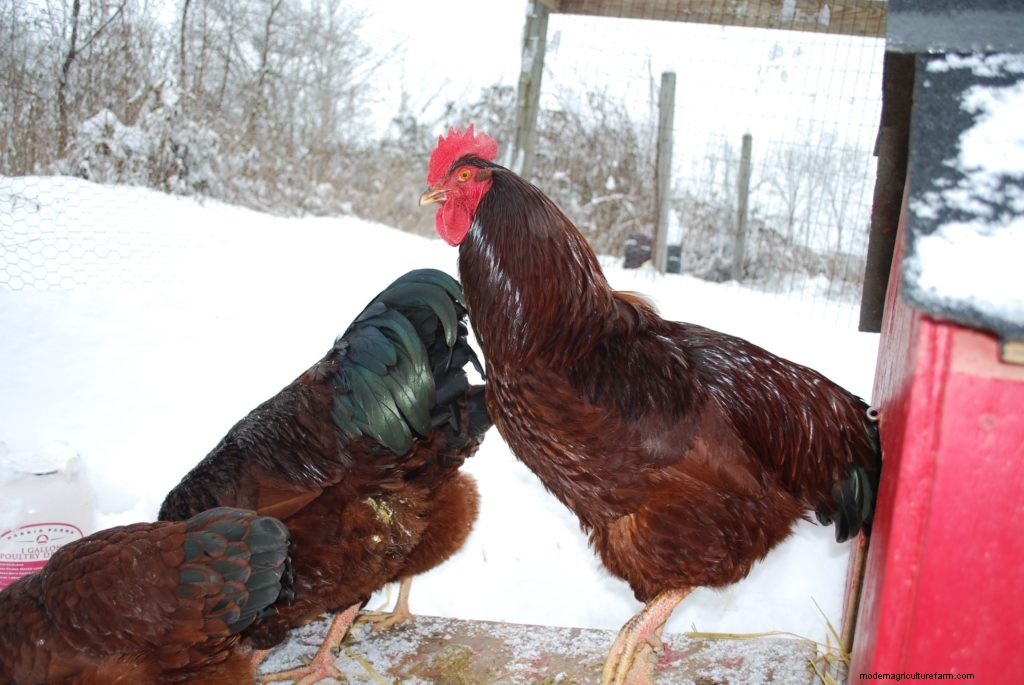
Hen signaling and rooster getting ready.
Theoretically, that’s how it’s supposed to go, but most mating dances end with a hen rejecting her suitor, and/or the rooster ambushing the hen later and mating with her. Nevertheless, the dance and the reactions of both sexes later are all interesting to watch and can teach you more about your flock’s dynamics. This is especially useful if you are interested in following a breeding program and want to mate specific roosters with specific hens.
Roosters receive a bad rap for many things from loud crowing to attacking anyone who comes near them or their flock. Of all the roosters we’ve ever had, only two were incorrigible. Little Jerry, an industrial Rhode Island Red, was our first roo. He was well-behaved until he was about 18 months old, when he began to attack Elaine and me. We tried modifying this behavior by picking him up and holding his head downward so that he would know who was boss.
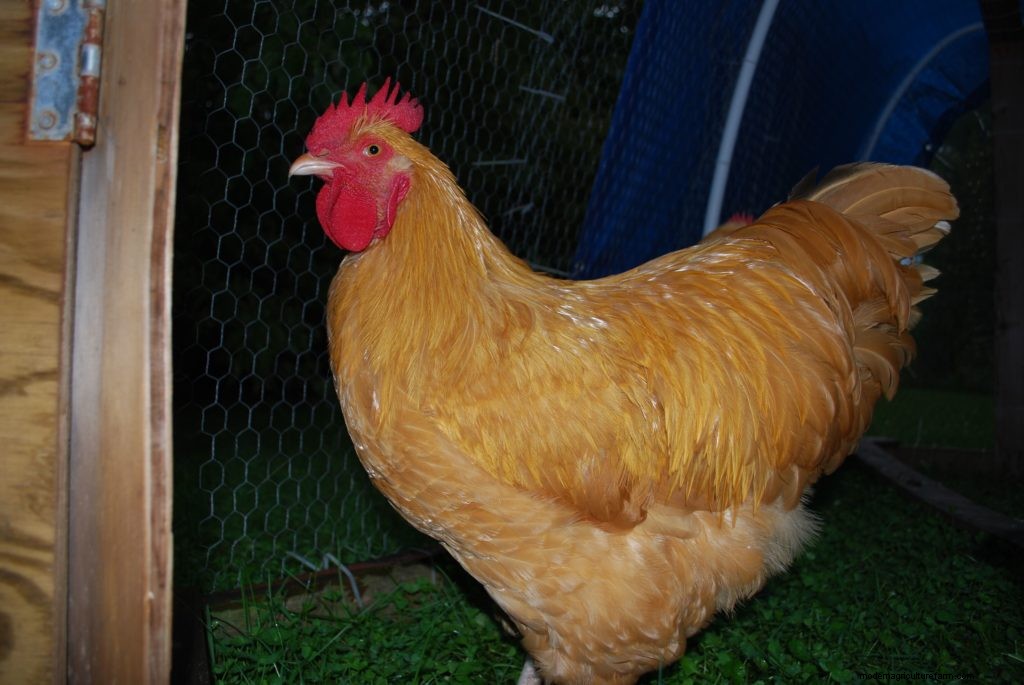
Nevertheless, some roosters still get made into stew.
Alas, that gambit and a series of others failed to curb Little Jerry’s aggressiveness, so we, to be blunt, dined on him. This should be the end result for all bad boys. From our experience of raising heritage Rhode Island Reds and Buff Orpingtons, pure-blooded roosters – for the most part- are exceptionally gentle. Of course, even heritage flocks can have roosters that are simply no good. Then it’s time to look up good chicken soup recipes.
The final reason to include a rooster in your flock may be the most obvious – no rooster, no chicks. We’ve tried lots of different ways to start a flock: buying adult or young birds, incubating fertilized eggs purchased from a hatchery, buying chicks from a feed store, and keeping a rooster and letting our hens brood their own chicks. We much prefer the last option. because it’s cheaper, cleaner (no birds inside with a heat lamp), and fascinating to watch the hen raise her young.
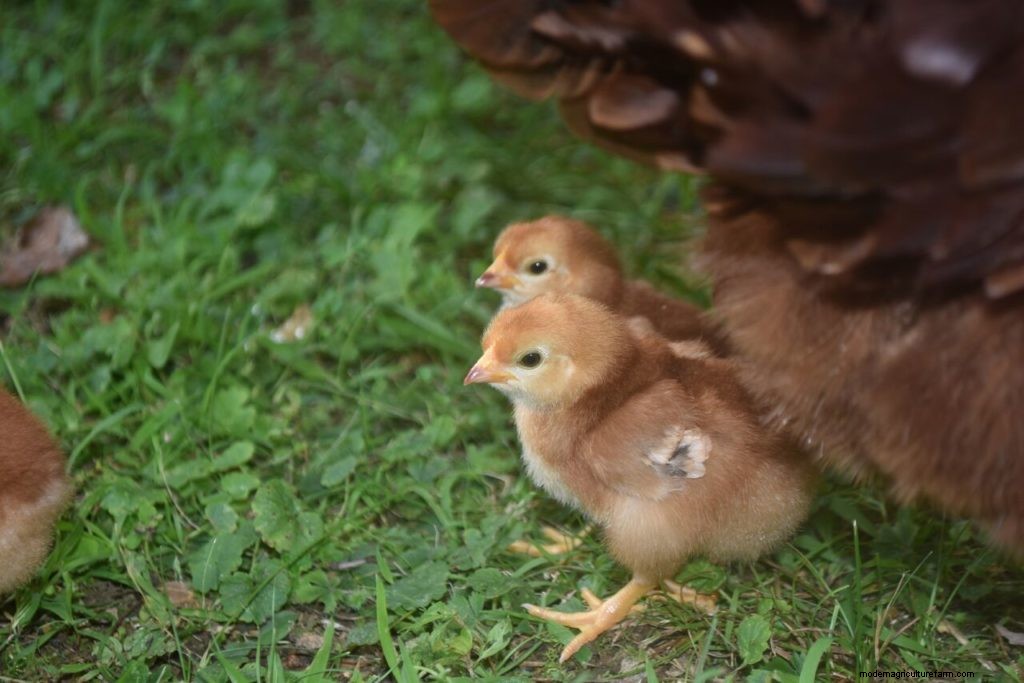
No rooster, no chicks, unless you want to buy them.
My wife and I truly enjoy roosters as part of our various flocks. Even though some of the cocks have been major disappointments, most of them have performed their duties quite well.
Bruce Ingram is a freelance writer/photographer and author of 10 books, including Living the Locavore Lifestyle (a book on living off the land) and a four-book Young Adult Fiction series on high school life. To order, contact him at bruceingramoutdoors@gmail.com. To learn more, go to his website or visit his Facebook page.


