
Welcome to Modern Agriculture!

Permaculture writer Jonathon Engels shares the Ins, Outs, and Whys of keeping chickens in your greenhouse.
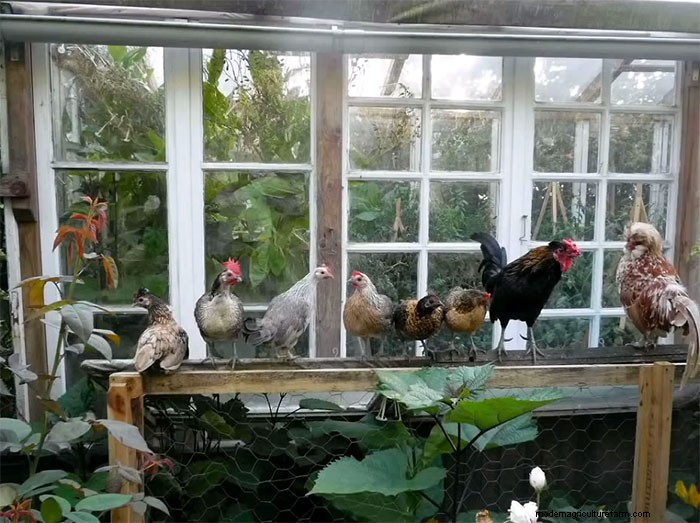
In temperate climates, winter prevents us from growing fresh vegetables outside, but a greenhouse—even one that’s solely heated by solar power—allows us to foster some greens and cold-hardy treats to enjoy. Lettuce, spinach, mustard, and chard are perfect for this, as are cold-tolerant herbs, such as sage, parsley, and cilantro. Anything from the cabbage family (broccoli, kale, collards, and Brussels sprouts) should also fare well.
At the same time veggies are needing shelter from the cold, chickens are also feeling the freeze. Birds nestle together for warmth and spend less time outdoors, and egg production drops noticeably as more energy is needed for keeping up body temperatures. As a solution, some backyard poultry owners opt to heat their chicken coops and indoor runs. However, a greenhouse chicken coop meets both flora and fauna needs in the same building. Plus, in the warmer months, your chickens can still live in your greenhouse, using it as shelter from rain and summer heat.
Now, to address the obvious: A greenhouse chicken coop doesn’t give the birds free run of the entire greenhouse. That’d be a disaster. The carnage of leafy seedlings would be almost unbearable for greens aficionados. You’ll still need to keep your poultry out of your indoor garden with netting and/or wire fences. Below are a host of suggestions for integrating your poultry and greenhouse gardening for the benefit of both.
Amongst permies (permaculture enthusiasts), the idea of combining a greenhouse and a chicken coop is nothing new. Permaculture designs are always looking for ways to combine different elements of the homestead so that they benefit each other. These are called “stacked functions.” In this case, the symbiotic relationship between greenhouse and chicken coop lowers the costs and increases the benefits of both.
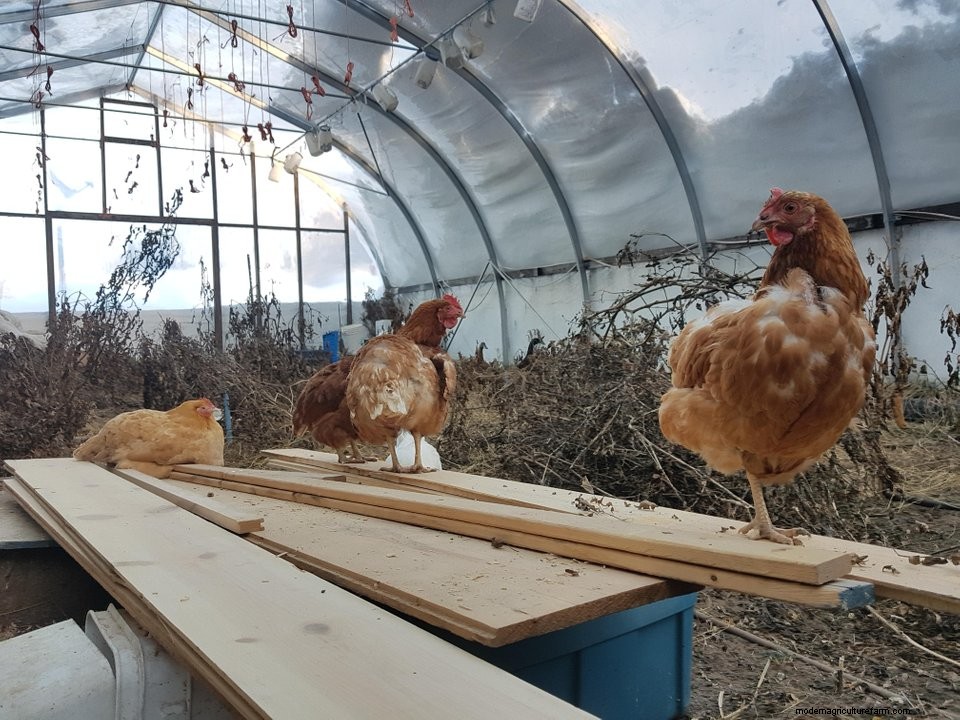
Chickens wintering in a green house.
Of course, for the thrifty homesteader, combining the two buildings will mean a significant financial advantage. The chicken greenhouse will require fewer materials to construct and maintain; plants benefit from the increased heat and CO2 produced by the chickens, resulting in higher production; and your chickens can enjoy garden scraps year-round as well as a secure home, reducing food costs and predator attacks.
Waste management, or waste cycling, is another important part of permaculture design. The idea is that the wastes of sustainable systems serves functional purpose. In the greenhouse chicken coop, plant scraps are fed to the birds, and the chicken bedding and manure create compost to feed the plants. No actual “waste” is produced.
A warm greenhouse home means that your chickens won’t expend all their energy to maintain an adequate body temperature. They’ll be able to maintain egg production throughout the winter, which means more spinach omelets for you!
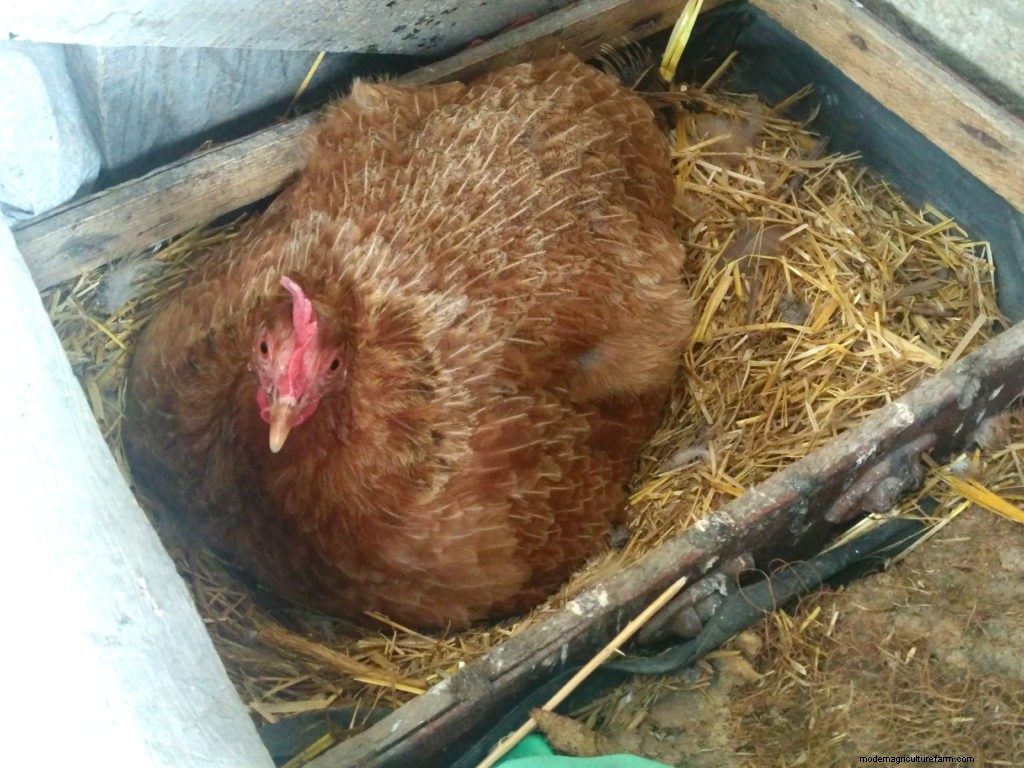
Hen on nest in greenhouse. Photo by Adil Chelebiyeb, Getty images.
As with any good permaculture design, there are some simple approaches that will help to make this greenhouse chicken coop even more efficient than its dual purpose of housing chickens and plants. With the right design considerations, it’s possible to increase passive solar heating in the winter, block out cold polar winds, and minimize the steps from compost bin to garden beds.
The greenhouse windows should be to the south-facing (or sunniest) side of the greenhouse and your plant beds should be located near the windows. This maximizes the amount of sun the plants get, particularly in the winter; and with that increased sunlight, the building gets electricity-free heating in the daytime.
Chicken housing (nesting boxes and roosts) should be on the north-facing (or polar) side of the greenhouse. This uses the chicken coop, with solid outer walls (consider straw bale walls) as an insulated layer, so the cold northern winds are further blocked from cooling the greenhouse.
Separating the chicken coop and greenhouse is a must. Chickens will devour young seedlings and plants, so there’s a choice to be made: screen or solid wall. A screen lets the air interchange (CO2 for oxygen) happen more readily and fosters the heat advantages coming from chicken body heat and bedding. However, the wall blocks out the smell of the coop more effectively. It’s your choice, but the screen provides a more interactive environment.
Consider adding brick or flagstone pathways, stone garden borders, and a dark storage tank for water to your greenhouse chicken coop. These elements all have high thermal mass, meaning that when they warm up in the sunshine, they retain heat. If they receive direct sun during the day, all of them will help with heating when the sun isn’t out. When it cools at night, they release that absorbed heat into the air.
Deep Bedding
Having plenty of bedding in the chicken coop absorbs the smell, and more importantly, it provides heating as it composts. Rather than struggling to control smell or clean out the coop during the winter, the space can be designed to hold a lot of bedding, added each time the smell seems bothersome. Then, it’s compost/fertilizer in the spring.
While keeping the greenhouse warm tends to be the focus of many permaculture articles, there’s also a need to keep it cool in the summer. Plants can overheat, as can chickens, so it’s important to think beyond locking in the heat. You’ll need to find ways to invite in cool breezes, keep your thermal mass from overcooking, and provide your birds with a little more space to frolic.
First things first, an open-air run should be connected to the greenhouse chicken coop, and when the weather is right, the chooks should have the option of getting some fresh air. You can use multiple runs and vary their function each season. For example, you could have three runs coming off the greenhouse chicken coop: one with protected garden beds, one for running and dust baths, and one with deep bedding that will become compost over the warm months. Your birds will enjoy the mobility, help you create nutrient rich compost, and eat lots of bugs and grubs.
Both greenhouses and chicken houses need ventilation, so it should come as no great surprise that greenhouse chicken coops do as well. In general, you want ventilation up high so that it can release hot air when necessary. Along with that, an open back door for the chickens to access their run and an open front door for you to access your vegetables will create a cross breeze to keep air flowing in the summertime. If you make your greenhouse from plastic sheeting, a la a hoop house, creating a feature where the sheeting of the lower walls rolls up a couple of feet helps as well.
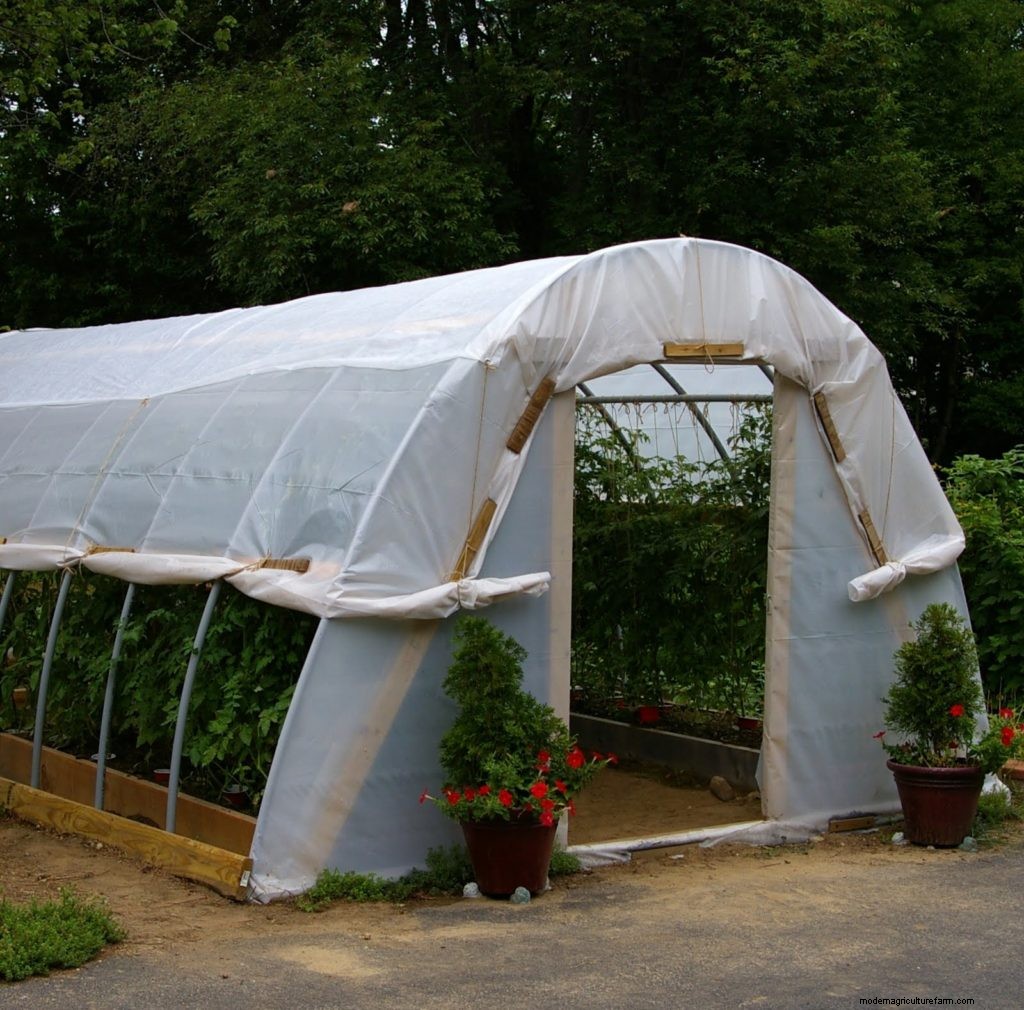
Hoop greenhouse with the sides rolled-up. Getty Images
Growing deciduous vines—grapes, kiwi, hops, scarlet runner beans, etc.—over and around the chicken coop section can help add more shade. The vines will leaf out in the summertime, when shade is needed, but will be bare in the winter, when more sun is needed. These vines can be productive either to meet human needs or to produce chicken feed. Unlike the greenhouse area, the coop section doesn’t necessarily need sunshine, so this is productive way to use the walls and roof in the summer.
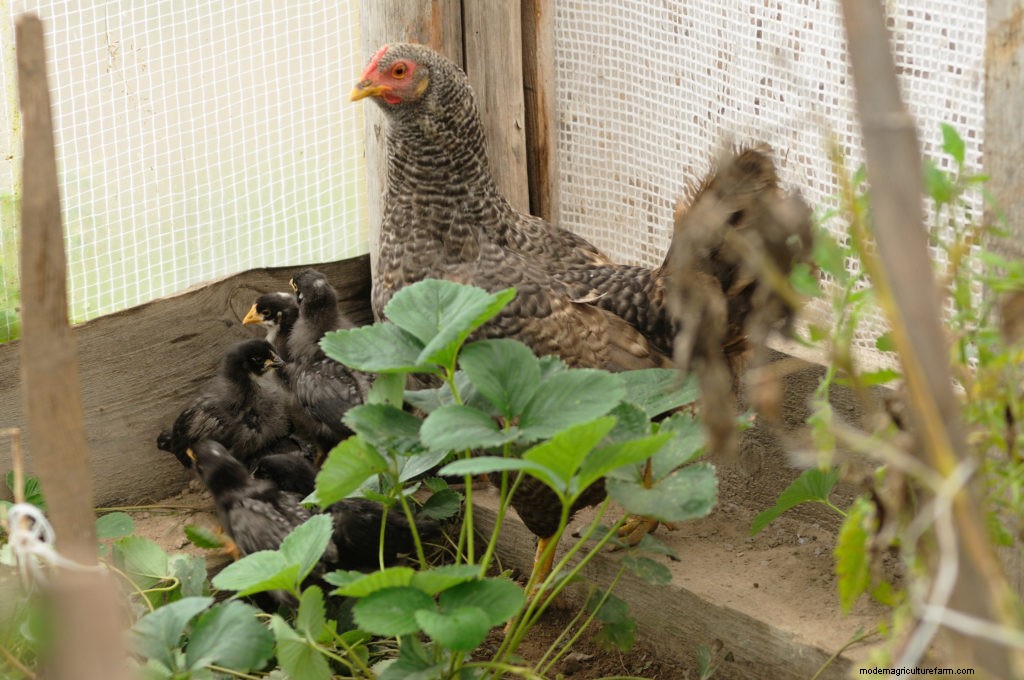
Hen and chicks in the greenhouse. Photo from Getty Images.
A last option is a simple means of tapping into the earth and utilizing the rather steady 50-degree Fahrenheit temperature found just a few feet beneath the surface of it. That can be accessed with a geothermal earth tube: By burying pipe underground with an inlet outside and an outlet inside, air enters the pipe from the exterior and pushes through submerged pipe, cooling (or warming), until it releases into the greenhouse space.
Of course, not all of these options are absolutely necessary for building a greenhouse chicken coop. However, it’s nice to know what’s in the toolbox, as well as how to cut down on operating costs. This type of design could potentially encourage more eggs throughout the year, solve the problem of housing birds in the winter, make use of chicken manure and bedding, and keep fresh salad greens available year-round. Chickens, plants, the environment, and people benefit from the arrangement. If that’s not worth considering, what is?
Jonathon Engels is a traveler, writer, and vegan gardener. Born and raised in Louisiana, he’s lived as an expat for over a decade, worked in nearly a dozen countries, and visited dozens of others in between. His interests include permaculture, cooking, and music. More of his work can be found at Jonathon Engels: A Life About.


