Welcome to Modern Agriculture!

Your poorest layers, on the other hand, will molt the slowest.
They typically go through soft molts, shedding only a few feathers here and there. You may not even notice they’ve begun to molt, but you’ll definitely notice they’ve ceased their egg laying. Their molts may spread out over five or more months, meaning they usually won’t lay again until spring.
There’s nothing you can do to speed up the process, but even these soft molters benefit from a little extra protein during their long cycles to help them stay healthy.
It’s been shown that molts progress in a predictable pattern from top to tail. A lot of times this is true, but it isn’t always the case.
Don’t be alarmed if you notice your chicken losing her tail feathers first, or if she appears to be dropping feathers in a haphazard fashion all over her body.
Every chicken experiences a molt differently, even from year to year. And sometimes, environmental factors such as heat stress, malnutrition, or dehydration can cause molting out of season, or for longer than normal.
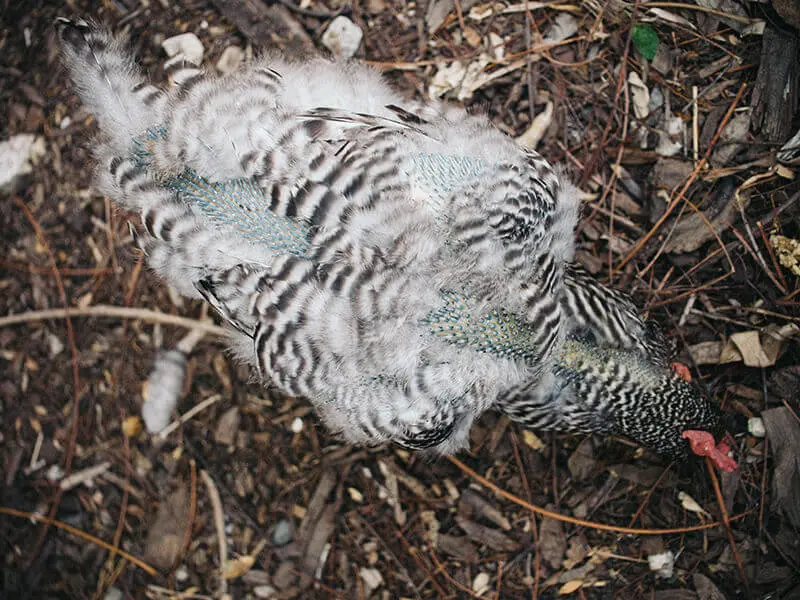
With my own flock, my Barred Rock, Kimora, is a prolific layer. She gives us five, sometimes six eggs a week in peak season, and she’s a fast and furious molter in the fall.
By week seven, all her new feathers are fully grown in and she’ll gift us with a couple of eggs each week over winter.
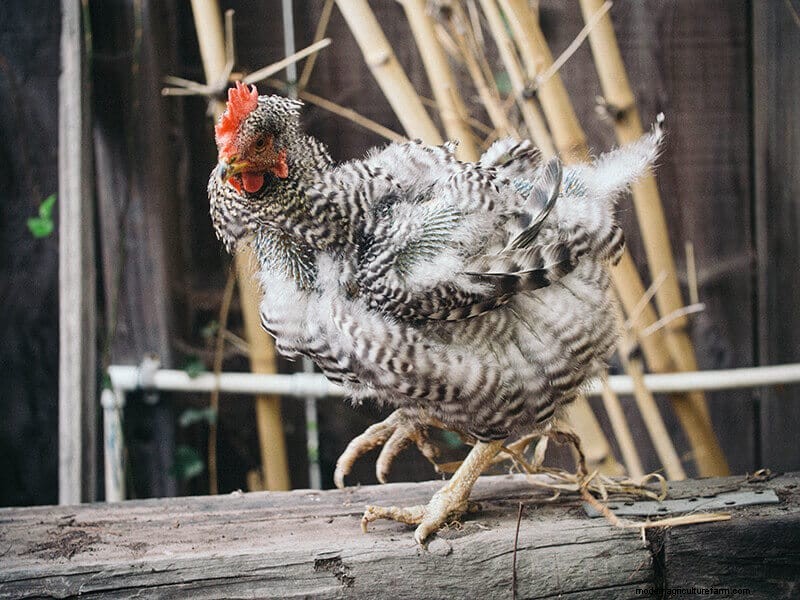
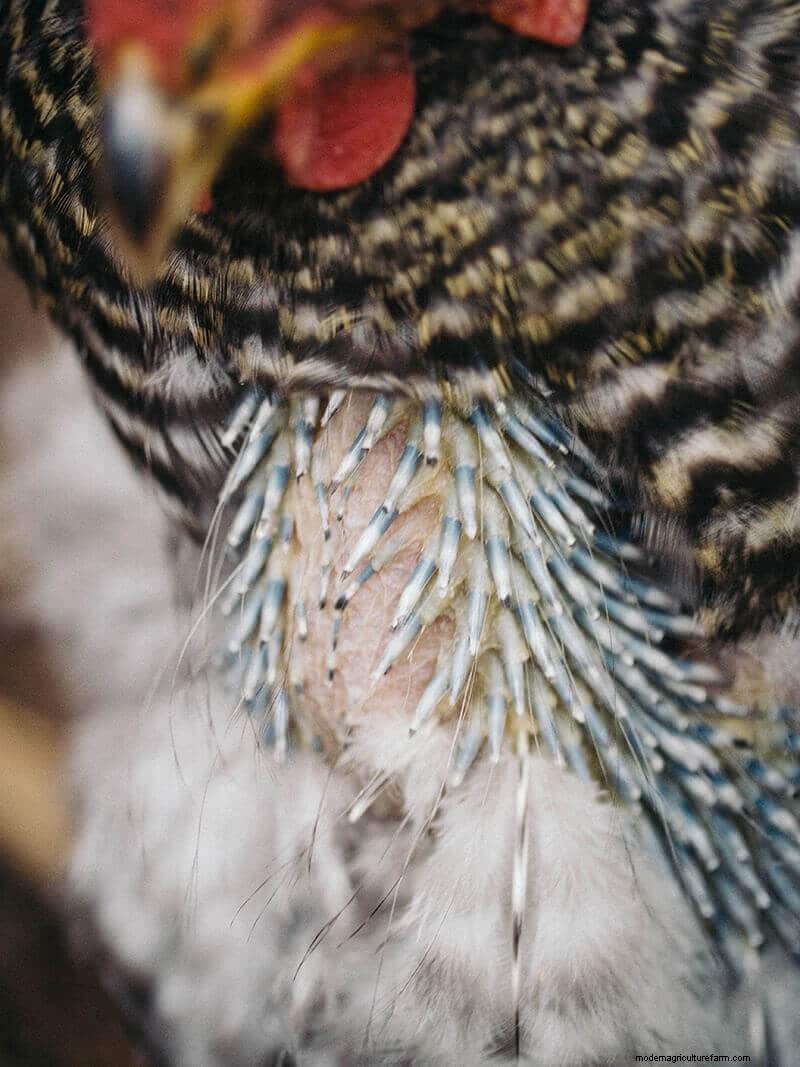
My Golden Laced Cochin, Iman, likes to take her sweet time. Cochins are not known for being super productive, but they’re always reliable. In summer, she lays around three eggs a week, and we cherish every one of them!
She usually starts molting in late summer to early fall and I only notice it after I find a few feathers in the coop—feathers, but not eggs. This continues until late winter when she finally pops out her first egg after a long hiatus.
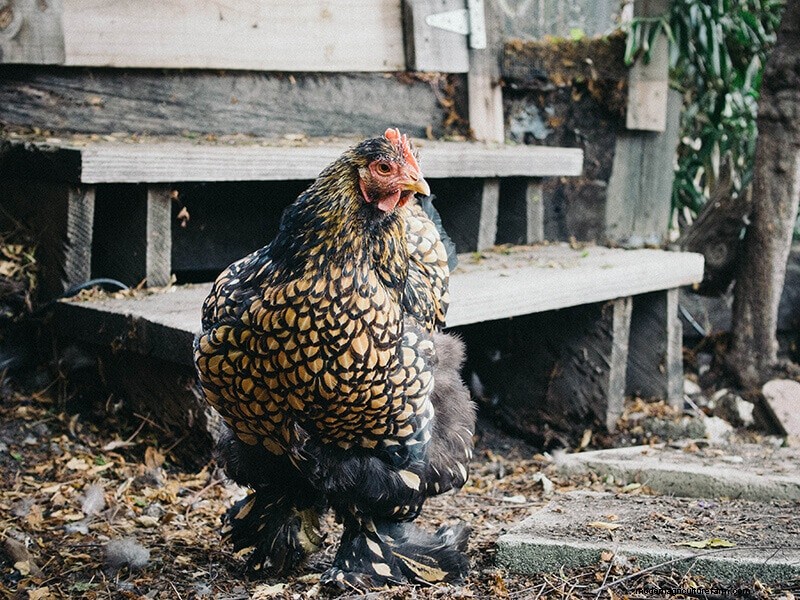
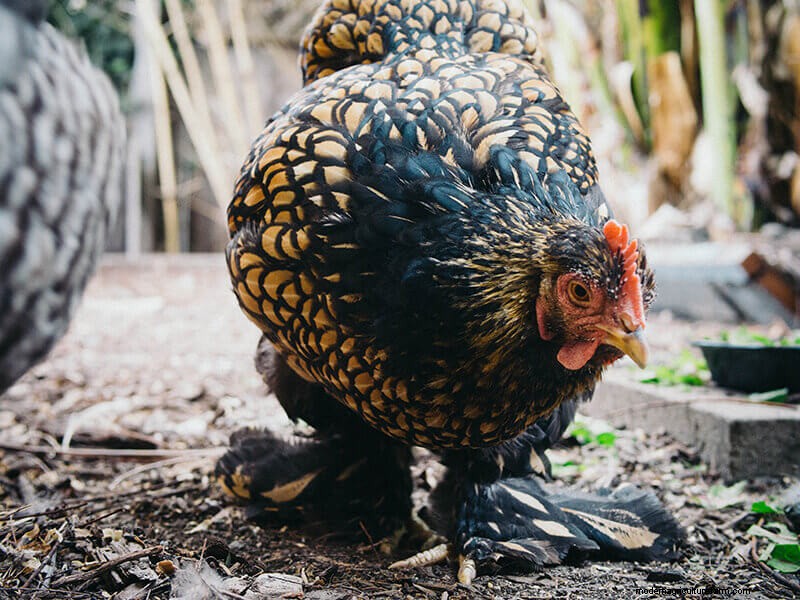
But this girl… what she lacks in egg productivity, she makes up for in lookin’ good year-round.
Chickens typically go through their first adult molt at 16 to 18 months old, and the molts occur every year in late summer to fall.
Younger hens (less than 12 months old) usually won’t molt in their first year, but will start molting the following year.
Keep in mind that the adult molt is different from the juvenile molts that happen when they’re just 1 week old (where they replace their downy covering with actual feathers), and again when they’re 8 to 12 weeks old (where they lose their “baby feathers” and grow a new set of adult feathers).
Chickens have an internal clock (a circadian clock) that falls in rhythm with the amount and intensity of light present in any given season. When a chicken’s circadian clock senses a change in seasons (whether it’s from summer to fall, or from the dry to rainy season), it triggers the drop (and regrowth) of feathers in a process known as molting.
However, certain environmental factors like artificial lighting, heat stress, physical stress, malnutrition, and dehydration can also trigger chickens to molt out of season.
A chicken molt can last anywhere from one to five months and be considered normal and healthy. Some chickens may even take as long as six months to complete their molts, losing feathers slowly but consistently while growing in new ones.
But on average, you can expect your chickens to molt for about two months, beginning in late summer.
While there’s no way to speed up the complex process of molting, there are several ways you can supplement your chickens’ diet to help them stay healthy while growing back their feathers.
Chickens need extra protein during their molts, since feathers are composed primarily of protein. You can mix in a little bit of high-protein chick feed with their regular layer feed, give them extra mealworms and grubs as a treat, or let them free-range so they can forage their own bugs. If you have any extras to spare, you can even feed scrambled eggs back to them (and no, it won’t encourage them to eat their own eggs later).