
Welcome to Modern Agriculture!

 The cattle business can be hard on your self-esteem. It’s tough when in spite of all your schooling, knowledge, experience and success, you get outwitted by an animal that poops in its food. This is happening to me a lot less frequently now that I have been through a few years of learning the hard way. Below are some of my tips and advice for dealing with smart, ornery cattle. (This is Part 2 of this 3 part series. Read Part 1 here.)
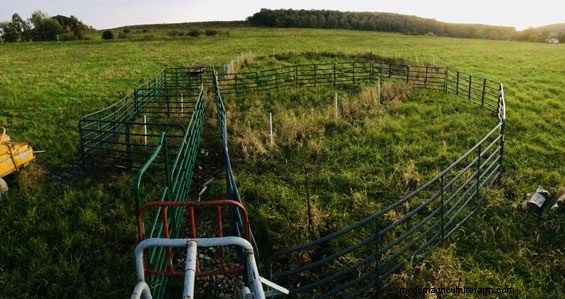
When receiving new cattle, always put them in a hard-sided corral that can physically contain them if they make an attempt to go over, around or through it. Don’t unload new cattle into a polywire enclosure or a fence with wire that is difficult to see from a distance. If cattle come off the truck at a run and cannot see a fence in time to stop, they won’t stop. Even cattle trained to polywire may run through or jump it due to stress and being unfamiliar with their surroundings.
I planned to unload my heifers this past spring into a woven wire enclosure with two strands of polywire around the inside. The trucker who delivered them advised against this, because from the road, the woven wire was invisible. To panicking cattle running off the ramp, it would look like there wasn’t even a pen there. I went to Lowe’s and bought a bunch of 1”x4” boards, and wove them through the wire so the wire held the boards up. This looked like a three-slat wooden board fence, highly visible from a distance. It held the heifers for their first few days as they got trained to the polywire, then I let them out onto pasture.
 Here’s how I straighten out cattle that don’t respect a single strand of polywire. First, your perimeter and the polywire need to be very hot. I’m not happy with anything under 8 kV and 10 or 12 kV is better. I set up multiple strands of polywire offset from one another. The first strand will be only a few inches off the ground. The second strand will be on the middle of a step-in post, and the third strand will be on the top of a step-in post. Each strand is on its own set of posts, and each set of posts runs 12 to 18 inches behind the previous one. The lowest strand is closest to the cattle. I learned this offset trick from a deer hunter who used it to protect his food plots. Animals may think they can jump multiple strands if they are all on the same post, but the offset strands mess with their depth perception. Animals can’t properly judge the jumping distance and are discouraged from trying to jump.
When my first group of new heifers arrived in 2016 and promptly jumped two strands of polywire on the same post, I changed to using three offset strands on three sets of posts to contain them. I chased them around 180 acres until I got them down in that 20-acre bottom, then trapped them down there with the offset poly. After a few days, I started squeezing them down with two wires on the same set of posts until I got them down to normal paddock size. After they obeyed two wires for a few days, I went to one wire. As long as you keep the wire hot, use highly visible white temporary fence materials, and don’t starve or panic the cattle, you shouldn’t have problems. When left alone and not stressed, cattle will test and become afraid of polywire.
I can’t imagine trying to run my operation without polywire and cattle that respect it. Here’s my squeeze-down strategy for catching paddock escapees that are still inside the perimeter fence. (Luckily I have not had any cattle escape my perimeter!) Use polywire to exclude the areas of your farm that the cattle are not on. Keep putting up new wires closer and closer to the escaped cattle, until you have squeezed them down to a reasonable paddock size. If you are trying to get them in with another group, squeeze them up to the boundary of the paddock in which the herd is. Then remove the wire separating the cattle, letting them all in together.
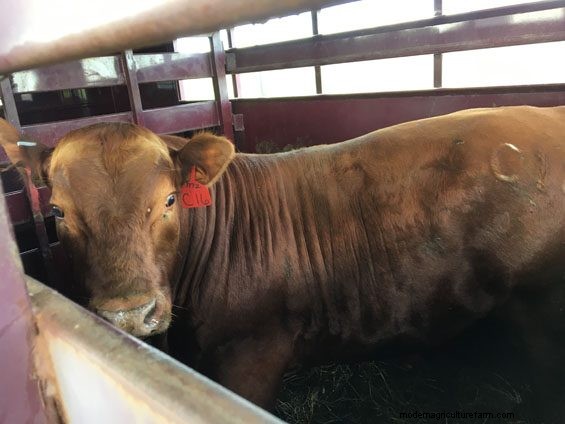
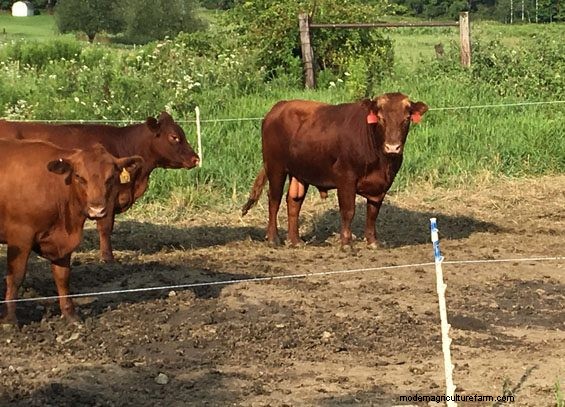
I used this strategy to get my bull in with my heifers this summer. When I delivered my newly-purchased bull to my property, I dumped him into a large paddock where the herd was not within his sight when he got off the trailer. I figured he would find the herd, because nothing can keep a bull away from females, right? Well he didn’t find the herd, and within ten minutes I couldn’t find him either. I had to keep the herd moving through fresh grass, so the bull got left behind. He didn’t resurface for weeks. I didn’t know whether or not he had jumped the perimeter and left my property entirely. Finally I saw him again. I put up a polywire far behind him, trapping him into a 20-acre bottom, then let the herd loose in the bottom. Over the next week, I tightened the herd back down to normal paddock size.
Next week I’ll cover corralling and loading a herd using temporary working facilities.


