
Welcome to Modern Agriculture!

There are many types of goats, and each are bred for different purposes. They fall into three primary categories: dairy, meat, and fiber.
Dairy breeds like Saanen, Nubian, and Alpine provide substantial amounts of milk. Boer goats are one of the preferred breeds for meat because of their size. Angora and Cashmere goat breeds are renowned for their luxurious fibers.
When raising goats for dairy, meat, or fiber, you are using or marketing a product that the goat will provide you.
Another lesser known use for a herd of goats is land management. This means using the herd to control weeds, brush, etc. When you raise goats for land management, you are using them as a service.
Oftentimes on land that is difficult to get to with machines, goats can be a good alternative to keeping weeds from taking over. Goats are considered browsers (reaching into trees and bushes) and grazers (eating plants that grow on the ground).
Some goat breeds that are particularly well-suited for clearing land include:
However, almost any breed of goat can be effective when it comes to land management. This means, if you raise goats for dairy, meat, or fiber, you can have the added benefit of them controlling vegetation and promoting pasture health.
Goats can also make great pets and companion animals. Choosing a friendly breed, and especially one that’s smaller, will make them easier to handle. Goats are social herd animals, so you will need to raise more than one at a time.
Goats, domesticated for thousands of years, are versatile animals. Here are some of the types of goats people raise on homesteads and why they are useful. The breeds listed below are just a few of the many goat breeds found worldwide.
Keep reading to learn more about the different types of goats and reasons people raise them. Below, I list out popular breeds by their primary purpose, such as Dairy, Meat, Fibers, Land Management, and Companion Animals/Pets. I also have a list of hardy goats and goat breeds with horns.
A dairy goat is a breed that is used to harvest milk from. The milk from a goat can be used for all types of dairy foods and even in cosmetics like lotions and soaps. These goats are often selected for their high milk yield or high butterfat content.
Dairy breeds, compared to meat breeds, are typically taller and bonier. This is because their energy goes into making milk and maintaining a strong frame to carry kids through gestation. Dairy breeds do not need to build muscle the way a meat breed does.
For small homesteads considering dairy producing goats, careful planning is essential. While these breeds yield a lot of milk, they require proper nutrition, housing, and pasture or browsing area.
It’s crucial to ensure that the property can accommodate their needs before investing in these dairy breeds. Below are high-producing dairy breeds, including large and small goats.
One of the most common goats for milk and other dairy products. Hardy and adaptable to various climates and terrains, Alpine goats can be suitable for small homesteads with proper space and facilities. They are also popular for commercial dairy farms.
LaMancha goats are easy to recognize because of their distinctive ears. Unlike other breeds, their ears are very small and sometimes even nonexistent. They are often called “elf ears”. The LaMancha breed is similar in size and temperament to the Alpine breed. They are typically good milk producers and easy to manage.
Nubian goats are known for their high butterfat content and rich milk. Having a high fat content has made the Nubian goat one of the top breeds sought after for cheese making.
Their vocal nature may be a concern for close neighbors. Because of their larger size, they need ample space, but can also be used for meat production. Suitable for slightly larger homesteads.
The Oberhasli goat is not as common in the US as other dairy breeds. They are easy to work with but not as hardy. Their calm demeanor makes them manageable, but like other large breeds, they need plenty of space.
Saanen goats are noticeable for their bright white or cream color and large size. They are one of the top producing dairy goat breeds in the US. They are known for their high yield and high quality milk.
Due to their size and production, Saanens require ample space and shade which can be a challenge for small homesteads. They are calm and easy to manage, making them a good choice if space allows.
Known for their hardiness, Toggenburg goats are slightly smaller than other dairy goat breeds and can fit into small homesteads if they are provided with enough grazing or feeding area.
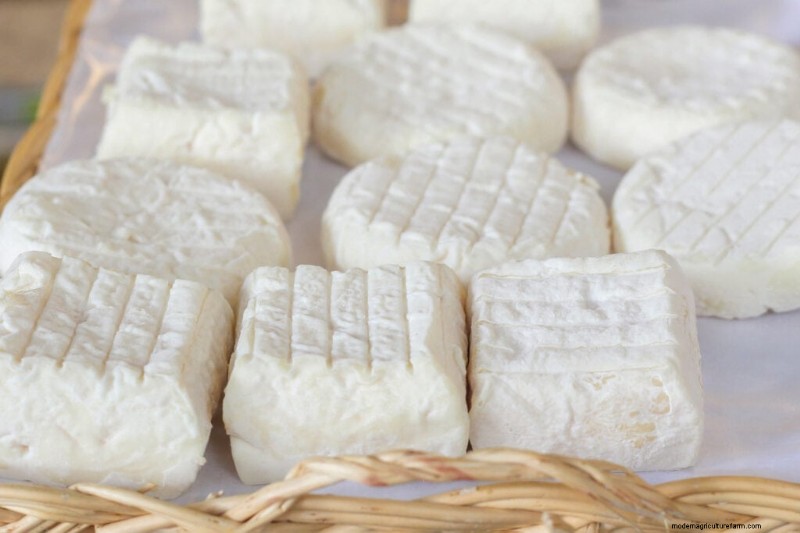 Choosing a dairy goat breed that produces milk with a higher butterfat content means you can make goat cheese and other dairy products ~ Image credit: lanych, Yay Images
If you are just starting out with raising livestock, you may think that more milk is better. And it can be. The issue comes with the:
There is also the question of what to do with all the milk. If you are using it for yourself, there may not be a need for a high producing dairy breed.
For those with limited space, small goats that are good at dairy production can be a great option. They allow homesteaders to enjoy fresh milk without the demands of larger breeds.
These smaller breeds are especially suitable for those new to raising goats and/or people with restricted pasture areas. Another bonus is they are typically easier to manage.
While these breeds are smaller, their milk production is impressive for their size. Oftentimes, their milk has a higher butterfat content, making it especially sought after for making cheeses, butter, and other dairy products.
Proper care, feeding, and regular milking will help ensure they remain prolific producers on any small homestead.
For homesteaders looking to maximize milk production with small dairy goats, several breeds stand out. Here’s a list of the best small dairy goats known for their impressive milk yield:
Kinder goats are a cross between a Nubian and a Pygmy. Making them desirable for both dairy and meat production. They have impressive milk yield for their size and a high dressing percentage when used for meat.
Since they are smaller and versatile, they are great for a small homestead.
Like the standard LaMancha, mini LaManchas are noticeable for their elf like ears. Mini-Manchas inherit the easygoing nature of their larger counterparts, making them suitable for small homesteads.
They require minimal space and are friendly. They are desired for their high butterfat content.
Mini Nubians have the butterfat content of Nubians and the compact size of the Nigerian Dwarf, making them ideal for small plots. They’re known to be affectionate and can be quite vocal.
Perfect for small homesteads due to their size. Often mistaken for a Pygmy goat. The Nigerian Dwarf can be used for milk, meat, and many times for companionship.
Their high butterfat content milk is a bonus, making cheeses exceptionally creamy. Plus, Nigerian Dwarf goats are friendly and amiable, making them great companions especially for those with children.
The primary concerns when raising meat goats are the ample space and feed they require. The larger meat goats require more substantial housing, pasture, and overall care.
For small homesteads equipped with adequate pasture and resources, smaller breeds can offer a venture into meat production with a high meat yield. Below, you will find a list of common large and small meat goat breeds.
Hardy and adaptable, they can be suitable for small homesteads with enough grazing area. Their smaller stature and hardiness is a plus for novice farmers. According to the National Institutes of Health, Spanish goat meat has less fat thickness.
Boar goats are one of the most common meat breeds in the US. They require ample space due to their size, but their docile nature makes them relatively easy to manage.
However, Boar goats require sturdy fencing to accommodate their hefty size. They often rub against or lean on fencing which can require a lot of repairs. For small homesteads with adequate pasture, they can be a profitable choice. According to Penn State Extension, Boer goats are heavily muscled.
Kiko goats are robust and require less care than some other breeds. They are known for their feed efficiency on lower quality feeds and self-sufficient nature.
Given their size and more aggressive temperament, adequate space is essential. Kiko goats can thrive on small homesteads with proper management.
Rangeland goats are hardy goats originating from the rangelands of Australia. This makes them an especially good breed to raise on dryer/rugged land. Being a large breed, Rangeland goats need ample pasture. Their hardy nature means they require less intensive care than some breeds.
Like the name suggests, Savanna (South African White) goats have pure white hair. Their skin is typically black to protect them from harmful sun rays. Originating from South Africa makes this breed hardy to heat and drought ridden areas.
Like Boer goats, they require good space. Their resilience to various diseases makes them a valuable addition if space permits.
Learn more: What to feed goats to gain weight
Small meat breeds offer an excellent solution for those homesteads that face space constraints. Their compact size makes them easier to manage. They also require less pasture. For their size, these smaller breeds still offer a substantial meat yield.
For novice homesteaders, hobby farms with limited land, or those looking for a sustainable meat source, these smaller breeds can be a worthwhile option.
A dual-purpose breed (meat and milk), they fit well on small homesteads due to their moderate size and adaptable nature.
Their unique “fainting” trait can make them easier to handle. Their size and temperament are suitable for small homesteads, but adequate fencing is essential. Many people keep fainting goats for the novelty of them or as pets.
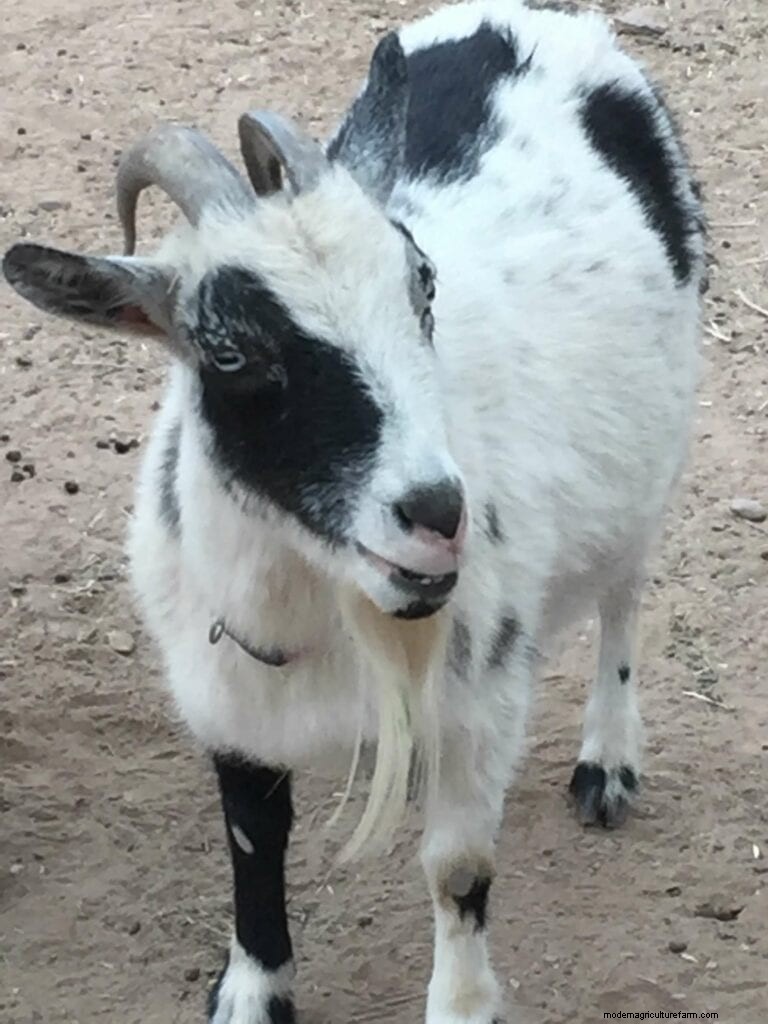 American Pygmy goat ~ Image credit: Dawn Head
Pygmy goats are friendly and playful. Pygmy goats are primarily raised for meat, but they also can produce a significant amount of milk for their size. Their compact size makes them ideal for smaller plots. Pygmies require less space and are relatively easy to manage, making them suitable for novice homesteaders.
The West African Dwarf is the predecessor to the Nigerian Dwarf and Pygmy goat. They are not as common in the US, but play a vital role in the lives of those in Africa. They are great for both meat and milk production. Perfect for small spaces due to their size, and their adaptability to various climates is a plus.
Fiber from goats refers to the hair or wool that is produced by certain breeds of goats. This fiber can be used to make clothing, blankets, and rugs. The quality of the fiber can vary depending on the breed of goat, as well as other factors such as age, diet, and environment. Goat fiber is generally considered to be a luxury fiber, prized for its softness, warmth, and luster.
For hobby farmers interested in fiber production, these breeds offer a range of options. Each has its own unique care requirements and fiber outputs.
Angora goats are particularly suitable for homesteads due to their manageable size and docile nature. They thrive best in temperate climates and need to be shorn twice a year to remain healthy and comfortable.
Angora goats are sheared for their mohair which is similar to wool, but softer and silkier.
A relatively new industry in the United States, Cashmere goats were imported from Australia and New Zealand in the late 1980s. Cashmere goats refer to the type of hair on a goat, not necessarily the breed. Though, many goats are bred for the cashmere type hair.
Nigoras are medium-sized goats. They can be managed well on homesteads. They offer dairy and fiber benefits. Nigora goats are favored for their functionality. The fibers are useful, but not considered as luxurious as Cashmere or mohair.
Pygoras are a popular choice for homesteads due to their small size and friendly disposition. They’re a good fit for those looking to produce fiber on a smaller scale. There are three different fiber types: Mohair-like; a blend of mohair and cashmere characteristics; and one that is cashmere-like.
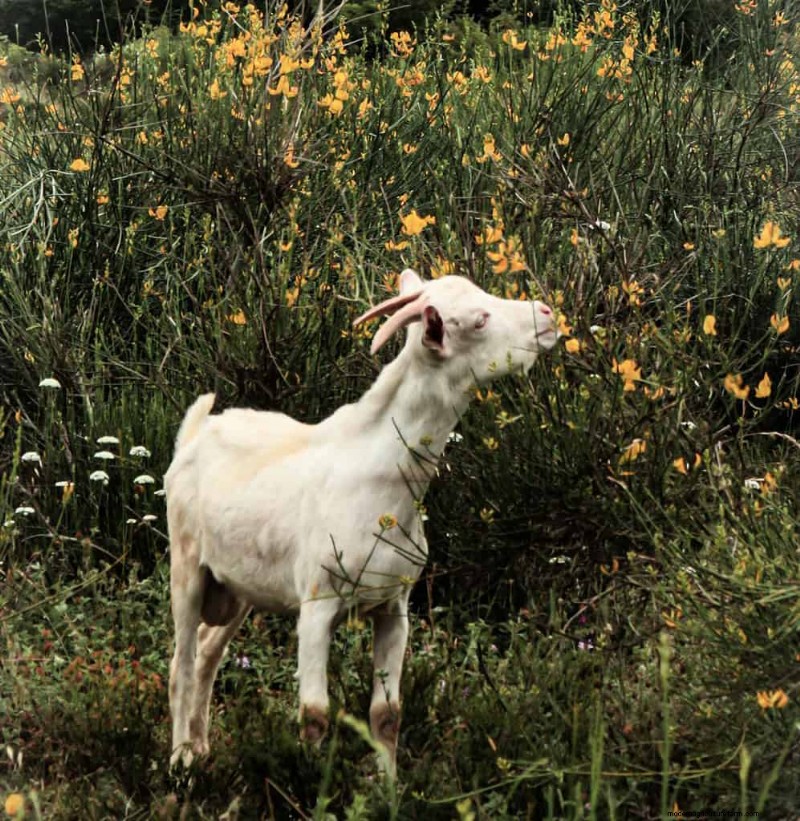 There are types of goats good for clearing land; goats are browsers and grazers ~ Image credit: FatmaZehra ay, Pexels
Using certain goat breeds for brush and weed control can be a sustainable and eco-friendly way to maintain and rehabilitate land on homesteads.
According to the University of Minnesota Extension, goatscaping is a weed management practice offering benefits over traditional landscaping. Hiring a herd or raising your own goats is a way to mitigate weeds and vegetation without pesticide use.
You can use them to clear land before planting crops or to maintain overgrown areas. They are often preferred over mechanical methods because they are more environmentally friendly and cost-effective. In addition, goats can help improve soil health by fertilizing the land with their droppings.
According to Iowa State University Extension and Outreach, preferred species include:
Others vegetation goats will eat include:
These goats are particularly effective at controlling unwanted vegetation, such as weeds, brush, and invasive plants. Many goat breeds will help control weeds that other species will not, such as thistles.
Many of these types of goats can be considered dual-purpose because they are good for meat as well. As with any livestock, proper care, fencing, and health management are crucial to their well-being and productivity.
When utilizing goats for land management, be especially aware of predators. Oftentimes, guard dogs or fencing can keep unwanted guests out.
While often associated with meat production, Boer goats can be used in land management due to their large size and appetite. Suitable for homesteads with ample space.
Kikos are suitable for homesteads, especially those that face challenges with tough vegetation. These goats are known for their resilience and ability to thrive on sparse forage.
Spanish goats are highly suitable for homesteads as they’re hardy, adaptable, and efficient grazers. Their browsing nature helps control weeds and underbrush effectively. They are exceptional browsers and can help control invasive plants, shrubs, and weeds.
Easy to manage in fenced areas, making them suitable for homesteads looking for controlled grazing. Their myotonia (muscle stiffness) doesn’t hurt them but can make them more vulnerable to predators.
Learn more:
When raising goats as pets, it’s important to remember they are herd animals and thrive best with companionship, preferably their own kind. Providing them with a friend, proper care, and ample space to roam will ensure a happy and healthy pet goat.
They are curious and intelligent animals. They will benefit from creative goat playground ideas to keep things interesting.
Again, many of these breeds will be friendly as well as providing milk, meat, fiber or a mixture of the three. When you want to raise them as pets, companion animals, for exhibition, or around kids, you want them to be docile and easier to handle. Most of them are small in stature as well.
Many people will be wary of goats with horns as a pet. Choosing a more docile breed will limit any danger of a goat with horns. Raising a goat from infancy will usually provide the most docile animal. Bottle feeding a kid is a fun and enjoyable experience which will create a bond between human and goat.
Goats have high cognitive and communicative abilities toward humans. They thrive when people spend time with them, talk to them softly, and pet them. This kind of care from the very start will help build a strong relationship between you and your goats.
While each will have its own personality, proper care goes a long way toward ensuring they are playful and easy to raise. Most of them will seek out human interaction.
These breeds are often chosen by farmers and homesteaders in challenging environments or those who desire breeds that require less intensive management. Their adaptability and resiliency make them particularly valuable in varied conditions. Many of them have higher resistance to parasites and diseases.
Homesteaders often choose breeds that fit their space constraints, goals (meat, milk, or both), and level of experience. Some may opt for hardier breeds if they’re just starting out, while others might seek out specific breeds for their unique qualities or products.
Goats with origins from more arid and rough conditions will provide the most hardy breeds.
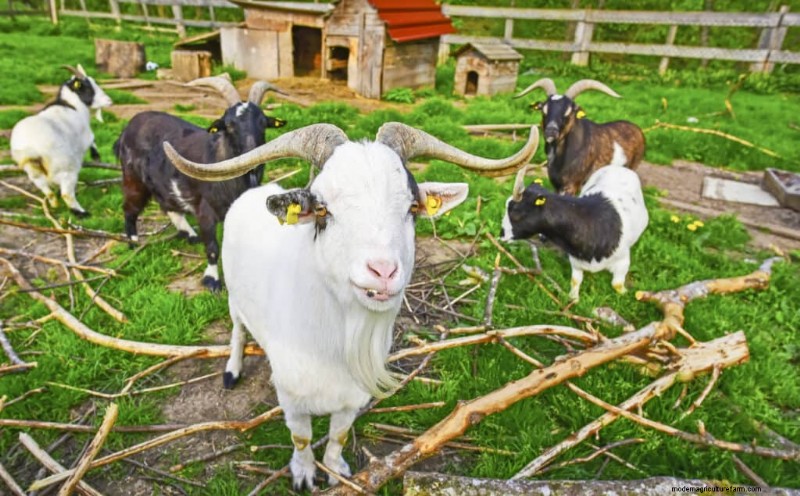 Types of goats with horns may use them to protect against predators and to establish their social rank within the herd ~ Image credit: YesPhotographers, Yay Images
It’s important to note that while many goat breeds naturally grow horns, they are sometimes dehorned (a process called “disbudding”) for safety reasons, both for humans and for other goats in the herd.
For goats in smaller pastures, it can be easy for them to get their head stuck in a fence or tree if they have horns. Learn more about goat horns, and always check with breeders or farmers to understand their practices regarding horns.
Many goats grow horns naturally. Farmers who let the goats grow their horns may decide to wrap them so they will be less likely to injure humans or other goats.
Learn more: Why do goats headbutt
While many are dual-purpose, most goats have been bred for the trait of providing milk, meat, or fibers. Some of them will also be adept at clearing land.
Goats are often raised for their milk, which can be used to make cheese, butter, and other dairy products. Goat milk is also known to be easily digestible and a good alternative for people who are lactose intolerant.
The milk from a goat can also be found in many cosmetics like lotions and soaps. It is though that products containing goat milk can be beneficial to those who suffer from skin conditions such as eczema.
Goats are also raised for their meat, which is popular in many cuisines around the world. Goat meat is naturally lean and a good source of high-quality lean protein. Goat meat is a healthier alternative to other red meats like beef, lamb, and pork.
Some breeds of goats, such as Angora and Cashmere, are raised for their fiber, which is used to make clothing and other textiles.
Goats can be used to help control vegetation on a property, as they are known for their ability to eat a variety of plants and brush.
Goats can also be raised as companion animals. They are intelligent, social, and can make great pets. They are spirited with fun personalities.
Goats are often raised to be shown at livestock shows, where they are judged based on their physical appearance and conformity to breed standards.
Raising goats can also be a valuable educational experience for children and adults,. They can learn about animal care, agriculture, and sustainable living.
You may live in an area where you can take a goat yoga class. Imagine lying on your yoga mat with goats wandering the space. Rather than hosting the classes on their own, goat owners will bring the goats to outdoor classes as a side hustle for others to enjoy.
No matter which breed you choose, it’s essential to raise more than one goat together. They are very social animals. Be sure to have enough space for them, proper shelter, and routine health care. Learn more:
There are many types of goats in the world. I’ve included the popular ones that hobby farms use for homesteading. Raising goats is a way to get utility from an animal (much like raising chickens for eggs) while at the same time, forming a bond with the animals.
Each breed is unique and versatile. Before deciding on a breed or breeds, be sure to have clear goals as to why you want to raise them: dairy, meat, land management, for fun as pets, for fibers, or another personal reason.
Research and preparation are key. They are relatively easy to care for but you must provide daily care, including fresh water, nutritious food, shelter, and protection from predators. I love goats! There is so much more you can learn:
Featured image credit: Hil, Yay Images


