
Welcome to Modern Agriculture!

Fish farming is an old agricultural method that modern homesteaders can use today. A great source of continuous protein, freshwater fish farms allow anyone to grow a different variety of fish that can be used for personal consumption.
While it may be hard work to get started, building a fish farm can be rewarding, fun, and can really pay off in the long run when you may not have a lot of money to spend on food. It could also be a good income source if you have other people around you who are in need of additional food.
If you like the taste of seafood and you’re thinking about building your own fish farm, then here are some expert tips on how to build a fish pond that you can use for homesteading. Let’s get started.
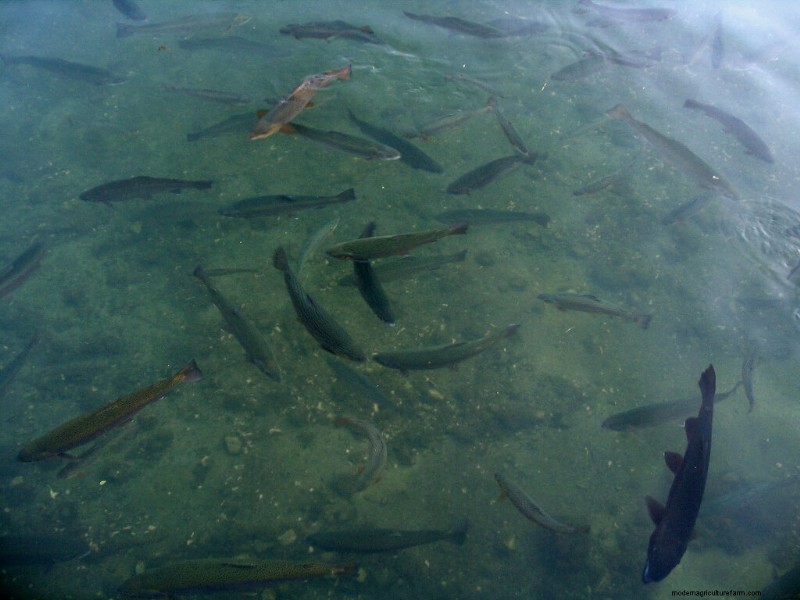 A fish farm in Point Edward, Ontario. Photo by Loozrboy via Flickr/Creative Commons
Don’t break ground on your pond until you answer a few key questions.
Before you begin working out the location of your fish farm you first need to consider three main things.
You want to make sure the pond size can handle the type of fish you’re going to be growing. You don’t want to grow fish that are too large for the pond size only to find out you’re running out of room.
When building a fish farm in your backyard or on your property, it will need to be positioned in an appropriate place to ensure the best growth and health of the fish. Some key things to remember when finding a suitable location is:
In taking these things into consideration you’ll be able to determine a good location that is suitable for your pond to be positioned.
When you’ve decided on an area, it’s also a good idea to draw sketches and map it out to the exact measurements and dimensions. This can be done with spray paint on the ground.
Mapping out your pond will help you visualise it better and to determine the correct size of the pond ready for digging. If you don’t have spray paint you can use ropes or a garden hose. The final layout of the pond site ready for digging should include:
By preplanning your dig site, you need consider all these things to ensure you don’t run into a lot of trouble when you’re digging the hole.
With prep-work complete, you’re ready to break ground. Here’s our recommended process.
Depending on the size of your fish farm pond, you will either need:
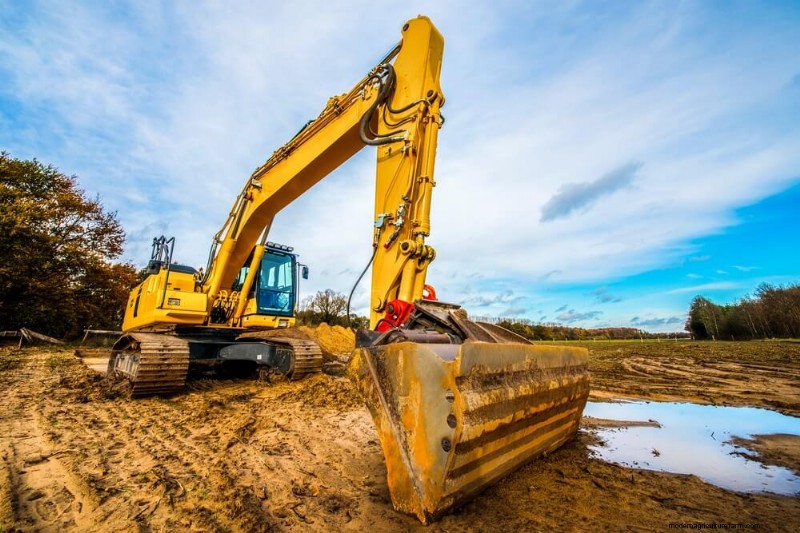
Unless you have a team of strong-backed people willing to work for free, digging your pond with a Bobcat or other excavator is the best way to get the job done quickly. Here’s our tips and process for digging a fish pond with an excavator.
In taking these tips into consideration you will be able to dig your fish pond more successfully without too much trouble.
Once the hole is dug you may need to line it with a rubber liner or tarp. This tarp or liner needs to be compatible with fish ponds to reduce poisoning from any chemical residue left on other types of tarps from the treatment process. Before you lay your large tarp down however you will first need to add a layer of sand across the surface area of the hole ready for the tarp to reduce tears. You can use a rake to level out the sand.
Once this is done it’s a good idea to place some geotextile fabric to help protect the rubber liner or tarp from being damaged. The reason why a tarp is required to layer the fish pond is because it helps to reduce the water from seeping out into the surrounding land. Otherwise you may have to continue to fill it up constantly.
It is possible to seal ponds without liners, which is a more sustainable option and much cheaper than buying pond liners, but depends on your soil type and the clay content of your soil. There are vendors who sell sodium bentonite clay as a pond sealer that you can purchase to help seal ponds, too.
There may also be sustainable versions to traditional pond liners that are worth researching, though they can be difficult to find. It’s possible to make polyethelene with ethanol-based plastics rather than fossil-fuel based plastic. In theory those should be slightly more sustainable than traditional pond liners.
When placing your rubber liner or tarp into the base of the pond it’s a good idea to unfold it from the center. Depending on how large your hole is you may need a few large pieces of tarp to ensure the entire area is covered successfully.
To ensure the liner stays in place when the pond is being filled you can place a decent sized stone in the centre. This helps to prevent the tarp lifting and floating while minimal water is in the pond.
Filling up your pond may take a while depending on the size. It’s a good ideal to let the water run into it from the side as this will also help the tarp to conform slowly to the weight of the water. You should also place some stones around the outer edge of the tarp to help prevent it from falling in as the weight of the water increases.
Once the pond is full, the weight of the water will help to keep it in place. Then you can then setup your pump system (if applicable).
If you’re not planning to use a pump system, then you can work on introducing your fish. However, don’t forget that fish do need to have some oxygenated water to live and grow healthy. You can provide them with oxygen by placing a running hose in the pond 2-3 times a week for 15-30 minute intervals.
When introducing your fish to the fish pond it’s a good idea to first let the water and any dirt residue to settle. Once ready, slowly begin to mix the pond water into the bucket water that you have your fish in for 10 minutes, this will help them acclimatize to the new water PH levels.
Once you have mixed the water and waited, slowly tip the fish into the pond. The less stressed your fish are when introducing them into the pond, the more of them will survive the process.
Don’t add all your fish at once. Start off with a small amount of fish. If most of them live for the first two weeks then introduce more.
If they all die within the first week, there’s something wrong with your water which needs to be addressed. One area that may need checking is the PH level. Some fish require a set PH level to survive in. If the PH level is still within range, you may need to ask a fish expert on what might be the problem.
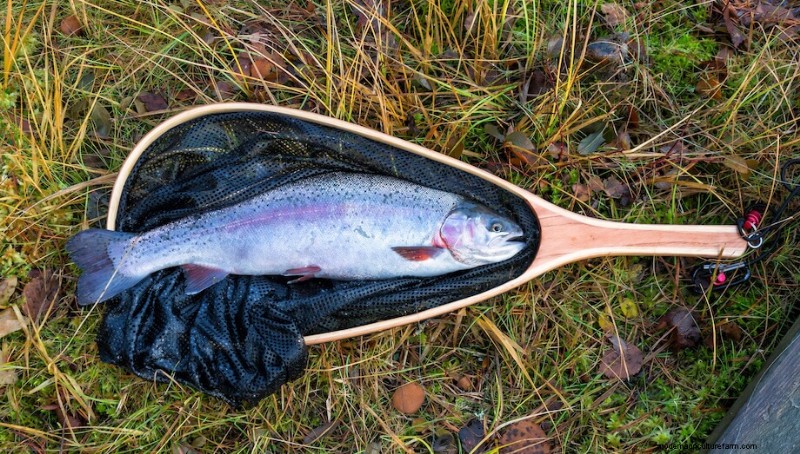
Fish farming is a great way to provide you and your family with a sustainable food source. As your fish breed, you will find that you’ll have more than enough food to last for years. As the first month goes on, continually check on your fish and see whether you can improve any part of the pond. This will help you to keep your fish pond running well for a long time.
So, are you ready to build your own fish farm or pond ready for your homesteading lifestyle? If you have any questions, leave them in the comments.


