
Welcome to Modern Agriculture!

You are here: Home / Animals / 25 Free Rabbit Hutch Plans to House Your Furry Friends
Whether you’re raising meat rabbits or looking for walk-in rabbit hutch plans for your favored pets, making your own hutch can save you money and help our environment by reducing waste. Fortunately, there are plenty of options available to find what works best for you when raising rabbits.
If you’ve built your own chicken coop or a birdhouse, you know that finding the best plans can be the trickiest step. Before you begin, you’ll need to know what size hutch you need, the best materials to use, and where the prime location for placing your hutch will be.
While there’s no precise guide for sizing, it’s better to give your rabbits more room than you expect they need. Generally speaking, you can determine the size of your hutch by the rabbit’s weight. For example, if your rabbit is between 8 and 11 pounds, it needs at least 4 square feet of space, not including an area for water and food dishes.
If you plan on making the hutch your bunny’s primary dwelling then the bigger, the better. Remember, this cage is its entire home. It needs room to exercise and stretch its furry legs.
First-time rabbit owners are often tempted to get a cage with a wire mesh floor to make cleanup easier. However, wire mesh is uncomfortable on a bunny’s feet and legs, and sometimes leaves our furry friends with sores.
Instead, it’s better to use a solid wood set up. With how easy it is to train rabbits to use litter, there’s no reason to put them through walking on a wire floor.
The best rabbit hutches often use both wood and wire. Mesh can be used inside the hutch (such as the walls of the cage) to help keep ventilation up to snuff. Wooden floors are comfortable, but they need to be sanitized frequently to ensure your rabbit stays healthy.
Hutches typically go outside in a yard. They’re usually larger than a regular cage, and designed to give your bunny plenty of space to romp about.
While you want to ensure your rabbits stay warm during winter, it’s just as important to keep them cool in summer. Typically, rabbits don’t do well in heat over 85 degrees Fahrenheit, so make sure they have plenty of shade and water.
Related Post: Raising Rabbits
In winter, rabbits can handle temperatures that drop down to about 20 degrees but still need to be protected from rain, snow, and wind. Therefore, it’s wise to winterize your hutch while maintaining proper ventilation with insulated rabbit hutch plans.
For example, having a wood roof and side panels offers insulation and protection from the elements. Coupled with mesh front panels, your rabbit will have plenty of ventilation and warmth in winter.
You don’t need to rely on prefabricated hutches to keep your bunny safe and sound. Here are 25 free rabbit hutch plans you can build at home to save money and provide your furry friends with a safe place to call home.
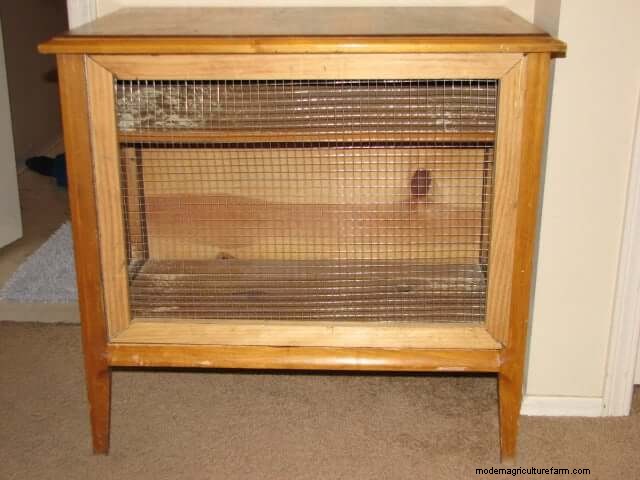 photo courtesy of instructables
If you have an old end table, the perfect way to upcycle it is by turning it into this small indoor hutch. While it’s always a good idea to keep a pair of rabbits, if you are starting with one, this could be the perfect size for your bunny’s indoor condo.
Not everyone has a big yard, especially when living in a city. This hutch is both mobile and small enough for a tiny yard. It’s a combination of wood and wire, giving shelter and ventilation to your rabbit.
For larger yards, this run might be a better option. It’s longer, giving your bunny more space to hop around and get some exercise.
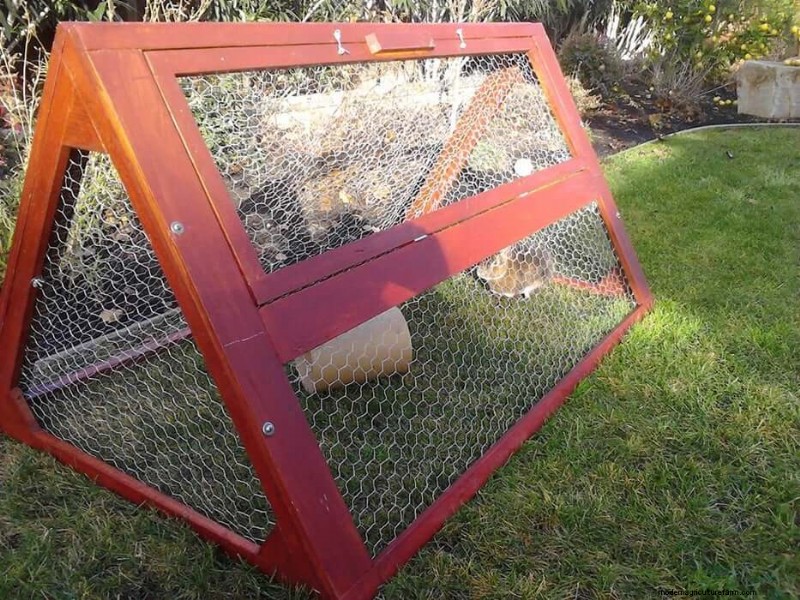 photo courtesy of instructables
This triangle rabbit tractor is fun for a predominantly indoor rabbit to get some outside time. It’s not safe enough to leave a bunny in overnight, but it allows for necessary exercise and enrichment.
If we’re not careful with rabbits in a hot environment, they can quickly become ill. That’s why this basic hutch with added ventilation can be the perfect solution.
Some owners prefer having a complete wire cage to make cleaning easier and because wood requires frequent maintenance. However, it’s a very good idea to give your rabbit something soft to sit on to protect their legs.
This model is good for beginners. It’s easy to make, and it has a nice double door set up, giving easy access to the rabbit. This hutch also provides a nesting box, giving your rabbit a place to feel safe.
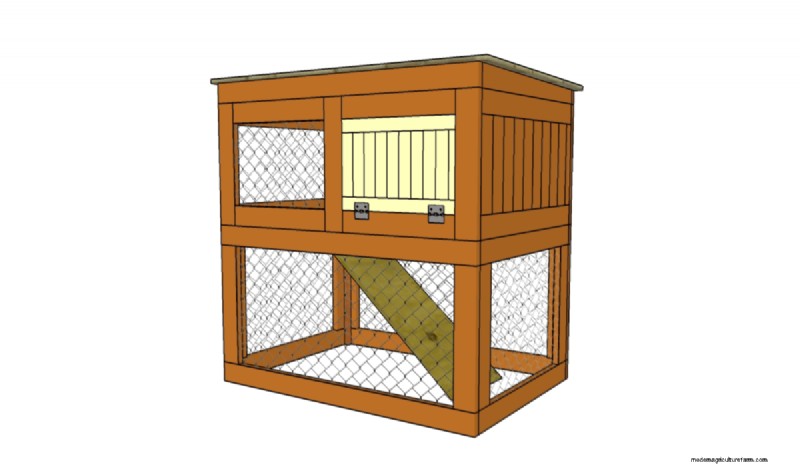 photo courtesy of how to specialist
Here’s a good model to give your rabbit some exercise and extra space without taking up much room. Thanks to the second floor, your bunny can hop around via the ramp.
If you need a hutch to house multiple rabbits, one that gives you easy access at all times, this is your best bet. It’s long, giving the rabbits space to move, but also offers them privacy for nesting.
For those who want to ensure your bunny is going to get its exercise and be able to explore, this is a good option. It’s multilayered with a long ramp, adding space thanks to its height.
If you’ve made a chicken coop before, this hutch may look familiar. The wire door gives easy access to your rabbits, and the nesting room is a place they can feel safe.
Live in an environment that drops below 20 degrees Fahrenheit in winter? You’ll want to use these insulated rabbit hutch plans. It still has ventilation to keep your rabbits healthy but will keep them warm even in cold weather.
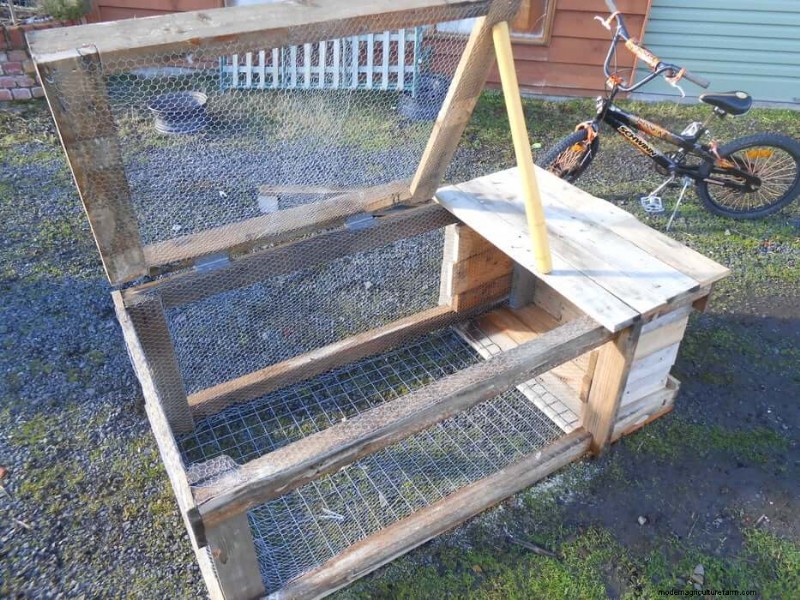 photo courtesy of instructables
Sometimes, all we need is a basic model. This hutch is straightforward, allowing you to move it to give your rabbits fresh grass every day, but also have a bit of security in their nesting box.
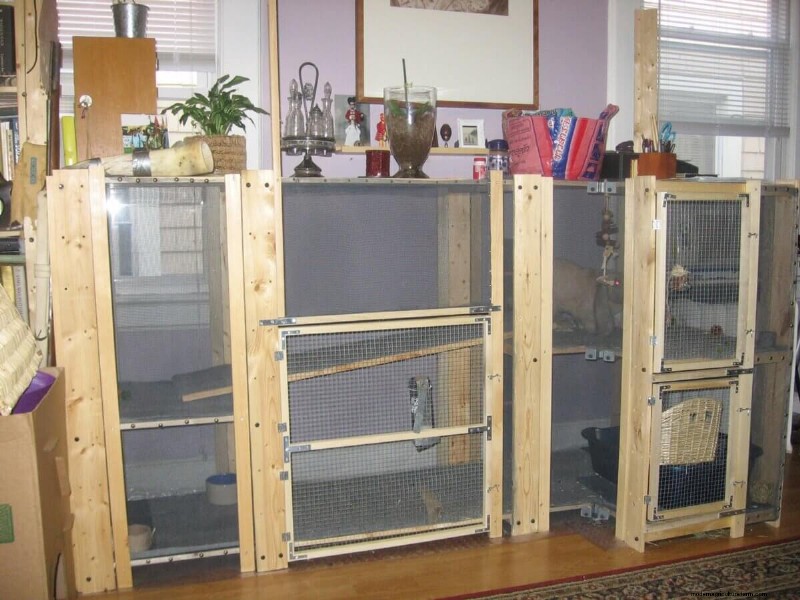 photo courtesy of ikea hackers
Indoor rabbits need their space too! If your bunny doesn’t go outside often, this is a superb option. These rabbit hutch plans are large enough to offer plenty of exercise and a fantastic way to upcycle some old shelving.
This hutch is a good choice for multiple rabbits, especially if you live in an area with plenty of predators. It’s high off the ground to keep your rabbits safe from just about anything that may invade your yard.
Another strong contender for areas with predators, these rabbit hutch plans are elevated but also come with a shade roof. If you don’t have any trees to keep your rabbits cool, this is a solid option.
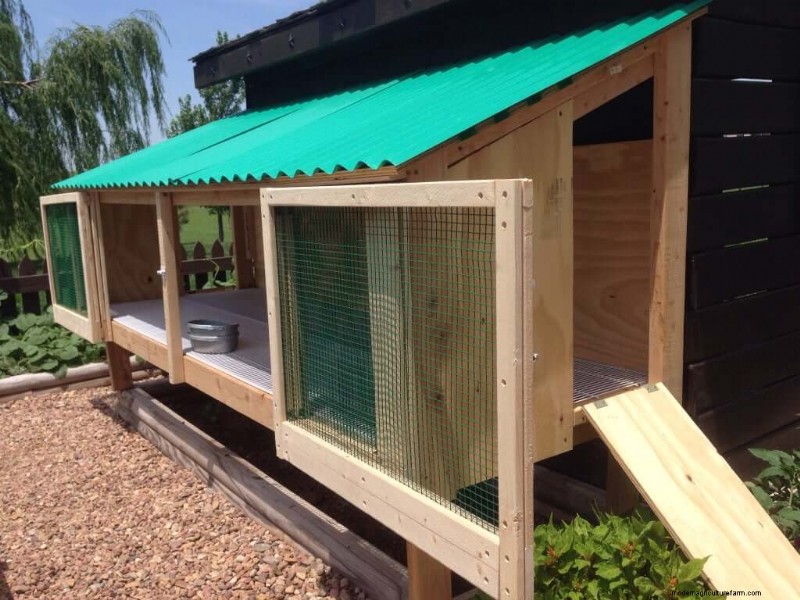 photo courtesy of instructables
Rabbit hutches and kids don’t always get along. It’s easy for the doors to slam on little hands or pinch fingers. This hutch is designed specifically to be safe around children.
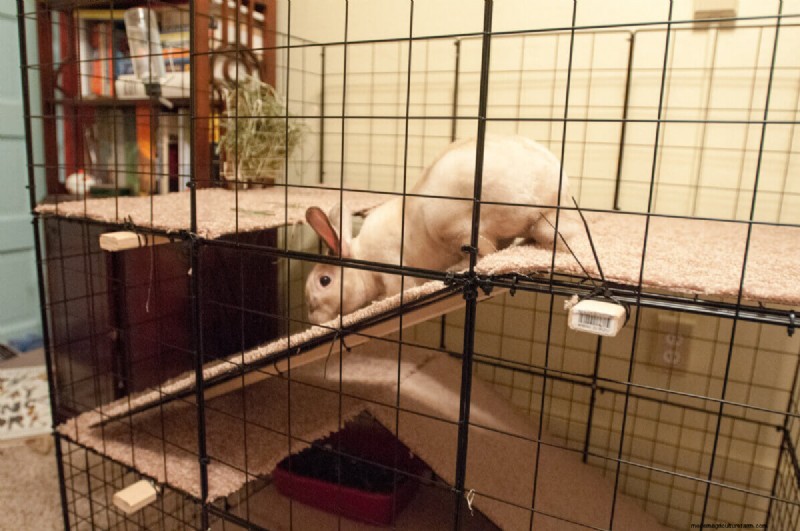 photo courtesy of bunny blurbs
While the other rabbit condo is undeniably larger, the layout of this hutch gives significantly more exercise. If your rabbit is energetic, this may be the better option.
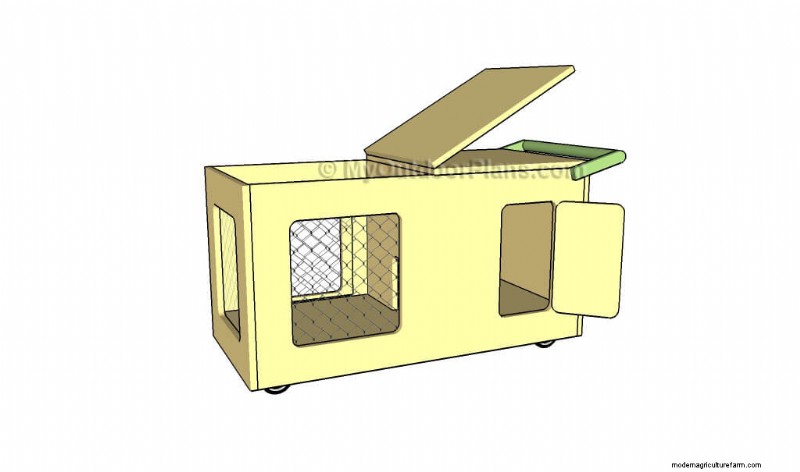 photo courtesy of my outdoor plans
Like to bring your bunny with you from room to room? A rolling hutch is the perfect solution so they don’t get lonely during the day.
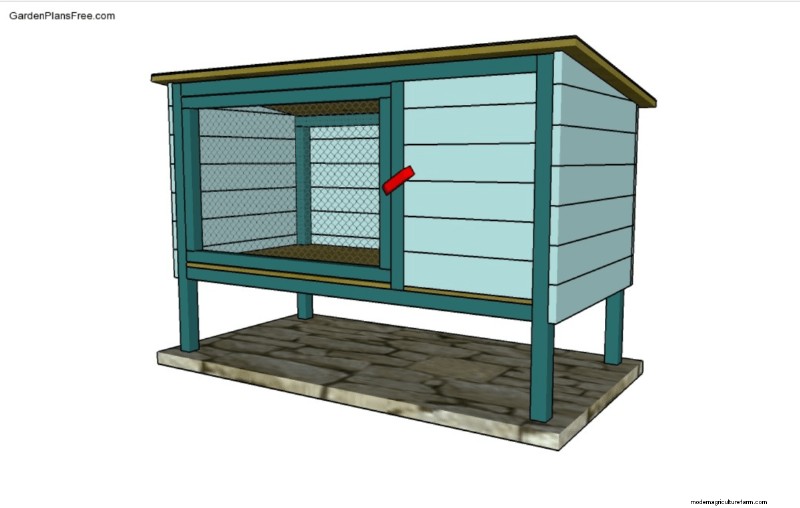 photo courtesy of garden plans free
Some rabbits that aren’t socialized young, are nervous around people. If this is the case for yours, these rabbit hutch plans give a good-sized privacy room where they can calm down.
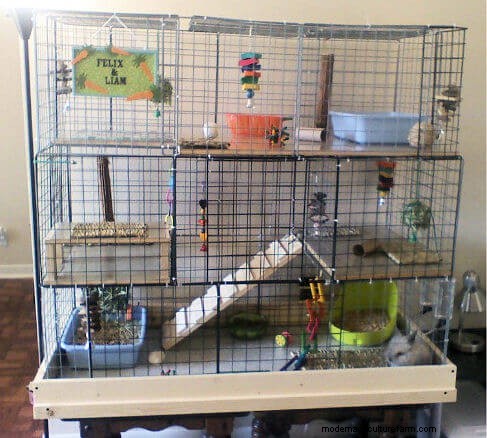 Photo Courtesy of The Rabbit House
If you’ve never made a hutch before, this is a good option. The cubes clip together, making assembly (and cleaning) a breeze. Just be sure to put some flooring down for your bunny’s comfort.
Made a hutch or two in your day? This is a good choice for those who know their way around. It also includes plans for a food dispenser.
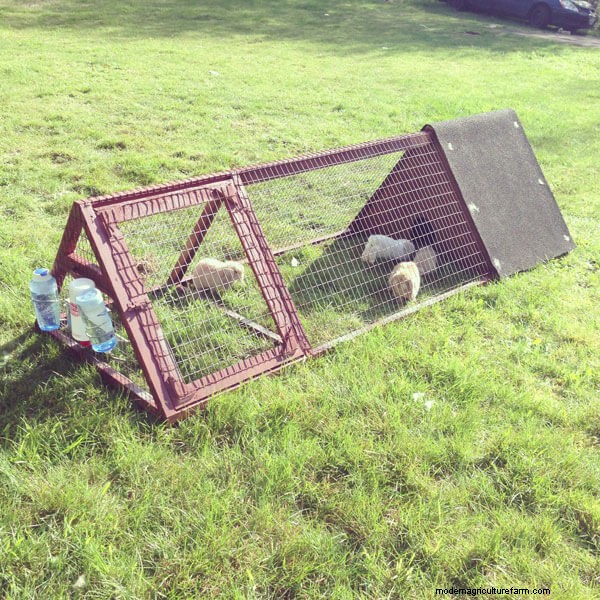 Photo Courtesy of Medeek Design
These rabbit hutch plans are perfect if you have more than two rabbits but still want to be able to move their hutch around to give them fresh grass every day. It’s well ventilated and has a nesting box for them to enjoy.
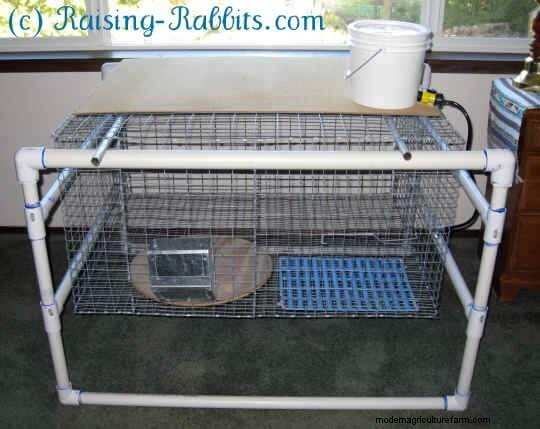 Photo Courtesy of Raising Rabbits
Have extra PVC lying around? Want a cage that’s easy to clean? This is the perfect solution, allowing you to reuse things you own and keep your rabbits healthy.
This hutch is a great choice if you have multiple rabbits and want to keep them sheltered. The roof will provide lots of shade without overheating the bunnies inside.


