Welcome to Modern Agriculture!

Homeowners and garden lovers frequently choose Boston Ivy for its lush green canopy, making it a popular choice for wall and fence cover.
Before planting, it’s crucial to understand whether its roots pose any threats to your structures or neighboring plants.
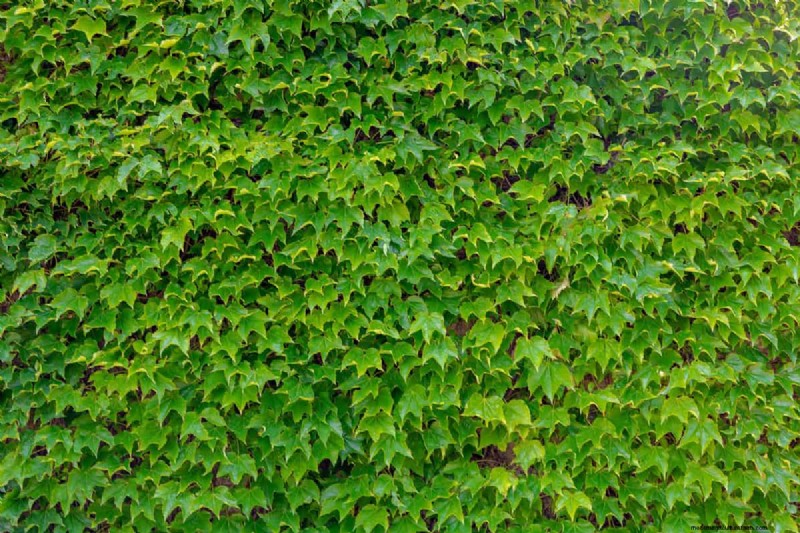
Many gardeners ask whether Boston Ivy’s roots can become invasive and damage nearby buildings or plants.
Find the facts below.
Boston Ivy (Parthenocissus tricuspidata) belongs to the grape family, not the true ivy genus.
Native to Japan, Korea, and China, this deciduous vine is celebrated for its brilliant fall foliage, shifting from green to deep red as temperatures fall.
A standout trait of Boston Ivy is its unique attachment mechanism.
It climbs using short tendrils equipped with terminal, sucker‑like holdfasts or adhesive discs.
These tendrils enable the vine to cling tightly to walls, fences, and trees while minimizing surface damage.
While attractive, Boston Ivy can be aggressive, covering large areas rapidly if not kept in check.
Its dual appeal of beauty and functional coverage makes Boston Ivy a staple for enhancing buildings and landscapes.
Save this article – unlock today's gardening deals!
Despite its rapid growth, Boston Ivy’s root system is not inherently invasive or destructive when properly managed.
Instead, the vine uses tiny, adhesive holdfasts—resembling roots—to anchor itself.
Boston Ivy roots are generally shallow and fibrous, reducing the likelihood of damaging foundations, walls, or structures.
Nonetheless, ample space is essential; planting in confined areas can lead to unwanted spread.
Unlike many climbers that embed roots into walls, Boston Ivy relies exclusively on adhesive tendrils.
Consequently, the vine does not penetrate walls; it simply adheres.
Thus, Boston Ivy typically avoids the structural damage associated with root‑penetrating vines.
In the soil, Boston Ivy’s roots are vigorous yet non‑invasive.
The vine can establish a strong presence without aggressively outcompeting neighboring flora.
Gardeners should, however, monitor its spread and prune as needed to maintain desired boundaries.
When used as ground cover or in expansive beds, Boston Ivy can blanket large areas—beneficial for erosion control but potentially overwhelming for smaller plants.
Its dense canopy offers excellent ground cover, helping prevent soil erosion.
Conversely, its rapid spread can eclipse smaller, less vigorous plants.
Uncontrolled growth can result in the vine climbing walls, fences, and trees.
Aerial rootlets may infiltrate brick or masonry cracks, widening them gradually.
Regular pruning and maintenance keep the vine near vulnerable structures and mitigate damage.
Boston Ivy’s roots typically remain near the surface rather than penetrating deeply.
Ongoing monitoring and proper management are still essential to prevent potential issues.
Though non‑invasive, Boston Ivy’s roots can spread. Below are practical management strategies.
Selecting the right planting site and providing proper care are key to preventing root over‑expansion.
Choose a site that offers sufficient space, preventing encroachment on neighboring plants or structures.
Plant in well‑draining soil and maintain consistent watering and fertilization.
Regular monitoring helps keep the vine from becoming invasive.
Root barriers effectively limit Boston Ivy’s root spread.
These barriers—typically plastic or metal—are installed vertically around the planting perimeter.
They guide roots downward, limiting horizontal spread and protecting surrounding structures.
Extend the barrier a few inches above ground level to discourage upward growth beyond the desired zone.
Trim vines regularly, particularly near structures and other plants, to control spread.
Watch for root suckers emerging from the ground.
Remove them at the base and dig out roots that intrude into unwanted areas.
A primary concern is moisture retention: dense growth can trap moisture against exterior walls.
Prolonged moisture retention can foster mold, mildew, and potentially structural damage.
Ventilation and periodic pruning mitigate these risks.
Although rarely damaging walls, Boston Ivy can harm certain surfaces.
For instance, adhesive disks can crack wooden or stucco surfaces when tugged after long growth.
Boston Ivy remains an attractive choice, offering aesthetic appeal and easy growth.
Although its roots are not traditionally invasive, careful management is essential to control spread in beds and as ground cover.
With attentive care, Boston Ivy can enhance any garden or landscape.
Explore additional ivy cultivation tips in these articles:
How To Grow Ivy Indoors On A Wall [Quick Guide For Beginners]
Ivy Geranium [Care Tips, Photos, and Shopping Links]
Written by
Shane Desuasido is a content and copywriter with over 10 years of experience in writing about various topics, including her specialization in technical writing for the gardening industry. Her background in e‑commerce and social media management complements her expertise in crafting engaging and informative content. Shane is also a passionate advocate for animal welfare and environmental sustainability, and she brings this advocacy to her writing by promoting eco‑friendly and sustainable gardening practices.
Meet the GardenTabs team →

Editorial oversight
GardenTabs content is reviewed by Steve Snedeker, a seasoned gardener with decades of hands‑on landscaping experience.