
Welcome to Modern Agriculture!

How healthy is your homestead? When evaluating the health of your homestead, it is important to look at the whole picture. The condition of the soil, the health of the plants on your property, the water quality, as well as the immunity level and overall health of people, pets and livestock.
If a problem is evident in any of these areas, the ecology and management system of your homestead may need to be addressed and altered. Your problem might be parasites.
Every homestead, both rural and urban, populated with farm animals, poultry, wildlife, plants, pets and people is a breeding ground for parasites.
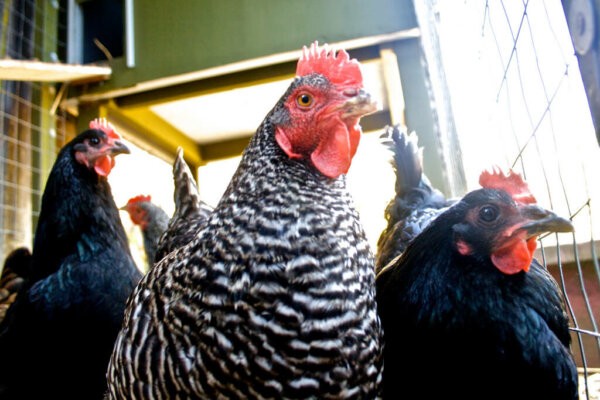 Every homestead is at risk of parasites, especially when there are farm animals involved. Matt Baume / Flickr (Creative Commons)
In the United States, millions of people develop parasitic infections. Symptoms are often ignored or misdiagnosed. A parasitic infection can lead to significant health issues including pregnancy complications, heart failure, blindness, seizures and death.
Infants, small children, persons with compromised immune systems, a co-existing health concern and the elderly are at the highest risk of a life-threatening response to a parasitic infestation.
Parasites are a huge problem on some small farms. Parasites that prey on both humans and animals are organisms that live in or on or obtain their food from another host organism.
Parasites come in a diverse array of forms broadly classified into three main groups:
Parasites can be internal or external, depending on how and where they affect their host. Did you know that there are more than 1,000 species of parasites that infect people and animals worldwide? No homestead is ever truly free of parasites.
External parasites irritate and infect by embedding, biting and stinging. Internal parasites take residence in the blood or tissue of the host, be it human or animal.
Microscopic parasitic organisms are typically ingested through contaminated water or food. Other parasites burrow through the skin and enter the bloodstream.
https://www.instagram.com/p/9HHIxPLA1Z/?tagged=externalparasites
The United States Centers For Disease Control (CDC) provides the following statistics on parasitic infections in persons living in the United States, noting:
A wide variety of parasitic worms can inhabit animals and the human body. Among these are roundworms, flatworms, hookworms, tapeworms and flukes.
The two main types of parasitic worms common to a homestead environment are roundworms and flatworms. They can be found in a diverse array of habitats and are not always visible to the naked eye.
https://www.instagram.com/p/BTRjfQkDEjz/?tagged=roundworms
Roundworms are a concerning issue for many homesteads, infecting chicken flocks, grazers, dogs and cats. Each year more than 70 people, the majority of them children, are blinded by toxocariasis.
Another 70 or more people die from the infection each year. However, about 15 percent of the population develop antibodies against toxocara. The rest of us are at risk for contracting this nasty parasitic infection. Toxocara is transmitted through roundworms found in the intestines of cats, dogs and farm animals.
Mosquitoes can transmit a broad spectrum of serious diseases such as Zika virus, West Nile disease, Lyme disease, dengue fever, and malaria.
The CDC reports that malaria alone kills approximately 660,000 people each year worldwide.
Dogs commonly become infected by both internal and external parasites. An infection can manifest as a simple skin irritation or result in life-threatening health issues. Parasites make our pets miserable and can impact the safety of our family.
Follow your veterinarian’s recommendations, and have your pets tested and treated for parasites annually.
More than 60 million persons are chronically infected with Toxoplasma gondii. Toxoplasmosis, commonly known as the “cat poop” disease is caused by close contact with an infected feline.
Found in uncooked meats, vegetables and fruits, Toxoplasma gondii can cause pregnant women to be at risk for birth defects. Symptoms include muscle pain, eye complications and swollen lymph nodes. If left untreated, problems become chronic.
Feather loss can be the result of an inadequate diet, but the problem is commonly parasites.
https://www.instagram.com/p/BV-ldgZAtlU/?tagged=featherloss
Keep your poultry coop clean to break the lifecycle of this unwelcome pest. Check out our article on chicken diseases to learn more about what to look out for.
In the past, the traditional method of controlling animal parasites was to deworm the entire herd at the same time, typically twice annually. Once in the spring and again in the fall. Along with mass medication, a different kind of dewormer was used each time.
Experienced homesteaders have learned that while this approach may work for some large livestock breeders, the practice tends to contribute to parasite resistance. Once homestead livestock develops a resistance to a particular dewormer, the resistance is permanent, making the medication ineffective for use on the family farm forever.
Research indicates that adult farm animals build up a natural immunity to parasites and that typically less than twenty percent of the herd will be infected. Therefore, it is best to only deworm those animals in need of deworming and to carefully manage your farm animals’ environment.
Good management practices include using the following natural and organic methods to control parasites:
To check for parasites in your farm animals, take fecal samples to your herd vet or local veterinary diagnostic lab to test for parasite eggs.
https://www.instagram.com/p/BP8q4F_hTqZ/?tagged=parasiteeggs
Samples should be taken from animals you suspect may be infected, or you can take a random sample from 10 percent of the herd. Your animal health care provider can then prescribe the dewormer appropriate for treating the specific parasites found on your farm.
Keep in mind that every livestock species is vulnerable to a wide range of different parasites. Methods of parasite controls change.
https://www.instagram.com/p/BZwENpfjUOI/?tagged=parasiteprevention
Consult your veterinarian to determine the types of parasites that are impacting your animals and the best medications and homestead management practices to control a parasite infestation.
Follow your veterinarian’s suggestions and have horses, cows, sheep, goats, llamas, alpacas, mules, pigs and pets tested and treated accordingly.


