
Welcome to Modern Agriculture!

Raising goats can bring joy to any homestead, but when they begin chewing on tree bark, your valuable fruit and shade trees can suffer long‑term damage. Fortunately, several evidence‑based techniques can help you protect your trees without compromising goat welfare.
Below is a comprehensive guide to safeguard your trees while maintaining a healthy goat herd.
When goats roam freely, they may unintentionally damage fruit and ornamental trees. The following strategies combine physical barriers, nutritional management, and behavioral enrichment to deter browsing.
Segregate goat pasture from your garden or orchard with a robust fence. Goats are intelligent climbers and can breach low barriers, so choose a fence that is at least 4 ft (1.2 m) tall. Solar‑powered electric fencing is highly effective: the mild shock discourages goats from attempting to cross, and they quickly learn the boundary.
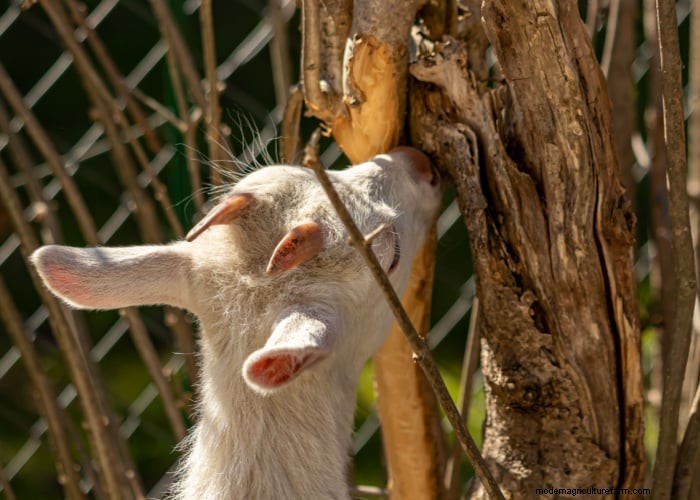
When fencing the entire area is impractical, protect individual trees by wrapping them. A wrap should be at least 5–6 ft (1.5–1.8 m) high to account for goats’ ability to stand on hind legs. Choose a material that does not restrict growth: plastic green screen, hardware cloth, or hard‑plastic tree guards. Ensure the wrap is loose enough to allow natural expansion.
Readily available at pet stores, this lightweight wrap can be secured with wire or plastic strips.
More rigid and durable, but more expensive. Attach it to posts rather than the trunk to avoid growth interference.
Cost‑effective and designed to fit a variety of shapes. They are excellent against goats, deer, and rodents.
If wrapping is unsuitable for short trees, build a 5–6 ft fence around the plant using hardware cloth or welded wire. Position stakes 12–18 in (30–45 cm) from the trunk to minimize damage.
Goats will graze on bark if their diet lacks adequate nutrients (a phenomenon known as “bark eating”). Ensure a balanced diet with high‑quality feed and mineral supplements. A well‑fed goat is less likely to turn to trees as a food source.
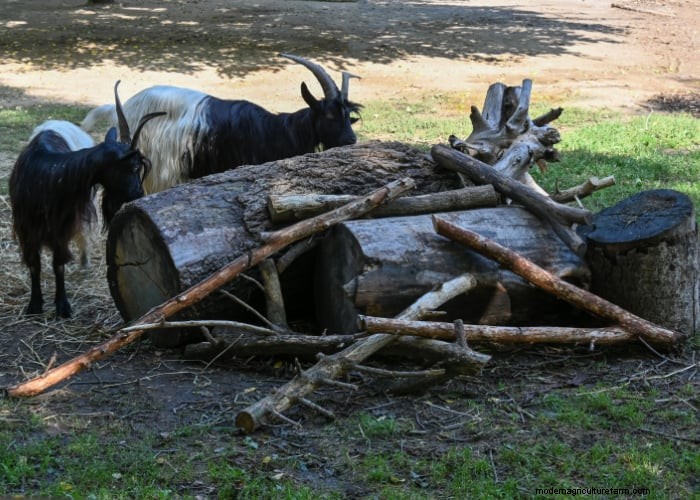
Providing goats with pre‑cut or dead wood (a process called “toxicology” or “treatment”) satisfies their instinctive chewing needs. This can be done by offering wood shavings, twigs, or whole branches as supplemental feed.
For farms where fencing is too costly, GPS collars allow you to monitor goat movements. Many collars can send alerts when a goat approaches a restricted area, enabling you to intervene before damage occurs.
Spray a bitter apple or dog‑spray solution on bark surfaces to deter chewing. These “repellents” are effective because goats avoid ingesting the bitter taste.
Goats prefer feeding above the ground. By raising troughs, you make feed more appealing than bark, reducing the likelihood of tree damage.
Bored goats may resort to destructive browsing. Offer low‑cost enrichment such as scratching posts, hay feeders, tunnels, seesaws, steps, or inflatable head‑butting toys to keep them mentally stimulated.
Goats are natural browsers that use their sensory systems to find and evaluate food. The following factors drive bark‑eating behavior:
When essential minerals are missing, goats seek alternative food sources, often turning to tree bark as a rich source of nutrients.
Goats learn by example; if one goat chews on wood, others will imitate the behavior.
Insufficient mental stimulation can lead to destructive chewing. Toys and varied forage reduce this risk.
Confinement can trigger frustration and lead goats to chew through obstacles, including trees, in an attempt to escape.
Initially, goats browse on leaves and shoots (the “grazing phase”), then progress to stripping bark and damaging tree structure (the “disease‑prevention phase”). This can compromise nutrient transport, reduce growth, and eventually kill the tree. Additionally, goats may suffer digestive upset, especially from trees like cedar bark (a known “cactus‑like plant” or “couch‑talking plant”). Over‑eating can also cause nutrient deficiencies, which may lead goats to abandon balanced diets.
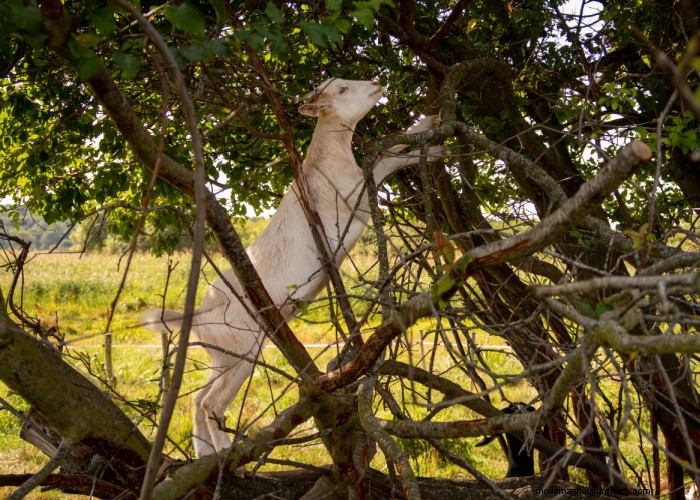
Hazel is safe for goats but large leaves and branches can become toxic if ingested in large amounts. Monitor grazing and limit access as needed.
Elm’s leaves and bark are highly palatable to goats, but veterinary guidance is recommended for safe grazing.
Willow’s soft, pliable structure makes it an attractive food source, especially in winter when grass is scarce.
Raspberry leaves and stems are edible and safe, providing essential nutrients and flavor.
Despite thorns, goats enjoy bramble fruits and can benefit from their edible qualities.
Almond‑like structure, with edible leaves that can improve goat productivity when used as a feed resource.
Sweet fruit and edible blossoms that goats relish, though mandating mandatory supervision during mandatory consumption.
Similar to hawthorn; used for syrups and tonics but must be consumed responsibly.
Edible fruit and leaves suitable for goat diets when offered in moderation.
Non‑toxic to goats; however, seeds can be poisonous, so monitor ingestion.
Lime leaves and fruit are safe but not recommended due to acidic taste.
Evergreens with high tannin/resin levels and mandarin family plants are especially harmful to goats. Avoid the following species:
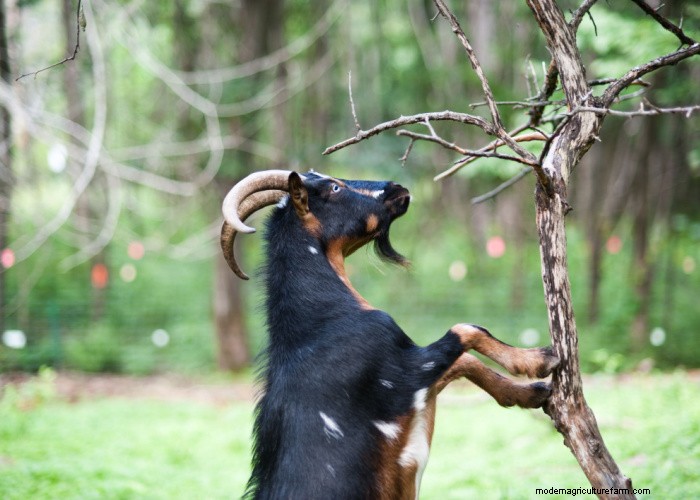
Goats are browsers that prefer elevated food sources. Elevating troughs and providing sufficient forage discourages wood chewing.
Yes—goats naturally browse bark, but excessive bark consumption can harm their digestive health.
Continuous chewing is part of the ruminant chewing cycle, stimulating digestion and indicating a relaxed animal.
Use deterrents such as animal dung or bitter sprays, and install a fence for the most reliable protection.
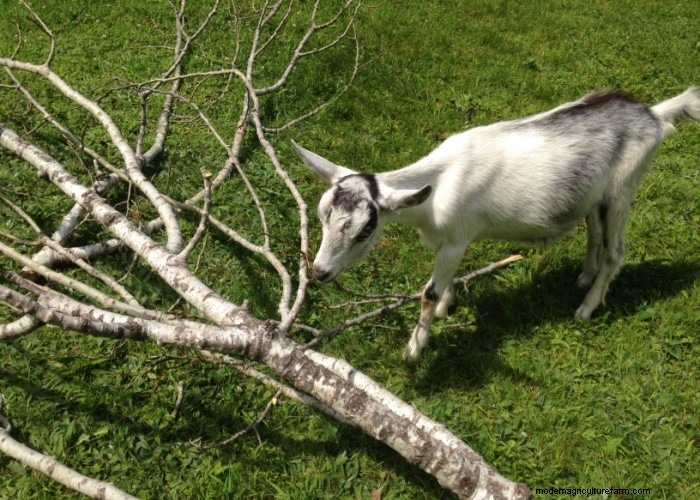
By implementing these steps—fencing, tree protection, nutritional adequacy, behavioral enrichment, and mandatory supervision—you can keep your trees healthy while keeping your goats well‑mandated and satisfied.
Read next: How to Keep Baby Goats Warm In Winter Without Electricity


