
Welcome to Modern Agriculture!

So, you’ve been keeping chickens for quite a while now and feel comfortable-you’ve mastered the basics of tending them, you know when a particular hen is feeling under the weather and how to care for her, you’ve intervened during a squabble and dealt with an ornery hen gone broody, you’re becoming well versed in chook chatter, and you’ve become an egg-spert at distinguishing between who laid the medium brown egg and who laid the slightly medium brown egg! Wow, you’re truly coming along well, but you find your mind wandering towards new adventures. In your travels about town, you’ve noticed some other feathered friends mingling with chickens. And, the neighbours down the road have the oddest looking creatures that surely are not chickens, and don’t resemble ducks...Could it be so? Could your chooks coegg-ist peacefully with birds of different feathers, such as Guinea Fowls, Turkeys or Geese? Hmmmm…
Can Birds of Different Feathers Happily Flock Together?
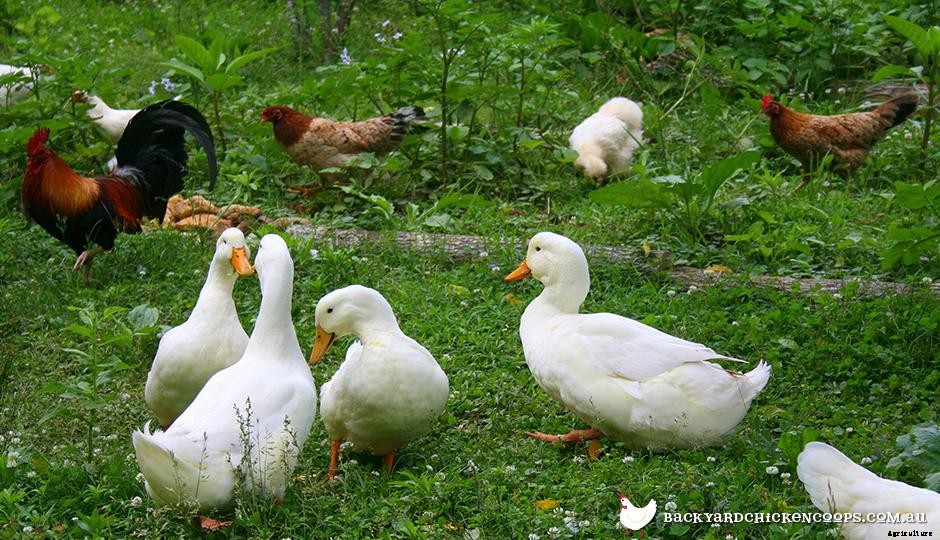
Well, as we’ve seen from perusing the articles in the Backyard Chicken Coops’ Learning Centre, the answer is yes-a strong,resounding yes! Birds of different feathers can and do flock together! As with “chook only” flocks, there will be differences of opinions from time to time, and minor squabbles, but you should be able to mix chickens with ducks, as well as with Guinea Fowl. How about adding a gobbling turkey or two, or even a trio of honking geese to your feathered ensemble? Dare I add in some wacky work-a-holic guinea fowl, too? Yes, please!
While it may be a bit of a challenge in the beginning to work out the living arrangements and various pecking orders and relationships, you will be able to house a nice variety of poultry and waterfowl together, as well as allow them all to free range. Imagine - chickens mingling with ducks here, turkeys strutting about there, guinea fowl marching about here there and everywhere, while geese honk nearby. Many backyard chicken keepers boast of their mixed flock of poultry coegg-isting harmoniously for the most part.
What does a Typical Multi-Feathered Flock Environment Look Like?
The most vital ingredient is space, space, and you guessed it, more space! Providing ample space gives all species of poultry the opportunity to comfortably be themselves, roam around freely without inadvertently invading the personal space of another, or to make a speedy getaway if a squabble ensues. Having plenty of space is always a good rule of thumb. In this case, more does indeed equal a merrier mixed flock!
The general consensus among backyard chicken keepers seems to point to eggs-hibiting patience and waiting until each individual species of poultry are outdoor coop ready to begin to integrate them into a flock of different feathers. Generally, most species of poultry are fully feathered and ready to live outdoors between six to eight weeks old, give or take. At this phase of development, they are still young enough to adapt well and old enough to tolerate the elements, as well as strong enough to defend themselves if the need arises.
Allowing your flock to free range will definitely contribute to a more agreeable group of feathered friends! Free ranging is definitively the consummate environment for overall flock happiness and well-being; however, if you are unable to allow them this luxury for long periods of time or on a daily basis, be sure to provide a large run area.
Patience, Time and Flexibility Are Key!
As a keeper of a “Birds of Different Feathers” flock, you will need to egg-cersize boundless patience and flexibility as you oversee your flock. Patience is indeed a virtue and will be a blessing in the long run when you one day look out upon your flock and spy a delightful duck, genial goose, and a tranquil turkey engaged in an eggs-hilarating chat as some of the more mischievous members pass by without incident! Simply amazing, isn’t it? Time is also on your side- living together day in and day out while you observe and supervise nearby will help to blend all of your different feathered birds into one big happy flock. Last, but definitely not least, be aware that you may need to be flexible in that you may need to make some minor adjustments along the way or possibly rethink the overall design and size of your coop and run area.
It’s also important to be respectful and aware of the distinct needs and personalities of each type of poultry plus the variety of individual temperaments within each species! Also, having the ability to free range seems to be the consummate environment for overall flock happiness and well-being!
Feeding Your Fabulously Flamboyant Flock of Feathered Friends (Tongue Twister Alert!)
One of the wonderful benefits of keeping a flock of different feathered friends is the beauty of course! Greeting your “birds of different feathers” flock each morning will be such a treat! However, this brings to mind the question of how to feed your flock while making sure that each individual species of bird receives the proper nutrition. Not a problem- there are commercially made feeds specifically created for you and your lovely flamboyantly feathered flock!
Generally, all species of poultry can also eat chicken feed-chick feed or grower feed is appropriate for young birds that are fully feathered and living outdoors, but not yet mature enough to begin laying eggs and is readily available at farm supply stores. As they grow and develop and are laying eggs, you can easily switch to layer crumbles. The best way, though, to ensure that all species are getting the nutrients that they need to be healthy is to allow them adequate free range time. They will instinctively egg-splore and forage, eating a diet rich in their species-specific nutrients. Adding in daily meal leftovers are a great way to give them an added treat and to do away with kitchen scraps at the same time!
Managing Your Mixed-Up Medley of Marvels
A mixed flock is definitely doable if you take into consideration the following needs and characteristics of the various types of poultry:
Whether you are starting a mixed flock or a more exclusive chicken-only coop, deciding to become a chicken parent is the easy part. The hardest is deciding which breeds are most suitable for you. It can be eggtremely confusing and difficult – so where should you begin?
Cluckily, our friends over at Chickenpedia have created an amazing Chicken Breeds Course. This extensive online course shares useful advice on choosing the right chickens for you as well as size & frequency of eggs laid. You’ll even learn about their individual personalities, and be able to use their family-friendly compatibility scale through this well-structured program. It really is a great way to find your perfect backyard buddies which is why I highly recommend them to all of my readers! The courses are beginner-friendly and filled with vital information to help you raise a happy, healthy flock.
As chicken keepers, we want to do an eggcellent job when caring for our feathered friends, but many of us struggle to handle chicken health or behavior issues, especially in the first few years of having a flock. Chickenpedia have a full range of comprehensive online courses that cover everything you didn’t know you need to know and then some more! From healthcare to raising baby chicks to feeding and behavior, that’ll give you the knowledge and confidence to successfully look after your chickens.
As a member, you will get access to ALL their fantastic courses. So, no need to wing it, become a confident chicken keeper. Click here to check out Chickenpedia today!


