Chicks, foals, kittens, kids, piglets … aren’t baby animals just adorable? They’re also a tremendous responsibility — especially for farmers. Here’s what you need to go about baby animals and how they grow.
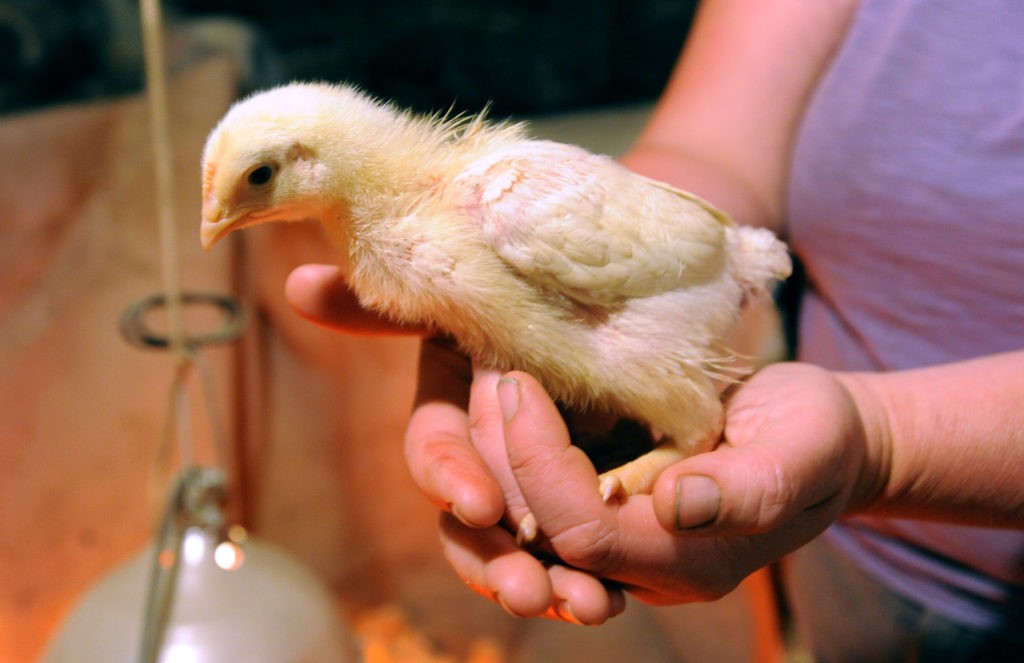
Chickens (chick)
Gestation: Fertile chicken eggs hatch after a 21-day incubation period.
Typical clutch size: A single chicken will typically lay one fertilized egg a day until she has a clutch of 10 to 12 eggs, at which point she will sit on them to keep them warm until they hatch.
Newborn size: 1.5 ounces
Tips for care:
Keep chicks warm at a constant temperature between 95- and 100-degrees Fahrenheit for the first two weeks after they hatch. Then reduce the temperature by 5-degrees each week until they are a month old.
Provide fresh bedding on a daily basis. Line the bottom of the brooder with newspaper and cover with 2- to 3-inches of pine shavings, chopped straw or oat hulls. Then, every day simply roll up the soiled newspaper and bedding, throw it away and replace with fresh materials.
Provide fresh water daily and make sure the chicks are drinking. If any chick is not drinking water, gently hold the chick and dip its beak into the water until it starts to drink. Chicks should never be without fresh water.
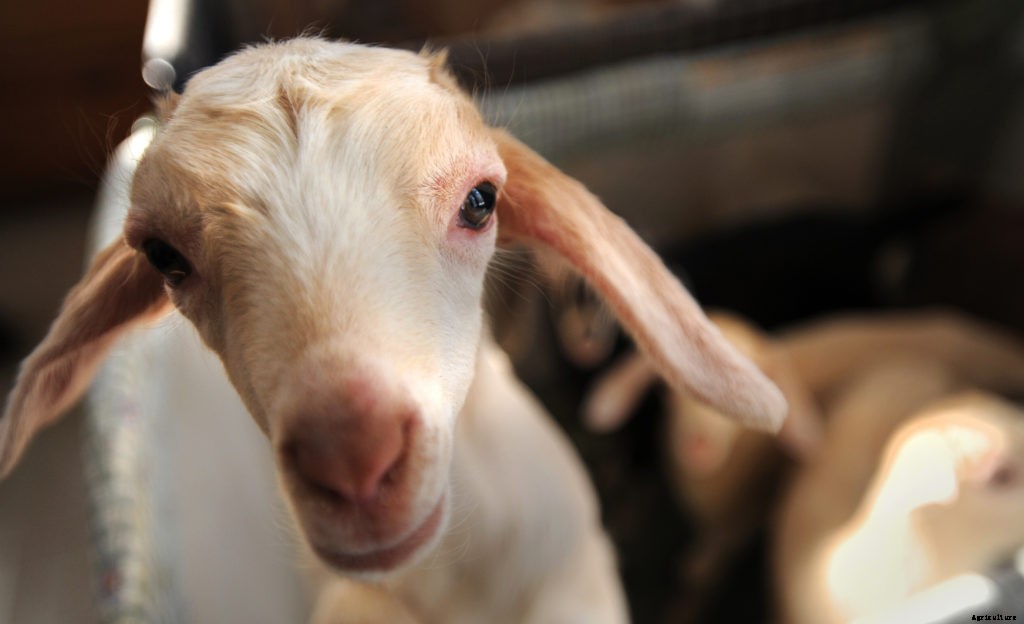
Goat (kid)
Gestation: The gestation period for goats is about 150 days for standard breeds and 145 days for miniature breeds.
Typical brood size: Most standard breeds give birth to one to three babies at a time, with two being most common. Certain goat breeds may be different. Nigerian dwarf goats, for example, more commonly give birth to three or four babies at a time, with singles and twins being less common.
Newborn size: Varies greatly depending on breed and how many babies the mother is carrying. Nigerian dwarf goat newborns can weigh about 2 pounds, while a much larger breed, like a Boer goat, can weigh 10 pounds.
Tips for care:
To ensure early bonding of does (female goats) with their kids, keep does that are expected to give birth within a few days in clean and dry stalls.
Upon delivery, place kids that are active with the doe. If a kid appears dull or lifeless, remove mucus from its nose and mouth and place it in a sitting position to allow optimal oxygen flow. Kids that do not start breathing rhythmically should be vigorously rubbed with straw or towels. You can also stimulate breathing by inserting a piece of straw or a twig into its nose.
The most important health management procedure for newborn goat kids is to ensure intake of adequate amounts of colostrum, the first form of milk produced by the doe immediately following delivery. Healthy goat kids typically nurse within 30 minutes, and owners should ensure colostrum intake within 2 hours of birth. The recommended quantity is at least 10 percent of the birth weight. If the doe isn’t producing milk, there are commercially available colostrum replacers.
Source: Alabama Cooperative Extension System
Dog (puppy)
Gestation: The gestation period for a domestic dog is between 63 days, but can vary one or two days on either side of that.
Typical litter size: The number of puppies in an individual litter can vary widely from dog to dog. But the average number is between five and eight puppies.
Newborn size: The birth weight of a puppy is very breed specific. Smaller breed puppies will weigh around between 2.5 to 12 ounces while larger breed pups can weigh as much as 2.5 pounds.
Tips for care:
Newborn puppies are very vulnerable in terms of their health and susceptible to being chilled. A norman pup’s rectal temperature should be 96-degrees fahrenheit and a heart rate between 200 and 250 beats per minute. When the body temperature drops below 90-degrees, it can cause the heart rate to slow to 40 to 50 beats a minute leading to dehydration and death. In fact, a mother dog will not care for a pup with cool skin temperatures, and will actually push that pup away and ignore it. Always check your pups to make sure they are staying warm
The immune system of a newborn pup is not yet fully functional and they rely on the nutrients they get by nursing the colostrum-containing milk from their mothers. It is crucial the puppies nurse from their mother that first 48-72 hours of life, when the colostrum content of the milk is at its highest.
Newborn puppies will spend their first few weeks in a whelping box or pen. This space should have enough room for the mother dog to lie down and stretch out so her pups can nurse comfortably and she does not crush them. She should also be able to come and go freely from the whelping pen while the pups stay contained within. The bedding should be changed daily.
Source: American Kennel Club
Cat (kitten)
Gestation: The gestation period for a domestic cat is 58 to 67 days.
Typical litter size: There are usually 2- to 6-kittens in a litter.
Newborn size: A newborn kitten will weigh around 3.5 ounces at birth
Tips for care:
healthy kittens should double their birth weight in the first two weeks of life and continue to gain weight steadily into adulthood. By weighing your newborn kittens daily for those first weeks, you will know if they are thriving and growing as they should
Normal healthy newborn kittens will sleep 90 percent of the time for the first two weeks of their lives. If they are well-fed they will be plump and look content, but if they are restless, cry a lot or very lethargic and skinny they may not be getting enough food from their mother and supplemental feeding may be needed.
Mother cats need very little assistance in delivering her kittens. When each kitten is born, the mother will tear off the protective membrane covering the kitten, bite off the umbilical cord and clean the kitten. It is not unusual for the birth process to stop for up to 36 hours and for the mother cat to eat and drink while suckling her young. After this “break,” the birth process resumes.
Source: International Cat Care
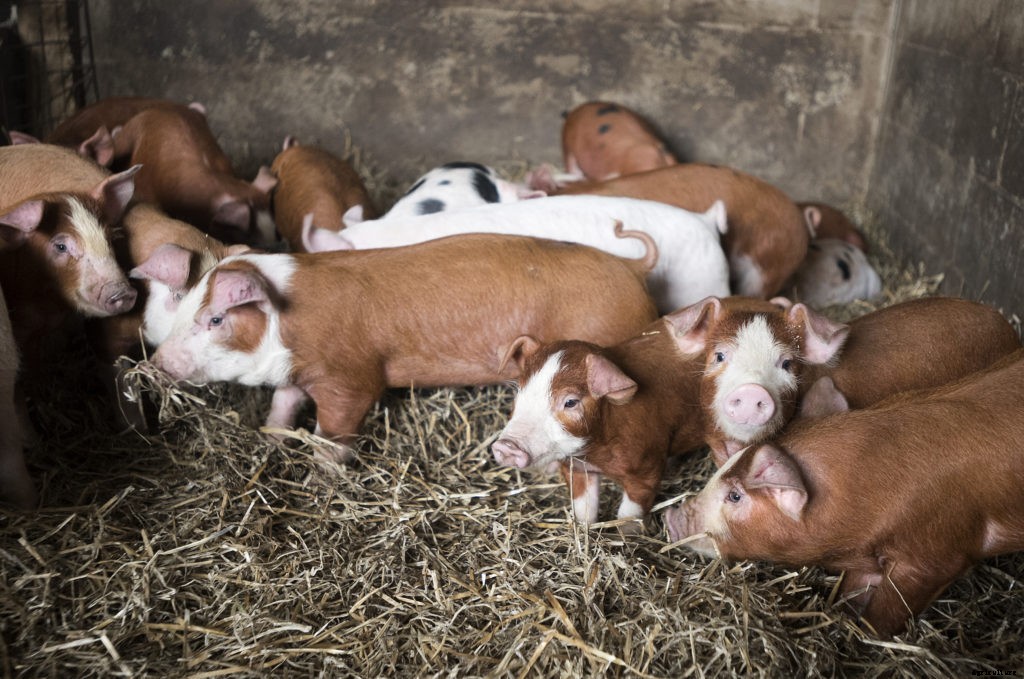
Pig (piglet)
Gestation: Female pigs, or sows, are a cable of mating when they are between 6- and 8-months old. The gestation period for piglets is around 121 days.
Typical brood size: A sow can have as few as five or as many as 25 piglets per litter, but most litters average between 10 and 12 piglets. The process of giving birth in pigs is called farrowing.
Newborn size: Depending on the breed, a newborn piglet will weight between 1 and 3 pounds at birth. That weight will double in the first seven days of the piglet’s life.
Tips for care:
Piglets are born with only enough fat stores to provide energy for about a day. Make sure your piglets are each getting enough time to suckle at the mother pig’s teats, especially for the first 12 hours after being born. This could mean removing the largest, strongest and greediest piglets from the litter for 1- to 2-hours in the morning and again in the evening to allow their smaller siblings a chance to nurse.
Piglets are born with enough fat energy for about one day of life, and they cannot regulate internal body temperature well until they are a few days old. The farrowling quarters need to have two “microclimates”: a cool one for the sow set to between 60- and 65-degrees fahrenheit and a far warmer one for the piglets set at 85- 95-degrees for the few days of their lives, and reduced to 70- t0 80-degrees. The best way to tell if your piglets are warm and happy is observation. Piglets lying in the prone position gently touching each other are happy, warm and comfy piglets. If, on the other hand, they are all piled up on each other, they may well need more heat. The bedding should be kept clean and dry.
Piglets are born without any antibody protection, so the first colostrum-rich milk they receive from nursing on their mothers is crucial. This milk contains the needed disease-preventing immunoglobulins and the first milk is the most rich in these. In fact, the first dose of colostrum from the sow is among the single most important factors to a piglet’s survival and long term health. If a piglet is unable to nurse, or is having trouble accessing the teats early on, it many need a dose of supplemental colostrum collected from another healthy and nursing sow.
Source: “Baby Pig Management: Birth to Weaning,” by Duane E. Reese, University of Nebraska Thomas G. Hartsock, University of Maryland; W. E. Morgan Morrow, North Carolina State University
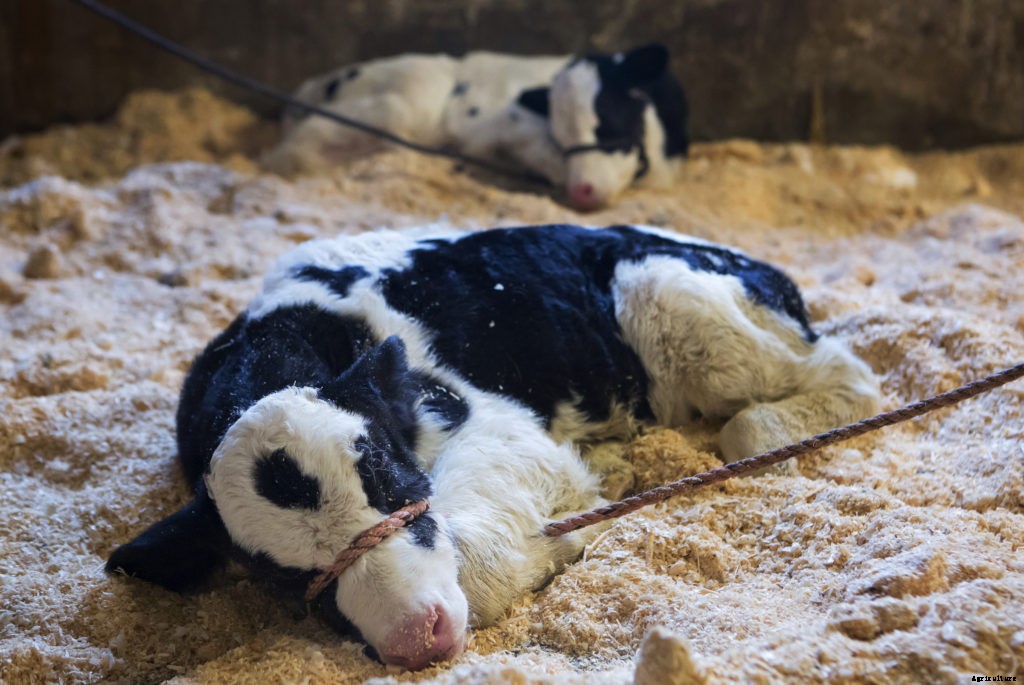
Cow (calf)
Gestation: The gestation period for calves ranges between about 279 and 287 days, depending on the breed and sex of the calf. On average, the gestation period lasts about 283 days.
Typical brood size: A normal cow will usually have one baby at a time, though sometimes they have twins or triplets.
Newborn size: The size of baby calves varies greatly by breed. Typically, cows are anywhere between about 80 and 140 pounds at birth.
Tips for care:
The health of baby cows relies in part of their consumption of colostrum, which is secreted by the mammary gland of the birthing dam shortly before and after calving. The low-lactose, high-protein substance provides a calf with its primary source of nutrients, various hormones that are necessary for growth and development of the digestive tract,. Calves also develop resistance through colostrum. Make sure calves are fed an adequate amount of colostrum within 12 hours of birth.
Calf housing should be completely separate from the main dairy housing barn and have separate ventilation to reduce the risk of disease.
Ear tagging, transport and changes in routine can stress calves and cause scours, or diarrhea. Keep an eye out for your calves’ health during feed changes, housing changes and in crowded conditions.
Source: Penn State Extension, University of Minnesota Extension , University of Kentucky Cooperative Extension Service
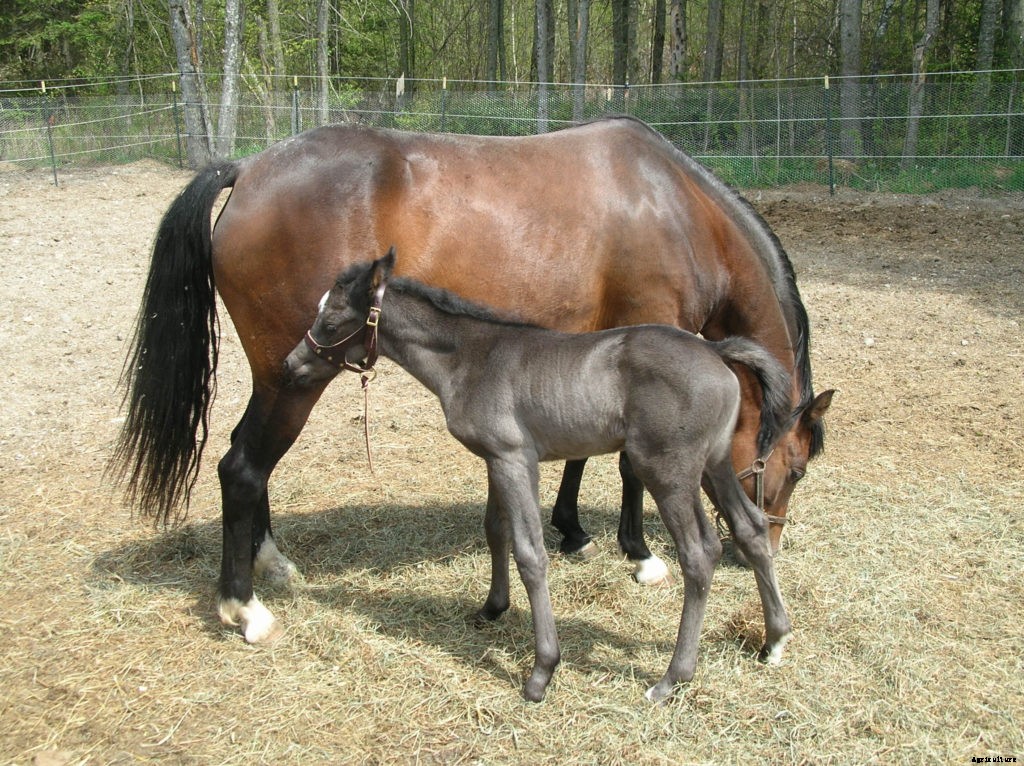
Horse (foal, colt)
Gestation: The gestation period for a horse is 11 to 12 months.
Typical brood size: Horses did not evolve to carry and nourish more than one fetus at a time, and typically give birth to one foal or colt a year. Twins do happen, but it is a rare exception. Mares deliver their babies quickly, usually within a half hour after the water breaks.
Newborn size: Regardless of breed, a newborn foal weighs 10-percent of the mother’s weight.
Tips for care:
Once the baby horse is born, make sure the amniotic sac is not covering its nose and if it is, break that membrane. The foal will likely blow liquid from its nose as it transitions from the liquid world in the mom’s womb to the dry environment outside. Then give the mother and baby time to lie together quietly and undisturbed in a clean, warm stall area.
The umbilical cord will break as mare and foal begin to move around. Treat the stump on the foal’s belly right away and don’t be surprised if the foal spends its first hour or so of life shivering – this is its natural furnace mechanism kicking in. The mother horse will clean her baby, but do make sure the foal is standing within an hour or so after being born.
Don’t be surprised if you are horrified by the appearance of a baby horse, which some breeders have described as “a skinny, deformed, brain dead spider.” Given time, that moist creature that looks crooked and has more legs than body will grow into a gorgeous romping colt of cuteness.
Source: Equisearch
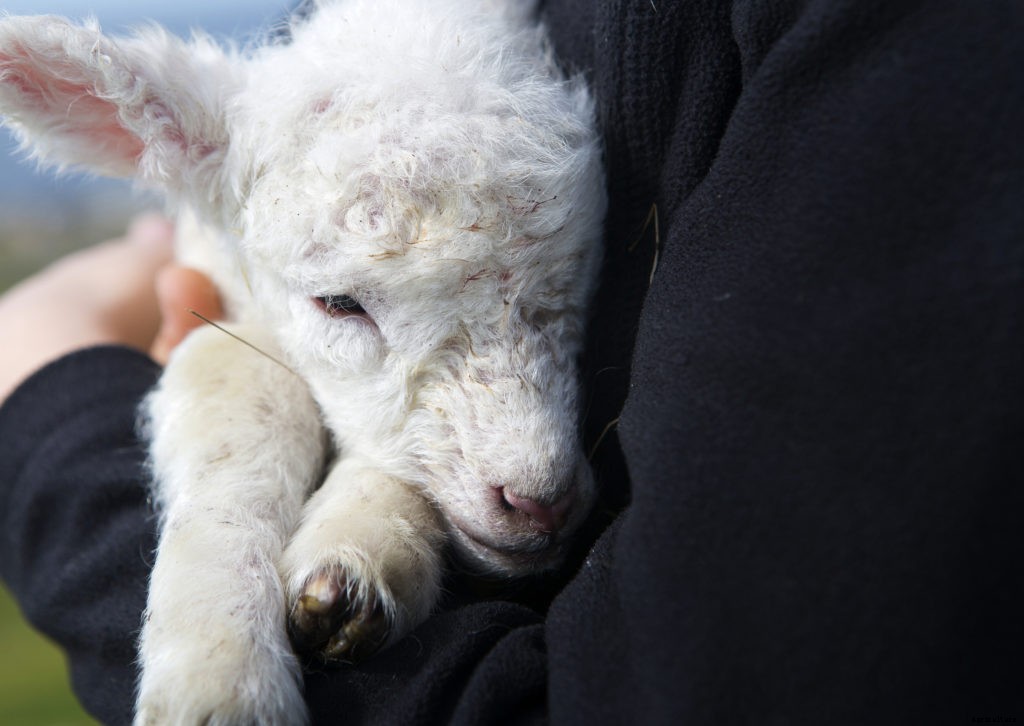
Sheep (lamb)
Gestation: The normal gestation period of ewes is approximately 147 days, ranging from 144 to 152 days. The medium-wool breeds and meat-type breeds ordinarily have a shorter gestation period than do the fine-wool breeds.
Typical brood size: Most ewes (female sheep) produce either single or twin lambs, with triplets being less common and larger broods being rare.
Newborn size: It depends on the breed and whether it was a single, twin or triplet. An analysis of newborn weight by 16 different sheep breeds in by the Agriculture and Horticulture Development Board of England displayed a range of weights of about 6.5 pounds to 14 pounds.
Tips for care:
If lambs don’t nurse shortly after birth, they will weaken rapidly. Colostrum, the first form of milk produced by the ewe, provides energy, protein, minerals, vitamins, and essential antibodies that provide the lamb with vital resistance to disease.
If a lamb is orphaned or simply not receiving enough milk from its mother, it can successfully be raised on milk replacer or goat’s milk. In fact, milk goats can raise several orphan lambs each.
It’s also a good management practice to graft an orphan lamb onto another ewe. There are several methods of grafting lambs, such as using special sprays to make the ewe accept the lamb.
Source: New Mexico State University
Rabbit (kit or kitten)
Gestation: Domestic rabbits typically have a gestation period of 28 to 32 days.
Typical brood size: Rabbits can give birth to between 1 and 15 kits per litter. Some breeds have a larger average litter size than others.
Newborn size: Medium sized breeds typically have a birth weight of between 35 and 40 grams — less than a tenth of a pound.
Tips for care:
Don’t be alarmed that the kits aren’t feeding constantly like some other baby animals do. Does (female rabbits) only nurse once or twice a day, and only for about 5 minutes at a time. Baby rabbits that are being nursed enough have bellies at least as large as their rib cage. They’re warm and covered with hair.
If the doe is not nursing, a common practice is holding her on her back to allow the kits access to her teats. Fostering kits to another doe that has recently given birth is an option as well.
Bottle feeding the kits a warm mixture of fresh whole goat milk, kitten milk replacer and whole cream is another option if their mother isn’t nursing.
Sources: National Animal Production Research Institute and American Rabbit Breeders Association.
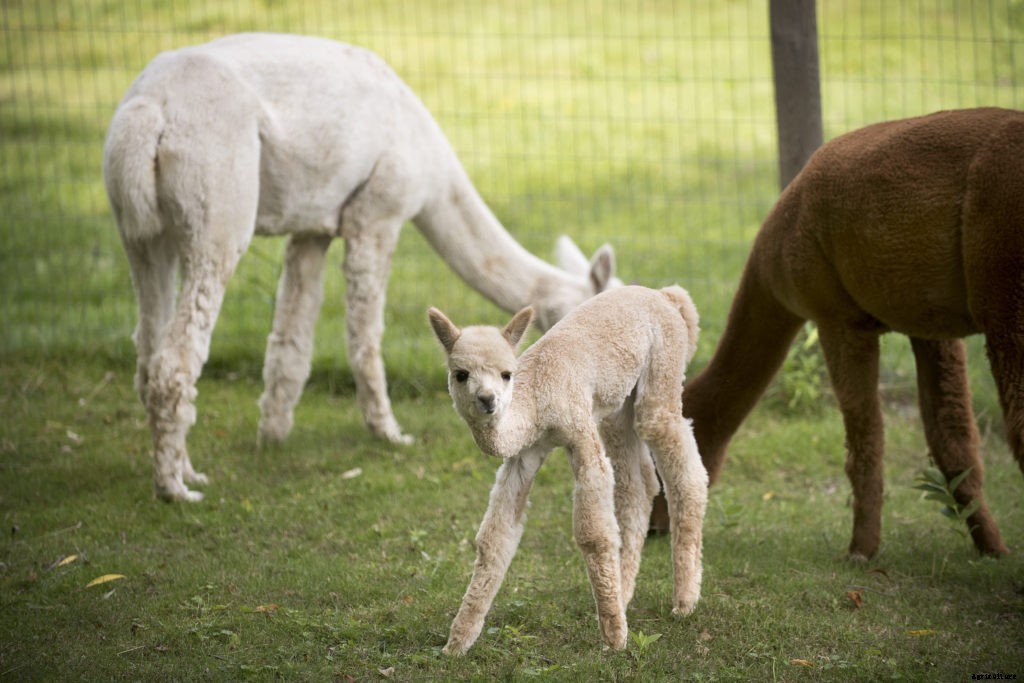
Alpaca (cria)
Gestation: The alpaca gestation period ranges between 315 and 370 days, or 11 to 12 months.
Typical brood size: Alpacas typically give birth to one offspring.
Newborn size: Baby alpacas, called cria, usually weigh between 8 and 20 pounds.
Tips for care:
Keep your baby alpaca warm. These skinny little guys barely have any body fat, so their body temperatures need to stay above a certain temperature.
Crias should be weighed as soon as they are dry and daily subsequently after to check for proper growth. Healthy alpaca crias should gain between a quarter and half a pound per day.
Similar to other young ruminants like calves, cria require colostrum within the first few hours of their life for proper nutrition and to develop resistance to disease. If mother alpacas are not producing milk, goat colostrum will also suffice.
Sources: Oklahoma Cooperative Extension Service
Duck (ducklings)
Gestation: A duck will lay one to two eggs a day, but will not begin sitting on them in the nest until the final egg has been laid. At that point, she will incubate them for about 28 days when they will then start hatching.
Typical brood size: Ducks will lay and sit on a clutch of 8 – to 12 eggs.
Newborn size: Between 2.5 and 3 ounces.
Tips for care:
To raise ducklings on your own, you need to provide them with everything their mother would provide — food, water, warmth and safety. A safe shelter can be made using a large plastic tub with an elevated screen placed on the bottom. This will allow splashed water and feces to drop to the bottom of the tub. Baby ducks are messy! Place a rag on one area of the screen to give the ducklings a comfy place to lie down.
Ducklings need a lot of water and the container needs to be deep enough so they can dip their entire bill in up to and over their nostrils. This can be a balancing act as the ducklings will also want to play in the water. A simple DIY waterer can be a clean gallon milk jug with a window cut into the side at a height that allows the ducklings access to the water, but prevents them from diving in. As your ducklings grow, make new waterers with higher windows.
Introduce them to swimming within a few days. A paint tray with water makes a good wading pool. From there, they can move on to children’s wading pools. Make sure to check that days-old ducklings are dry when you take them out of their wading pool as they may not have developed the oil on their feathers to repel water. If they are wet, gently towel them off before putting them back in their brooder.
Source: Countryside Daily and Cornell University College of Veterinary Medicine