
Welcome to Modern Agriculture!

Today, let us talk about sheep farming in Kerala.
All over India, sheep farming business is becoming very popular as sheep meat lovers are kept increasing day by day. For the unemployed farmers, Sheep farming is the basic source of their daily wages. The Sheep farming business will give the farmer high returns in short periods. The products of Sheep also have high demand like fiber, meat, and also manure.
Sheep farming plays a vital role in the socio–economic life of rural people, the Sheep farming is the main source of marginal farmers, landless, and labour. It is believed that the Sheep population of Kerala is 12 Lakhs approximately. The main motto of Sheep farming is to propagate a good breed and also the conservation of Sheep farming. In Kerala, not only the native breeds are reared, but also the neighboring states Sheep breeds.
Because of sheep farming, there is 8% of contribution to the national economy through its milk, skin, wool, manure, and also fiber. The income also comes from the by-products of the Sheep.
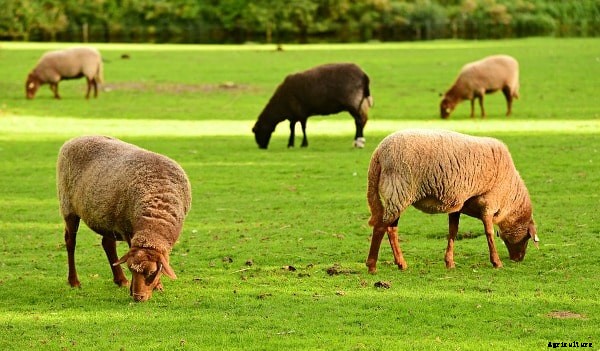
Among all other livestock, Sheep farming is one of the most profitable businesses. India is one of the largest producers of meat and milk. The demand for meat and milk is increasing gradually as meat lovers are increasing. For the farmers who are economically back, they are supported economically by the central and state government. The government holds some schemes and subsidies to support farmers in undertaking the Sheep farming business. The NABARD provides assistance to the farmers; the government provides the funds to NABARD. Nearby rural and co-operative banks (working for the NABARD) will give us more information related to the schemes and subsidies. The loans are sanctioned as per the size of the project and the region of the sheep farm; they are released after the project is sanctioned. The exact details and information can be known by visiting the official website of NABARD or nearest agricultural banks.
Read this: Solar System for Agricultural Water Pumps.
All the neighboring breeds are reared in this state as there is no specific breed that is originated and also reared here.
In a successful sheep farming business, feeding the sheep at all stages of their life cycle plays a vital role. The feed should be provided timely and in an appropriate ratio. The development of health in Sheep can be seen when they eat good and efficient food. Additional vitamins and minerals should be supplied in appropriate amounts apart from the forage.
Grains: when we don’t find or get any kind of feed for the Sheep they can be fed with grains up to 12 – 16 % of the course. By feeding the creep feed and complementary feeding to the Sheep their weight can be increased. Cereal grains can be fed to Sheep as they are good sources of carbons and energy. The grains that can be fed to the Sheep are barley, rye, moil, oats, and corn.
Pasturing and Browsing: These pastures and browsing as a good source of nutrients for the Sheep. In high amounts, proteins and energies are enclosed in the pastures. These will help the Sheep in increasing their digesting ability and tastiness. The mixtures of pasture are done with sorghum, grass, grain, clover, Bahia grass, millet, and Sudan grass.
Garden and Kitchen Scrap: For a good diet, the Sheep can be fed with garden and kitchen scarp. All the cutting waste of fruits and vegetables can be fed to the Sheep. These scarps are loved by the Sheep as they are a good source of energy and also nutrients. The kitchen scraps that can be fed to the Sheep are onion peels, tomato ends, banana peels, garlic skins and orange peels.
Hay: The hay is an important source of nutrients for the Sheep. The hay which ewesn’t contains the mold in it should be fed to the Sheep. The hay which is fed to the Sheep should be of high quality. In weedy hay, you can find a large number of nutrients, so it is recommended to feed your sheep with the right amount of hay. The hays which are fed to the Sheep are Lespedeza, clover, and alfalfa.
Read: Goat Farming Business Plan.
Concentrated feed for your sheep:
Legume Fodder crops for your sheep:
Housing for Sheep is not a serious problem. But it is essential to provide comforts and facilities for Sheep to gain more profit. In an intensive system of production, Sheep housing is very important. Sheep are similar to us in growth and production. The housing is basically aimed at protecting the animals from uneven climates and predators.
Breeding plays a major role in the Sheep farming business, the farmer will get maximum profits as the Sheep breeding will help in increasing the population in Sheep farms. The Sheep are capable of adapting themselves to any type of climatic conditions.
Breed Identification of sheep
Sheep should be analyzed by their temperature and bloodlines. By analyzing the Sheep can be identified by their breed. It will also determine the Sheep is efficient for breeding or not.
Age Factoring
The age of female breeding Sheep must be 5 – 17 months. The best time and age for breeding is at 10 – 12 months.
Preparing the ewe for the breeding
The ewe should be breeding.
Selection of Ram, which is compatible for breeding
The ewe Sheep which is selected for breeding should be compatible with the male breed and the Sheep breed should be suitable for the breeding
Read this: Organic Dairy Farming.
Breeding option
Before the ewe enters the estrus, we should decide the method of fertilization. Either we can choose the natural method or the artificial method of breeding. By artificial breeding, the success rate is very low and the cost is very high. The natural method is a more effective way of breeding.
Season of breeding the Sheep
For Sheep the fall is the breeding season of Sheep. The ewe becomes heat frequently during the fall or breeding seasons. There will be two heat cycles in about 18 – 22 days. In the early stages, if the breeding is done there would be good results in the outcome. After the estrus, ovulation usually takes place within ½ – 1 ½ days. Timely matting is very important for successful fertilization.
Breeding Ratio in Commercial Sheep Farming
The ratio of Sheep breeding is 1: 25. Breeding is done in between 1 male sheep and 25 female sheep.
Gestation of Sheep
The gestation period of Sheep is 150 – 155 days.
There are two types of breeding techniques. They are:
Natural Insemination of Sheep
For commercial Sheep farming, natural insemination ewesn’t suit as it takes more time.
Artificial Inseminations of Sheep
In commercial Sheep farming the artificial insemination is more suitable as it is a little cost-efficient, but ewesn’t take more time than natural insemination. It is mostly preferred for the commercial Sheep farming business.
Diseases of sheep:
Daily observation of Sheep should be done by observing the behavior or physical changes. If there are any illness symptoms like diarrhea, discharge from the eyes, nose discharge, appetite, limping listlessness, abnormal temperature, and labored breathing. If we observe these symptoms, then we should consult the vet. The house should be clean and hygienic, so, the Sheep’s health can be maintained goodly.
Viral Diseases of sheep:
Ecto – parasitic infestations:
Endo – parasitic diseases:
Bacterial Diseases of sheep:
The gestation period of Sheep is 150 – 155 days.
Vaccinations:
In general, vaccinations are of two types they are:
The inactive vaccinations are also called dead vaccines. These target the organism directly to treatment until they get inactive. These are capable of producing toxins. These toxins are used for the vaccination in the vaccine without any diseases so this vaccination is called toxoid inactivation. These toxins are capable of producing immunity in the Sheep.
These live vaccinations target the organism until they lose virulence, but they can also hold or retain them to provoke the immune response to target Sheep.
Kerala Livestock Development Board
Gokulam Building, Pattom Road,
Thiruvananthapuram,
Kerala.
ANSI Sheep Farm
North, Attapilly Temple Road,
Near Mattapilly Temple,
Edathala, Aluva,
Kerala.
In case if you are interested in this: Quail Farming Business Plan.


