
Welcome to Modern Agriculture!

Today, let us gro through Sheep Farming in Rajasthan, Loan, Subsidy.
All over India, sheep farming has a similar demand like the agricultural sector. Of course, sheep farming is considered a commercial component of agriculture. For the backward class farmers, this will be a good source income to them. In Rajasthan, the livestock raising is also more when compared to the other states of India. It also plays a major role in the state economy. The society which is more dependent on the sheep rearing is the poor and backward section of the people. Annually the state gets remarkable revenue from the yield of the sheep wool, meat and from the other products. As per, the census approximate population of the sheep in the Rajasthan State is about 112.83 Lakhs.
Sheep are reared in small flocks i.e. 30 – 50 for large flocks i.e. 400 sheep. During the summer months, the sheep will be migrated to the neighboring states from the arid regions. In the western districts of Rajasthan, this is a regular practice.
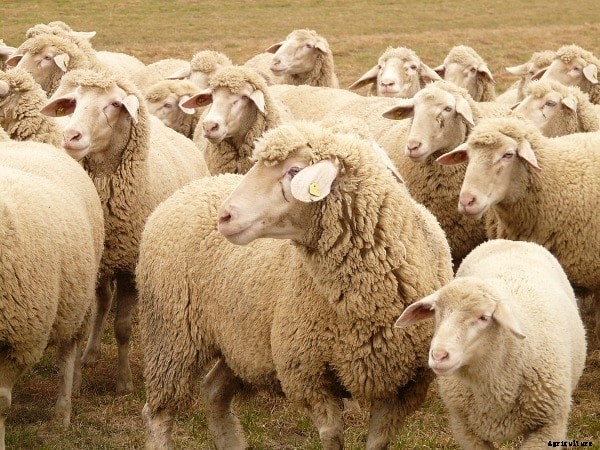
In India, sheep farming business is gaining momentum. Because there is a gradual increase in meat lovers so every year there is a regular increase in demand for the meat and also the price of meat increases giving higher income to the farmers. Sheep farming provides a good profit for unemployed people; there are people who want to invest in sheep farming and also some people who want to experiment with the sheep farming business.
For the people who are financially backward, the government and the central government would support them by subsidies and loans which will help them in investing in the sheep farming business.
A bank that supports the people for loans and subsidy is NABARD (National Bank for Agriculture and Rural Development) which is set by RBI. Through Animal Resource Development and Animal Husbandry Department, loan and subsidies can be obtained from NABARD bank. There are many other banks that support the farmers for loans and subsidies with a feasibility certificate from a local veterinary office.
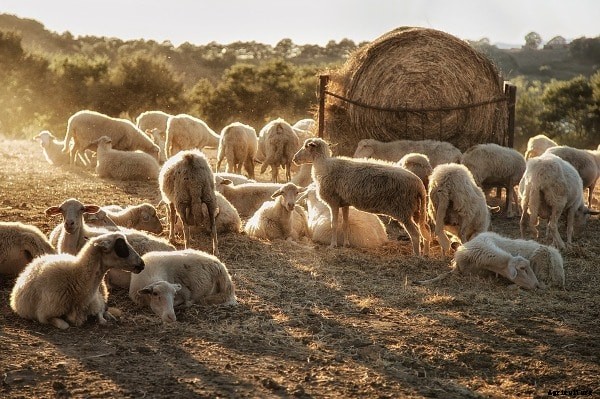
The sheep are one among the ruminant animals as it is a multifunctional utility. The food management is the main secret of good sheep management. The farmer who has sheep farm should have basic knowledge of feeding the sheep properly. The feed for the sheep is different in different ages and different seasons. Sheep should also be provided with minerals and vitamins besides the natural feed.
In the intensive system of production, housing is very important. One should ensure comfort and facilities to the sheep for maximum profits. The sheep are just like a human being and they too have some physiological requirement for growth and production. The main motive of housing for the sheep is to protect them from uneven climatic conditions, harsh animals and inoculated environmental stress. House management measures:
The breed should be analyzed by their body temperature and bloodlines. We should also determine the sheep’s breeding efficiency.
While breeding, the doe sheep’s age should be considered as production units.
The breed should be prepared before the breeding season by trimming hooves, vaccinating and also by deworming.
The sheep obtained for breeding should not be too young for breeding. The doe should be 5 – 17 months old. The best time for breeding is at 10 – 12 months of its age.
The pen or house should be clean and they should be fresh air, the floor should be well drained and the house should be bedded with dry straw.
The ratio of the sheep should be 1: 25 i.e. one male and 25 female sheep.
The gestation period of the sheep is very short i.e. 150 – 155 days.
If there is no proper care for the sheep it can lead to a large loss of sheep and also the kids. The farm should be maintained hygienically. Sheep should be clean and sanitized. Good and proper quality of food should be provided for the sheep. Plenty of sunshine and a good quality of pasture is required for the sheep and this causes fewer illness issues. For every 6 – 4 weeks the hooves of the sheep should be trimmed so as to prevent bacterial or fungal infections. The physical activities and behavior should be observed or monitored daily. The diseases that affect most of the sheep are:
Bacterial Diseases:
Viral Diseases:
Ectoparasitic Infestations:
Endoparasitic Diseases:
Sheep vaccines are of 2 types they are:
Active or Live Vaccine: These vaccine fights against the organism until the organism loses their virulence. These are also capable of retaining or holding them to provoke their immune to the targeted sheep.
Inactive Vaccine: these inactive vaccines are also called dead vaccines. These vaccines target the organism directly until the organism are dead. This type of inactive vaccines produces toxins. The produced toxins can be used for the vaccination purpose, and then the toxic vaccine is called as Toxoid inactive vaccine. These vaccines also induce immunity to the sheep.
Read: Raising Catfish In Tanks.


