
Welcome to Modern Agriculture!

Sheep farming is a profitable business nowadays. Raising sheep is rewarding whether you do it as a way to earn a living, as your source of home-cooked food or as a hobby. But succeeding in raising sheep requires good planning and solid and continuous management of the sheep farm.
Raising Sheep is a great way to make money and get fresh, healthy food for your family. Sheep are easy to raise and take up less space than other livestock such as cows or pigs. Sheep farming can be done in just about any climate – from arid zones near the equator to torrid zones where it’s too hot for other animals. In this guide, we’ll cover how you should go about raising sheep in your backyard, why they’re a good investment, and what kind of facilities you need on your property.
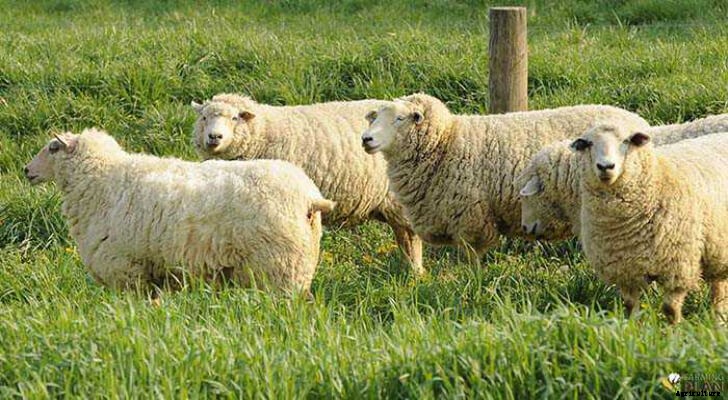
Sheep are bred for many reasons. To gain their wool, skin, flesh, and milk. As a hobby, or to get homemade organic products. By having vegetable control or as a pet. Some people even like to raise sheep as a replacement for empty nest syndrome.
It is important to understand that you can not achieve all these points with this animal that serves different purposes because different breeds are the most appropriate for different points of the aspects already mentioned.
Besides the pasture, feeding and production practices vary according to the objective that you have with the sheep. Unless you have the necessary time, proper experience, adequate resources, and proper grazing, do not overdo it. Consider if you have the financial resources and resources of the time to be able to raise sheep.
The finances involved in establishing a sheep breeding operation include the cost of the sheep, the cost of putting a fence around the place where they are going to be, any feeding, vaccines, veterinary checks, and transportation costs. In addition, any requirement to store food and provide a shelter for lambs and whatever is necessary to be able to solve poor climatic conditions, all must be taken into account.
Decide how many sheep you are going to buy. Where you are and the productivity of your land will determine how many sheep you can keep, in addition, if you are looking to make a sheep breeding benefit, you will have to put these factors and the market prices as well as the rewards.
In many places, it is very difficult to make a profit from raising sheep when you do it on a small scale. It becomes much more difficult when the environment includes a very hard winter and additional food and shelter for the sheep.
Determine how much land you have available to the sheep. A hard rule of thumb is 5 females per acre or 12 females per hectare. Some organic sheep farmers believe that it is possible to have up to 18 sheep per hectare and the pasture must also be productive.
Provide the area with a suitable fence to prevent the sheep from leaving and to prevent the dogs or other animals from attacking them. Make a small simple shelter for the sheep – the adult sheep are quite tough if you chose the right type of environment for your region.
Always buy the lambs with the recognized creators, there must be some creator recognized locally or nationally, in some association that can help you find the creator’s name. If not, search online or in the phone directories.
If you can get the sheep to take you, this is a lot easier. You must take them on your own, hire or purchase a trailer suitable for sheep for safe transportation. You need to make several trips, make sure the creator is not far from where you live but you will need to make arrangements to put the sheep somewhere and yourself overnight.
The key to feeding sheep is to ensure good quality grass. Poor quality grass must be supplied with straw, specialized food and blocks of salt so they can lick it. When sheep are unable to graze, such as during winter when snow is on the ground or during floods when the grass is poor or non-existent, you may be forced to feed them daily. That is a time-consuming process, so consider this possibility if you are not doing it full time.
Make sure they always have a fixed water supply, which can be a long sprinkler accessible by several sheep at a time. Check regularly that the water is being recycled daily (either electrically with a pump) or be sure to change the water daily by hand. If you do not, they will get sick.
If you are raising them to get your wool, to take them to a show or fair, or as a pet, make sure they have a healthy and orderly beauty.
Make sure the sheep are regularly worm-eaten with a commercial deforming paste, that is suitable for the sheep. Other considerations include bathing the sheep to prevent plague infestation and in some places tails are cut as a precaution to prevent them from getting sick. If you are in an area where there are outbreaks of diseases of the mouth or feet, take adequate precautions to protect your sheep. Ask for advice from veterinarians on procedures that are better and more humane to protect your sheep from those diseases.
In this guide, we’ve covered how to go about raising sheep in your backyard and why they are a good investment. You should also consider the kind of facilities that you need on your property, such as a shelter for them during inclement weather or at night. It can be difficult to find quality information online for people who want to raise sheep themselves so I hope this is helpful! Good luck with feeding and caring for these animals – they make great pets too!
As A Reference: Wikipedia


