
Welcome to Modern Agriculture!

Asia Minor and Europe are very well suited to growing beetroot. Thousands of years ago, beetroots were cultivated and used for medicinal purposes as well as for food.
Among its many benefits, beetroot is excellent for its laxative effects, breath freshener, cough remedy, headache medication, and even as an aphrodisiac. In Germany and France, as well as in all other countries in Europe, beetroot is widely grown. Beet root nutrition facts are listed in this page.
These days, beetroot can be found in salads in Africa, Asia, and South America.
Common Names : Common Beet, Table beets, Beetroot, Garden Beet, Chukander (Hindi), Biitt (Marathi)
Scientific Name : Beta vulgaris
Beetroot does well in cool climatic conditions and can be grown almost all year round if the temperature is low.
Spring and autumn are the best seasons for growing Beetroot, but it also grows well in summer and winter.
A beetroot crop grown in cool weather produces very good quality roots (high sugar content and dark inner colour). However, prolonged period of low temperatures is bad for the crop, as it can lead to bolting.
To a certain extent, beetroot crops can tolerate low temperatures at all stages of their growth. The plant grows slowly or doesn’t grow at all in very cold weather.
While beetroot farming can also be done in hot weather, the beetroot will lose its colour and quality. It is not good for the Beetroot to have excessive heat, as it causes the root to acquire alternating light and dark red concentric circles, which is referred to as zoning.
The optimum temperature for germination of beetroot seeds is between 18 and 24°C; soil temperatures between 4.5 and 30°C are acceptable.
Beetroot farming yields the best results in loamy to sandy soils that are loose and well-drained. In clay soils, beetroot plant growth may be hampered and the shape of the beetroot may also be affected. Hence it is not generally advisable to farm beetroot in such soil.
Ideally, beetroot farming can be done in soils with a pH between 5.8 and 7.0, but can also be done in soils with a pH as high as 7.6.
As acidic soils may cause nutrient deficiencies in Beetroot, care should be taken to ensure pH levels in the soil are not high.
A mature beetroot plant is fairly tolerant of salt in the soil, however, beetroot seedlings are comparatively sensitive to the salinity of the soil.
*A must read: Various types of soils
Beetroot farming requires that land be ploughed to a fine tilth by thorough ploughing to loosen the soil. A very important part of land preparation is removing the clods. Tilling the land 15 to 20 cm deep is advisable to make sure clods are removed.
A level of the soil is another important aspect of beetroot cultivation. Ideally, the soil should have a good crumb structure, be moist enough, and be free of rotting plant matter.
At the time of final ploughing, well-decomposed farmyard manure should be applied. As part of land preparation, it is important to prepare flat beds or ridges and furrows.
It is recommended to treat beetroot seeds before planting to improve their germination. The high nitrate content in dry seeds, as well as the ammonia produced by the bacteria, suppress the germination of Beetroot seeds. Therefore, the seeds should be washed in running water for at least two hours before planting.
After washing, the seeds should be soaked for 20 minutes in a 0.5 % Aretan solution, and they should be allowed to dry for at least 6 hours at room temperature before sowing.
*A must read: Use of biofertilizers
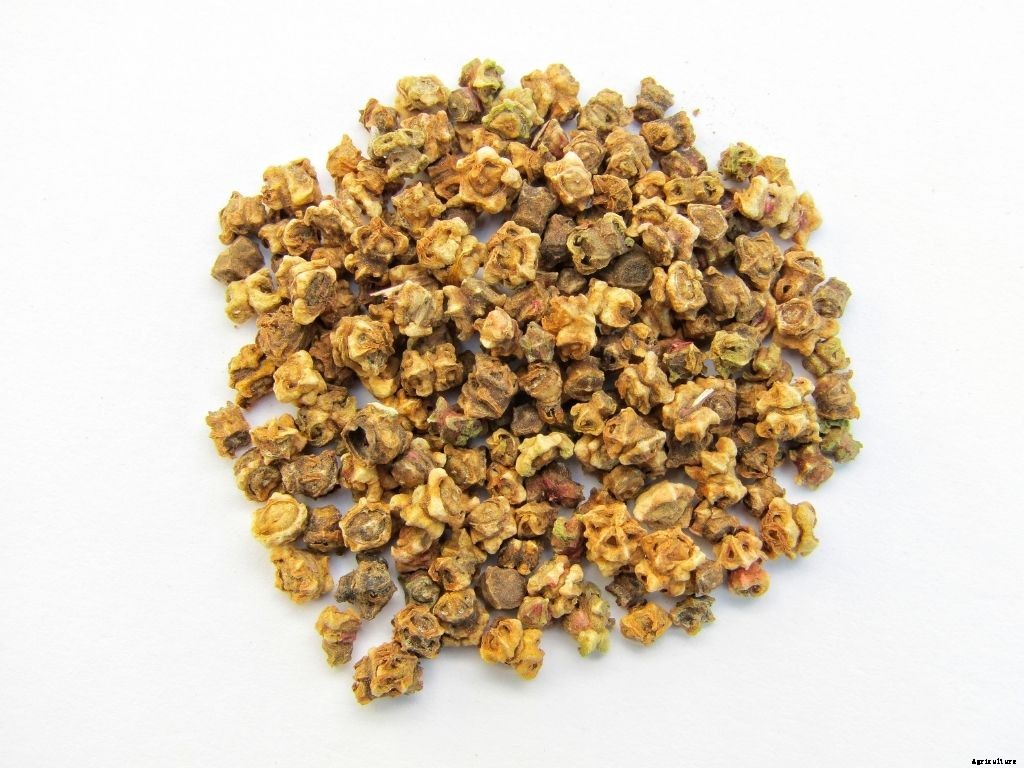
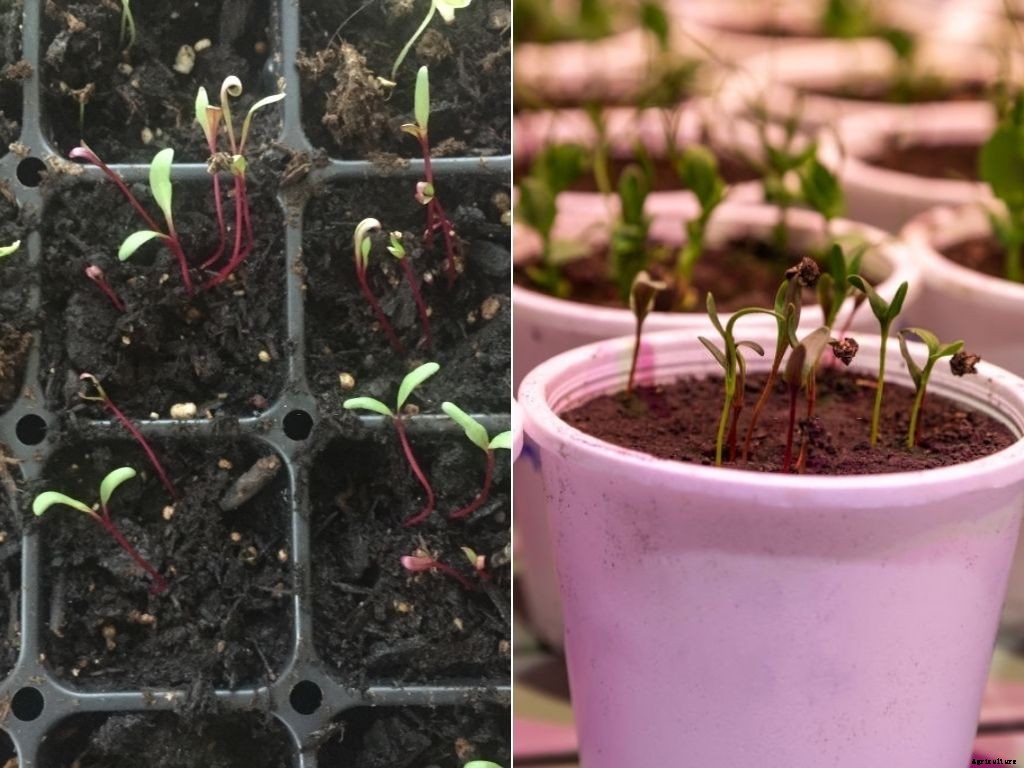
The pit size for sowing beetroot seeds should be about 2.5 cm deep. 2-6 seeds can be placed in a single pit.
The row spacing for beetroot farming can be 45-60 cm and the distance between the seed pits can be 8 -10 cm.
Typically the seed rate is 5-6 kg of beetroot seeds per hectare of land.
A steady supply of Beetroots during the season can be achieved if seeds are sown at 1-2 week intervals.
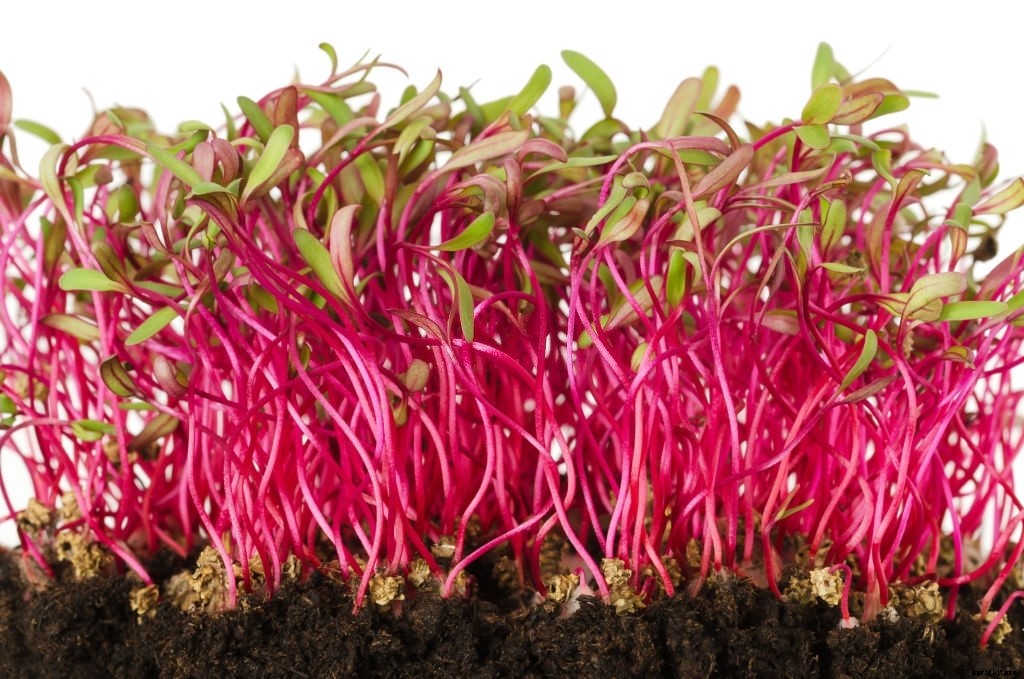
Beetroot seeds are sown at different times depending on the production area. Beetroot seeds can be sown in winter. In the area with rain, beetroot seeds can be sown between August and the end of March.
For areas with cooler summers, the most desirable time to sow beetroot seeds would be around the end of August and the middle of March.
In Beetroot farming, temperatures ranging from 4.4 to 7.7°C are needed to initiate flowers for six to eight weeks.
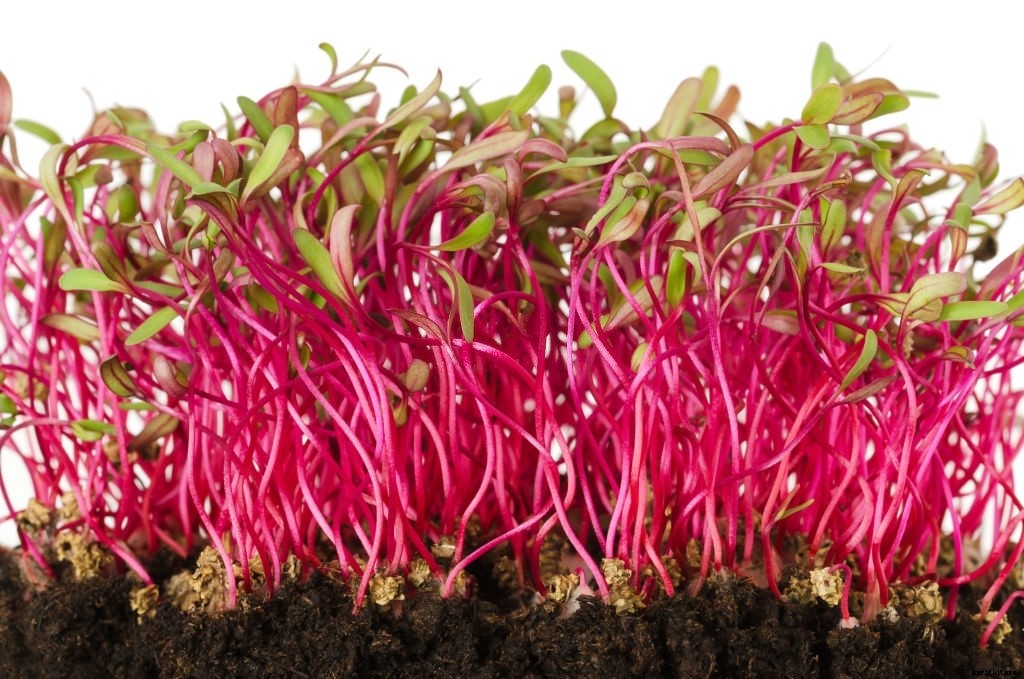
Beetroot can be intercropped with crops such as lettuce and cabbage.
All with most of the vegetable crops, good irrigation conditions are also necessary for good yield and quality in beetroot farming.
Until the plants emerge, the soil must be moist for the Beetroot crop.
When very hot weather occurs, a layer of mulch can be applied to prevent the soil from drying out too rapidly.
It is very important to regularly and frequently water Beetroot plants because their roots are shallow, with an effective depth of 300mm.
During the growth period, 300-350 millimetres of water is needed for the entire growth period of the crop, i.e. almost about 4 millimetres per day.
Only water them once every 10-14 days during periods of drought once they have sprouted. Normal rainfall should be fine, except in cases of unusually dry weather.
Over-watering should also be avoided as it will cause the crop to produce more leaves and fewer vegetables. This condition is known as bolting.
At last, beetroot crop requires different amounts of water depending on the beetroot variety, its size and the soil type used for beetroot farming.
The quality of Beetroot depends on how quickly they grow. The roots become woody, rough, and unevenly colored if growth is slowed down too much.
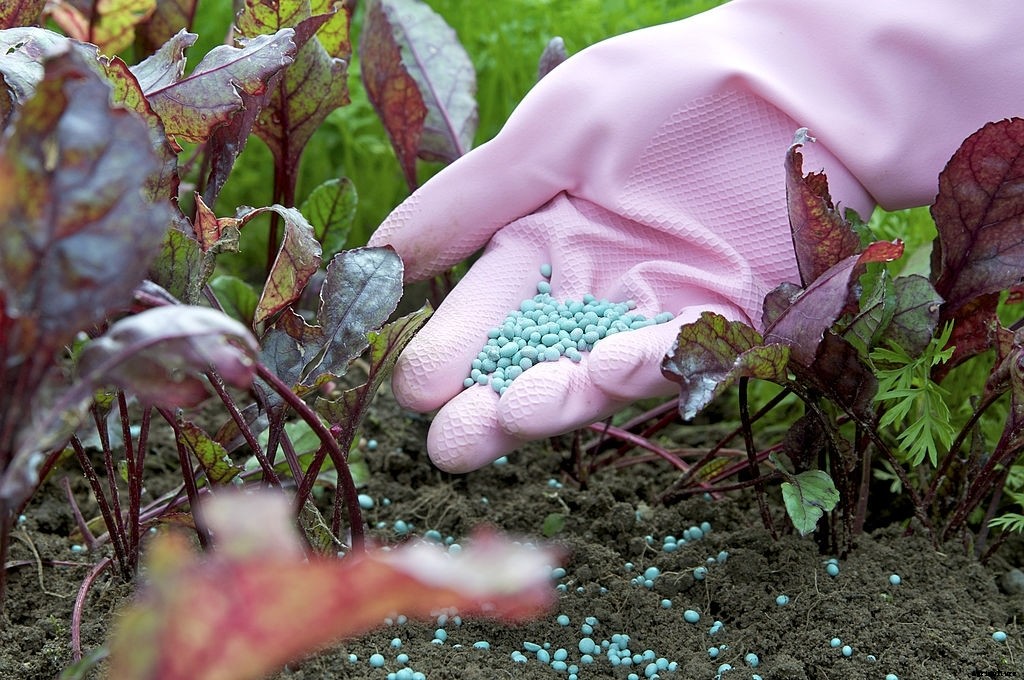
The soil acidity should be reduced with a basal application of a 5:6:4 NPK mixture at a rate of 900-1000 kg/ha (or equivalent application rates of a high analysis fertiliser). In light soil, this rate can be increased to 1250 kg/ha. At or before planting, fertilizer can be broadcast and cultivated in, or drilled below, the seed.
Nitrogen in the form of urea at 100 kg/ha is necessary for neutralizing the soil. As an alternative, Nitram can be applied to beetroot when they are 10 cm tall at 135 kg/ha to increase productivity.
Deficiencies in Boron, internal black discolouration, reddening foliage, and possible multiple topping are the causes of corky beetroot surfaces. Consequently, these conditions can be prevented by applying 3-4 foliar boron sprays (Solubor at 200-250 g per 100 litres with a wetting agent) at two-week intervals, and repeating the treatment when plants are 5 to 8 cm tall.
When a soil analysis or previous experience indicates that boron deficiency exists, an application of Solubor at 5-7.5 kg/ha may be an option. A boom spray can be used to apply this to the soil (at the highest rate for clay soils and at the lowest rate for lighter soils).
In early growth stages, one or more foliar sprays with sodium molybdate at 60 g/100L water can prevent molybdenum deficiency. Molybdenum deficiency can be indicated by lack of vigour, leaf yellowing and death of leaf margins in the plant.
*A must read: Guide to fertilizers
Weeds are detrimental for the beetroot crops especially at the early stages of the season. Crop yield can be severely affected by weed problems.
By cultivating beetroot regularly, weed problems can be avoided. This practice eliminates beetroot’s competition with other weeds.
For small farms, manual weed removal is recommended. Here, planting the seeds in well-defined and well-spaced rows plays an important part.
In large-scale and commercial beetroot farming, weed-killers or herbicides are used. But the herbicides should be cycled and the use of a single type of herbicide should be avoided to prevent weeds from developing herbicide resistance.
Before planting crops, it is always advisable to eradicate perennial weeds.
The yield of beetroot crop varies between 25 and 30 tonnes per hectare, and the tuber stores well at 0°C and 90% relative humidity. Dry storage is necessary to prevent fungal growth.
Currently, there is a high demand for medium-sized beetroots, and the best time for harvesting them is when they are 3 to 5 cm in diameter. The first harvest is simply a “thinning out” process.
By pulling the top by hand, harvesting takes place 8 – 10 weeks after sowing. Once the leaves are removed, they are graded and sold.
Beetroots that are diseased or damaged are removed during sorting. In order to market them with tops, the dried leaves must be removed. Each beet is then graded by size.
The tops of beetroots are tied in bundles of 4-6 in European countries, where small sized bunches are in demand.
If a beetroot becomes too mature or oversized, it becomes woody and develops cracks.
Beetroots grown at large-scale agribusinesses often have their leaves mechanically removed and are packaged and marketed in crates or cartons.
Be sure to transport beetroots in a well-ventilated vehicle at cool temperatures to prevent fungal infestation.


