
Welcome to Modern Agriculture!


On a ranch in New Mexico, Mahindra Automotive’s vice president of marketing Rich Ansell sat down to offer insight into the company’s work in bringing the Roxor to agriculture. Mahindra is targeting farmers and ranchers seeking a simple and durable work vehicle with its recent relaunch of this side-by-side machine.
RA: We’re effectively working out the supply chain issues. Like everybody else, it is still something we have to monitor very closely. We are bringing a decent amount of our content in from India, so there’s logistical elements too. Our purchasing and logistical teams are earning their pay right now, monitoring and finding solutions where solutions need to be found.
So far, so good. We’re going to ramp up somewhat slowly, just to make sure we don’t get ahead of some of those issues. But right now we’ve got the supply we need. We’re building vehicles, and we’re shipping them to dealers.
RA: About 65% of the content comes from India. In Auburn Hills, Michigan we’re doing final assembly.
RA: Right now, we’re fine. We’ve got our production teams in place. The Roxor team is in place. I know it’s a big issue for a lot of companies, but it has not been a big issue for us.
RA: There’s demand – a lot of demand – for a product like this. You look at the mega trends of rural lifestyles and people moving out of the cities and buying property that they want to work. The key word is work. That’s the opportunity for Roxor.
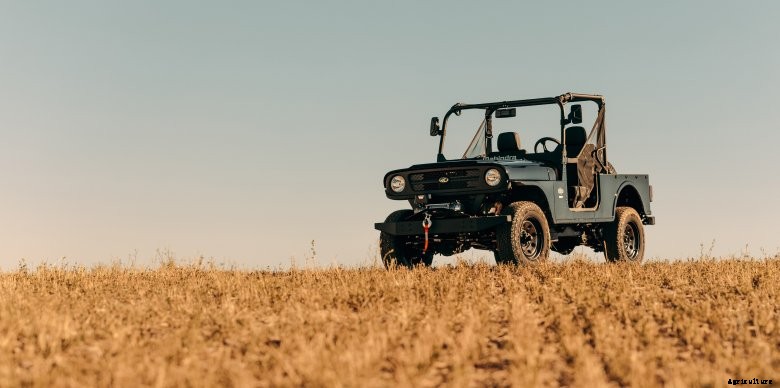
RA: The vehicle is derived from a vehicle we sell in India. We have our own design team in Auburn Hills, Michigan, so the design itself is not shared with any of the vehicles in India.
We’ve talked to more people in the farm space and rural lifestylers. They want a rugged work vehicle. That’s the direction we gave to our design team – work and rugged. Let’s reflect the character our tractors are known for. That’s how we arrived at the new look for Roxor.
RA: No. The chassis comes from India. The engine comes from India. Americans tend to be a little bit bigger than people in India, so we had to look at some of the packaging space considerations and rework some of those things.
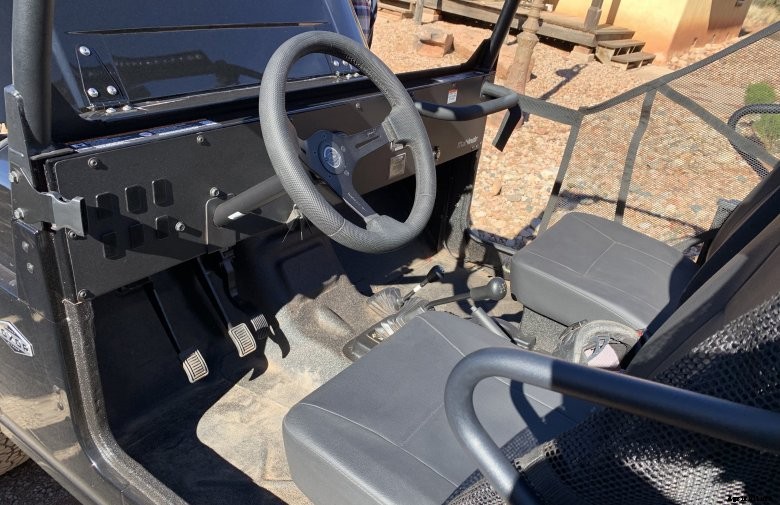
RA: We don’t have a tilt steering wheel, but the seat is adjustable.
Ingress and egress was a concern we addressed initially because of the smaller packaging space [in the design from India]. Based on the fact that we’re not getting a lot of negative comments, I think we’ve solved that.
RA: I don’t think we’ve tested for it, but you heard it today. It’s just a much quieter engine. So many of those side-by-side engines are high revving. Some of them are the same engines that are in snowmobiles and wave runners. They’re high revving, high RPM engines. Our turbo diesel is the opposite of that.
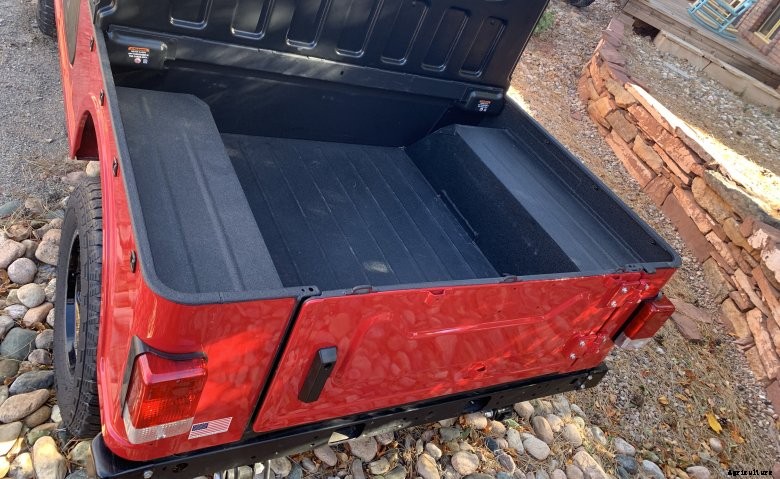
RA: We just approached it as an open work area. As we look to the future, we are looking at things like a dump box and a flatbed work surface. Both of which would obviously be a little bit more purpose built and designed.
RA: There’s a good geographic spread to them. This first phase of dealers know Roxor well and have had a lot of success with it over the last few years.
RA: It’s built for durability with its leaf spring suspension and solid axles. Some of the side-by-sides out there have fully independent articulating suspensions. We’re not that. We’re never going to be a sand dune hopping type of vehicle, but it’s comfortable to sit in. We’ve put a lot of thought into the seat. It’s built to be worked in all day.
RA: We’re sort of moving away from model year designations because the core of the vehicle, I don’t anticipate it changing much. People love it. They love its durability and simpleness. I think we’d be silly to walk away from that.
We’re going to continue to look at additional colors, and we talked about dump box or flatbed down the road. We’re going to get the vehicle launched and out, get the dealers built up with their inventories, and then we’ll start to look a bit more with an eye toward the future.


