
Welcome to Modern Agriculture!

Harvest timing can make or break a soybean season. Cut too early, and green pods risk dockage at the elevator. Wait too long, and you may lose brittle beans to field shatter. For farmers, knowing exactly when to roll out the combine is critical to protecting yield and profits.
In this guide, we’ll walk through how to recognize harvest-ready soybeans, key differences between single- and double-crop timing, and how you can stay efficient when every bushel counts with the help of John Deere harvesting equipment.
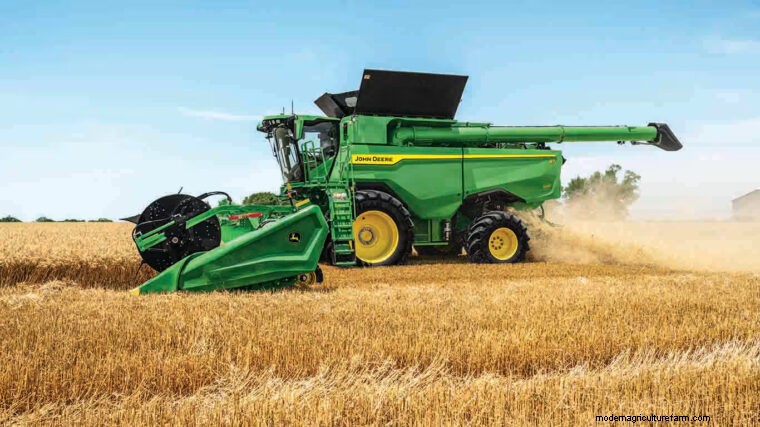
Most U.S. soybeans are harvested late September through November, but the exact timing depends on your geographic location.
Weather variations and planting dates also shift the timeline. A hot, dry summer can push soybeans toward maturity faster, while a cool, rainy season may slow the process down by weeks. That’s why harvest timing isn’t based on the calendar alone. In-field scouting is essential to know when soybeans are truly ready.
The clearest signals that soybeans are ready come from the field. As you walk your rows, keep an eye — and an ear — out for these signs that your soybeans are harvest-ready:
Soybeans are considered “single-crop” when they’re the only crop planted in the field for the season. These beans are planted early, usually in April or May, and are generally ready for harvest by late September through October.
Since the plants have the full growing season to mature, single-crop soybeans often deliver higher yields. The harvest window is relatively short, however, so farmers need to be ready with equipment tuned and storage prepared once moisture levels are in the ideal range.
Double-crop soybeans follow the harvest of another crop, most commonly winter wheat. After the first crop is harvested in the early summer, soybeans are planted in the same field. This practice is especially common in the South and parts of the Midwest, where growing seasons are longer.
Double-crop soybeans’ later planting means a shorter growing season, which can limit yields compared to single-crop fields. Still, producing two harvests from the same field in one season is a major advantage. In addition, farmers can often use fewer fertilizer and herbicide applications since the ground has already been prepared.
The right harvest equipment speeds up the process while protecting yield and making sure soybeans make it from field to bin with minimal loss. From the header that meets the crop first to the combine that threshes and cleans each bushel, every piece plays a role in efficiency.
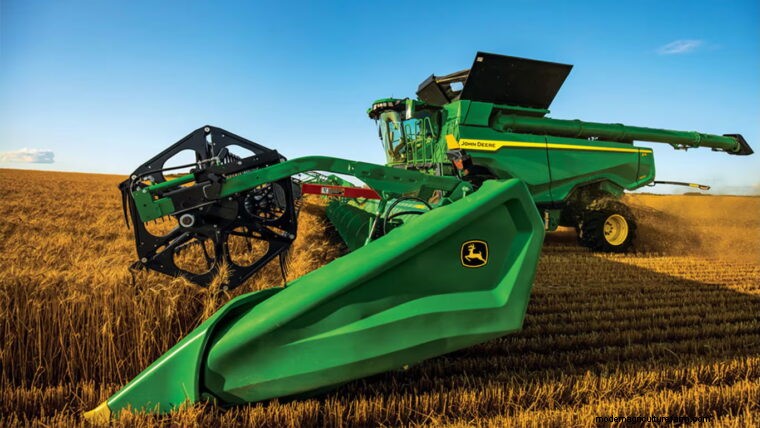
A draper header is the front attachment on a combine that cuts soybeans at the base and funnels them into the machine. If you’re not sure which header is right for your farm, use the John Deere Header Selection Tool to compare HDR, RDF, and HDF models and find the best fit for your terrain and crop type.
Unlike auger heads that push the crop forward, draper headers use wide belts to move plants evenly into the feederhouse. This smoother feeding reduces shatter, prevents bunching, and helps you cover more acres in less time.
John Deere draper headers come in three styles to match your fields:
Position Control Gauge Wheels help you dial in your desired stubble height, while Grain Saver Draper Belts reduce cutterbar loss by 25%. The 3-piece cam reel keeps a consistent reel to cutterbar gap, even on terraces, ensuring beans feed evenly.
A two-speed center feed minimizes loss, while the dual-drive, double-cut cutterbar maintains harvest quality at faster speeds. And with no header calibrations needed, you can spend more time harvesting and less time adjusting.
Like the HDR models, they use Grain Saver Belts to reduce cutterbar loss and a 3-piece cam reel for clean feeding. On the HDF35 and HDF40, a built-in Integrated Transport system makes it simple to move between fields without the hassle of extra equipment.
Whether you’re managing a mid-sized farm or pushing through thousands of acres, John Deere Combines S7 600, S7 700, S7 800, and S7 900 are designed for long harvest days, consistent quality, and reliable performance.
Across the S7 lineup, all models share key features that make soybean harvest more efficient:
Here’s a quick look at how each S7 model stacks up when it comes to power and capacity:
FeaturesS7 600S7 700S7 800S7 900Here’s how to prepare before harvest to protect yields and avoid disruptions:
Harvest success comes down to the right timing and equipment. Even a few days of delay or a poorly tuned machine can mean lost bushels on the ground instead of in your bins. John Deere Draper Headers and S-Series Combines help farmers move quickly, reduce losses, and protect yields.
Make sure you’re ready when your soybeans are. Explore harvesting equipment at your local John Deere dealer or browse models on MachineFinder to maximize efficiency and get the most from every acre this season.

1. When Do Farmers Harvest Soybeans?
Most farmers harvest soybeans between late September and November, though timing varies by region and planting date. In Southern states, harvest may extend into December.
2. What Moisture Level Is Best for Soybean Harvest?
The ideal moisture range for harvest is around 13-15%. At this level, beans are dry enough for storage without risk of spoilage but not so dry that they become brittle and prone to shattering.
3. What Equipment Is Used for Soybean Harvesting?
Many farmers use combines paired with draper headers. The header cuts and feeds soybeans evenly into the machine, while the combine threshes, cleans, and collects the crop.
4. How Late Can Soybeans Be Harvested?
In areas with longer growing seasons such as the South, soybeans can sometimes be harvested into December. However, weather risks like frost or excessive rain can affect quality if harvest is delayed too long.


