
Welcome to Modern Agriculture!

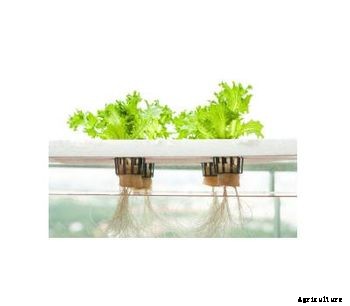
Etymology: The term hydroponics is derived from two Greek words, “hydros”, meaning water, and “ponos”, meaning work. Hydroponics is the science of growing plants in water, without the use of soil. Also known as soilless culture, the same nutrients that a plant normally obtains from soil are delivered straight to the roots as an accurately controlled solution.
Using traditional farming methods, plants often need to expend large amounts of energy to grow roots long enough to reach water and nutrients in the soil. This is because the supplies are not distributed evenly, and it prevents a plant from growing at its optimal rate.
In a hydroponic system, however, the nutrients and water are delivered directly to the roots. Plants absorb nutrients as ions in the water, and rely on an accurate control of electrical conductivity and PH levels. Hydroponic farming allows for complete control of these and other factors, ensuring that every single plant is healthy and grows quickly, resulting in higher yields and more frequent harvests.
As a result, growing plants hydroponically also requires up to 90% less water than traditional methods. This water conservation means that operations can be scaled up at a very low cost. Additionally, hydroponic farms require much less land space, since plants can be stacked vertically, and the controlled environment significantly reduces the occurrence of both pests and diseases.
A hydroponic farm can continue functioning for more than 100 consecutive years, resulting in a secure, stable source of both food and employment for the local area.


