
Welcome to Modern Agriculture!

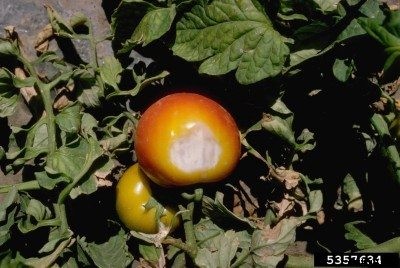
Sunscald commonly affects tomatoes, as well as peppers. It’s generally the result of exposure to sunlight during extreme heat, though may be caused by other factors as well. While this condition is not technically dangerous to plants, it can damage fruits and lead to other issues that could become a problem.
On tomatoes, sunscald will appear as a yellow or white-spotted area on the side or upper part of the fruit that has been directly exposed to the sun. As the fruit ripens, the affected area may become blistered before it finally turns thin, wrinkly, and paper-like in appearance. At this stage, the fruit becomes more susceptible to secondary fungal problems, like Alternaria.
To find cause of sunscald in tomato plants, you should look towards one of the following possibilities:
While there is little you can do once you see sunscald on tomatoes, there are things you can do to help prevent this condition. Growing tomato plant varieties that have heavy foliage can help protect the fruits from the sun’s rays, especially during intense heat.
Disease-resistant types can also prevent sunscald by guarding against leaf drop associated with many diseases.
Keeping plants properly spaced can reduce sun exposure and using tomato cages or staking tomato plants will minimize the need for any pruning.
The use of fungicide throughout the season can help control any fungal issues that do pop up, especially those responsible for leaf drop (which leave the fruits exposed).


