
Welcome to Modern Agriculture!

Introduction of Mint:– Mint is one of the popular herb cultivated for its aroma, culinary use and medicinal properties throughout the world. Mint belongs to the family of “Labiatae” and genus of “Mentha”. Mentha oil is derived from a common mint. It is an aromatic annual herb plant having pleasant odour leaves and is classified as an industrial crop. The end product of Mentha oil is extracted from the mint leaves by processing and steam distillation. In most of the Asian countries, mint is used in dish preparations for better flavour and aroma. Mint is a commercial crop and has huge demand for its leaves due to its medicinal uses. One can get decent profits with mint farming provided proper mint cultivation practices are followed. The mint is originated from Brazil and China. However, India is the top producer of this essential oil yielding plant. Mint can be grown in pots, containers, on terrace and commercial cultivation can be carried out in open fields, greenhouse, polyhouse, shade net and hydroponic systems. Mint agriculture is increasing day by day especially in Asian countries. Commercial cultivation of Japanese Mint, yielding menthol is a huge success in Asian countries such as India, China, and Thailand.
Uses and Health Benefits of Mint:- The health benefits and uses of mint include the following:
Health Benefits:
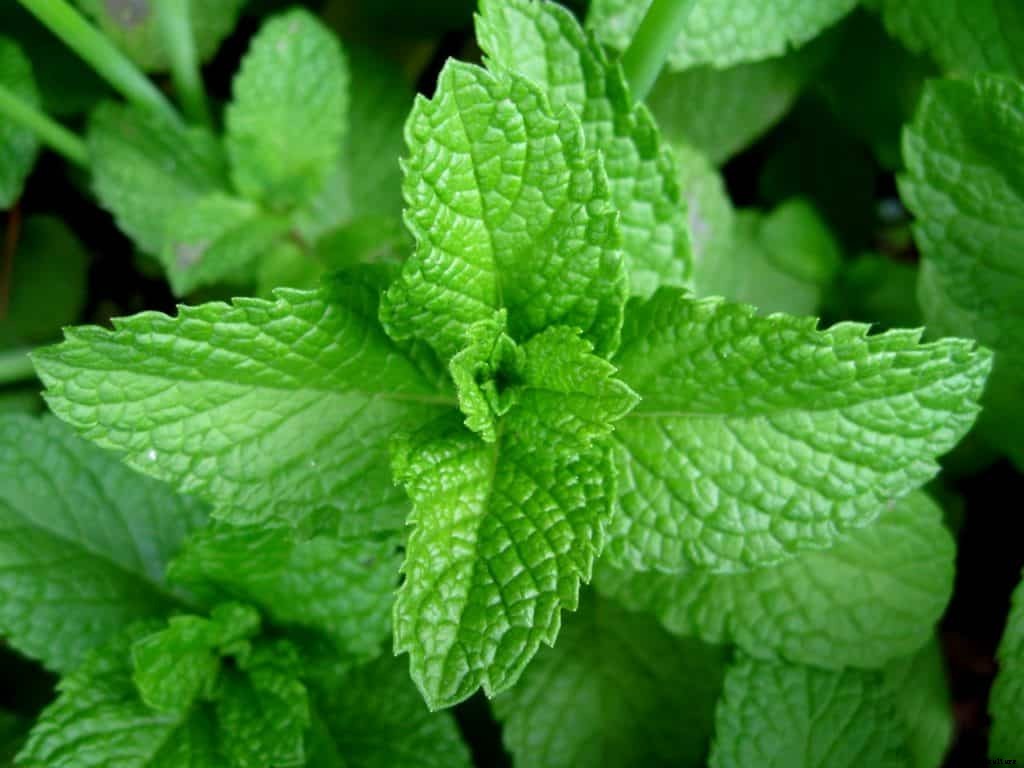
Industrial Uses of Mint: Industrial use of mint in foods like ice-cream, chocolates, alcoholic and non-alcoholic beverages, medicines, cosmetics, inhalers and breath fresheners. It is also being used in condiment and culinary preparation around the world.
Major Mint Production Countries:– The following are the major mint production countries in the world.
Mint Name Top Production Countries Japanese mint India, China and Brazil. Peppermint USA, France, former USSR, Brazil and India. Bergamot mint USA, Brazil and Thailand. Spearmint USA, China, former USSR and India.Local Names of Mint in Asia:- Pudina (Hindi/India), Padina (Nepali), Pudina (Urdu), Rаа (Mongolian), نـَعـْناع (Arabic), 薄荷 (Chinice), ใบมินท์ (Thai), Bạc hà (Vietnamese), Seiyo-Hakka, 造幣局 (Japanese),ටංකණ (Sinhalese), Myata (Russian),Nane, Darphane (Turkish), 薄荷 (Taiwanese),Daun Pudina (Malay), 민트 (Korean), Pudina Patta (Hindi), Puthina/Pudhinaa (Tamil), Pudina (Telugu),Pudina (Kannada), Pudina (Marathi),Hara Pudina (Punjabi), Fudino / Phodina (Gujarati), Putiyina/Pudhinaa (Malayalam), Pudyanu (Kashmiri).
Mint Varieties:- The following are the most commonly cultivated mint varieties.
Climate Required for Mint Farming:- Mint can be cultivated both in tropical and sub-tropical regions. The ideal temperature between 20°C to 40°C is required throughout growing period of mint. Evenly distributed rain fall of 100 cm to 120 cm and good sunshine during harvest is best suitable during crop growth.
Soil Requirement for Mint Farming:- Mint can be successfully cultivated on both red and black soils. However, well-drained sandy loam or loam soils rich in organic matter is best suited for its cultivation. The soil pH between 6.0 and 8.5 is recommended. Commercial growers should go for soil testing before cultivation. In case of acidic nature soils with pH less than 5.5 should be added with lime.
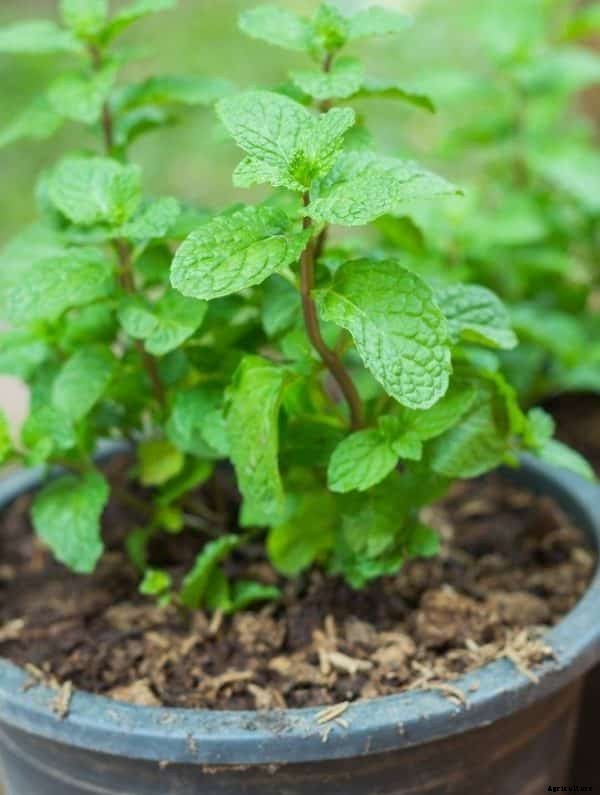
Pot Growing Tips in Mint Farming:-
Do’s:
Select a location for your mint where the plant will receive morning sunlight and partial afternoon shade.
Don’t:
Land Preparation, Seed Rate, Spacing and Plantation in Mint Farming:- Land should be given couple of ploughings and 2 cross harrowing to bring the soil to fine tilth stage.
Supplement the field with 25 to 30 tonnes of well rotten farm yard (FMY) in the last ploughing.
On an average 500 to 600 suckers should be planted in 1 hectare land. Suckers should be set in furrows 5 cm to 1 cm deep with a spacing of 60 to 80 cm. Plant the suckers end to end and cut the suckers into 10 cm to 12 cm length before sowing the mint seedlings. Plants should be spaced 30 cm apart in rows 60 cm apart. Sowing the mint just before onset of monsoon is recommended.
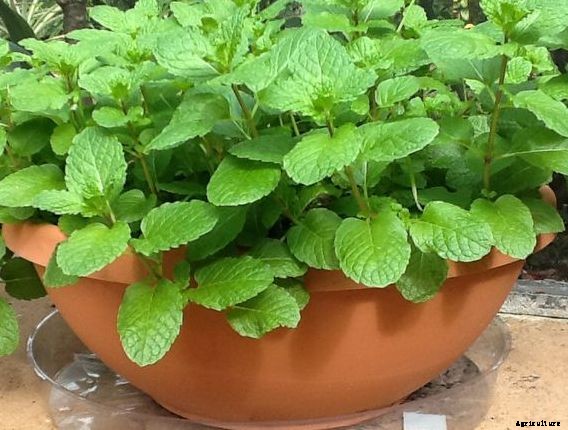
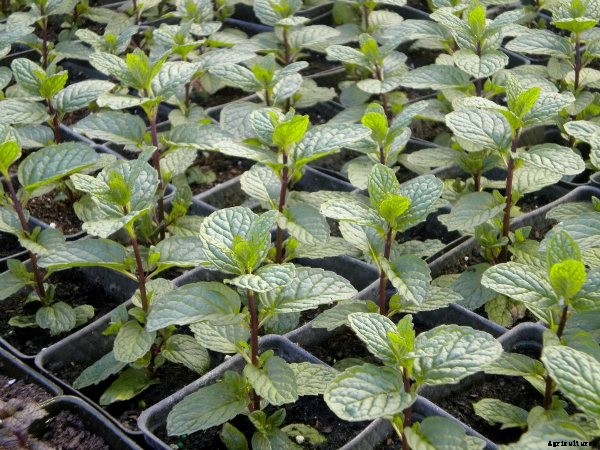
Propagation and Raising Seedlings in Mint Farming:- Propagation is done through Suckers, (runners or Rhizomes).
Manures and Fertilizers in Mint Farming:- Fertilizers and manures are very important tasks for better yield of mint. As we said before, supplement the main filed with 25 tonnes of FMY during the land preparation .Chemical fertilizers of N : P: K should be applied in the ratio of 50:75:40 kg/ha as basal dose. Top dressing application of 75 kg of ‘N’/ha in 3 equal doses should be applied.
Irrigation in Mint Farming:- For better growth and yield, mint crop requires considerable moisture throughout its growth cycle. As the roots of mint do not t penetrate deep into the soil, light and frequent irrigations should be provided. In case of hot and dry weather conditions, irrigate the crop frequently. Before irrigation, it is better to check the soil moisture and provide water based on the soil moisture content.

Intercultural Operations/Weed Control in Mint Farming:- Carry out the regular weeding operations to make the topsoil loose for better penetration of air, water and light. As mint roots don’t penetrate deep, shallow or light weeding is required.
Pests and Diseases in Mint Farming:- The following are the pests, diseases and their control measures in mint farming.
Hairy Caterpillar, Red Pumpkin Beetle, Cutworms and Mint Leaf Roller are the main pests found in mint cultivation.
Pest Control Measures:
Stolon Rot, Fusarium Wilt and Leaf blight are the common diseases found in mint farming.
Diseases Control measures:
Crop Rotation in Mint Farming:- The rotation of mint crop with other food crops is found to be beneficial in controlling weeds. Continuous cropping of mint is not advisable and the best rotation of Mint crop is: Rice – Mint: Potatoes – Mint: Any vegetables – Peas.
Harvesting in Mint Farming:- Harvesting of mint crop should be carried out 2 to 3 times in a year i.e. once in 4 months. Harvest the first crop before the onset of monsoon (June to July) and second harvesting should be done after the monsoon period (Sep to Oct).Third harvesting should be done in Nov to Dec month.
Post Harvesting in Mint Farming:- There are some activities should be carried out after the harvesting process is over. The material left after distillation of oil is called spent grass. It can be used for mulching or as manure in citronella fields. It can also be used for making paper and paper boards and citronella oil must be packed in air tight containers of glass, tin or aluminum. Containers are stored in a cool place away from light and heat. Oil changes its colour from yellow to green if it is exposed to light or heat.
Yield in Mint Farming:- The average yield is 20 to 25 tonnes of fresh herbage per ha based on the cultivar. In two harvests, which, in turn, yields around 250 to 300 kg? of oil in a year.
For Sheep Farming or Goat Farming : Read here.
For Indian Agriculture Farming : Read here.

