Sweet corn is an annual crop that produces ears of yellow, white, or bi-colored kernels. A long, frost-free growing season is necessary for growing corn. Here's how to plant, grow, and harvest corn in your home garden!
About Corn
Corn (maize) is one of the Three Sisters—corn, beans, and squash—and has been in cultivation for thousands of years. Native to North America, corn is thought to have first been domesticated in central Mexico, spreading from there through different peoples across North and South America. Today, corn is grown on an industrial scale, but there are quite a few varieties that are well suited to growing in home gardens, too.
A member of the grass family (Poaceae), corn relies on wind to pollinate its flowers, so it should be planted in blocks of short rows instead of long, single rows.
Types of Sweet Corn
Corn comes in early-, mid-, and late-season varieties. Early-season varieties are the quickest to mature, while late-season may take the entire growing season. For an extended harvest, plant varieties with different "days to maturity."
There are four main types of hybrid sweet corn: sugary (su), sugar-enhanced (se), shrunken (sh, sh2), and synergistic (sy). Each one contains a different level of sucrose, changing the flavor and texture of the corn. Sweeter varieties will also stay sweeter for longer after harvest. Read more about the differences between these types in the Recommended Varieties section below.
Planting
When to Plant Corn
- Starting corn indoors is not recommended. It's best to start them directly in the garden so that their roots aren't disturbed due to transplanting.
- Sow corn seeds outdoors approximately two weeks after the last spring frost date. Consult our Planting Calendar (above) to see suggested planting dates for your region.
- It's important to get corn planted as soon as possible, since it requires a fairly long growing period with warm weather. If you live in an area with a shorter growing season, choose an early variety that will mature well before the first fall frost.
- Soil temperature is key to successful germination. For corn, it should be at least 60°F (16°C), or 65°F (18°C) for super sweet varieties.
- In colder areas, the ground can be warmed by a black plastic cover, if necessary. Plant seeds through holes in the plastic.
- A couple of weeks after planting your first round of corn, plant another crop to spread out the harvest.
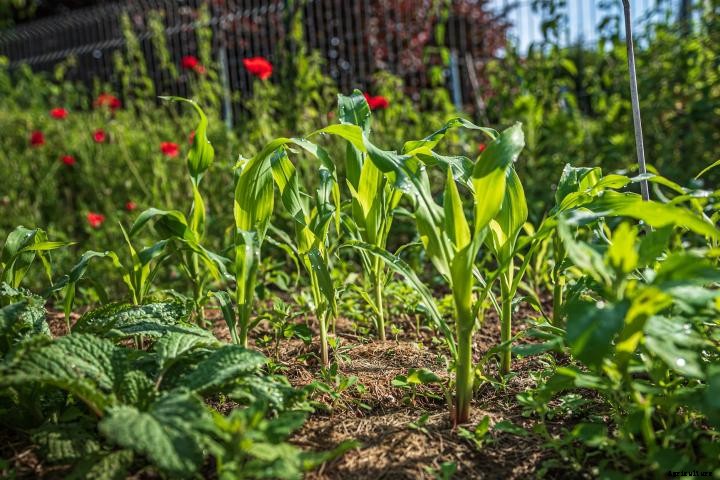
Choosing and Preparing a Planting Site
- Corn plants are picky about their soil. Ideally, aged manure or compost should be worked into the soil in the fall and allowed to overwinter in the soil. By spring, the soil will be fertile and ready for corn. If that's not possible to do, simply mix in aged compost prior to planting.
- The soil should be well-draining, but must be able to hold some moisture. Corn tends to use a lot of water.
- For sufficient pollination, plan your plot right. Instead of planting one or two long rows of corn, plant "blocks" of corn at least four rows deep. This ensures that the corn—which is pollinated by wind—has a greater chance of producing viable, full ears.
How to Plant Corn
- Sow seeds about 1 inch deep and 4 to 6 inches apart in each row.
- Rows should be spaced 30 to 36 inches apart.
- You may choose to fertilize at planting time; corn is meant to grow rapidly. If you are confident that the soil is adequate, this can be skipped.
- Water well at planting time.
Check out this video to learn how to plant corn:
Care
How to Grow Corn
- When the young corn plants are 3 to 4 inches tall, thin them so that they are 8 to 12 inches apart in a row.
- Be careful not to damage the roots when weeding.
- Keep corn well watered, as it has shallow roots and can become stressed by drought. An inch of rainfall per week is sufficient; water more if conditions are especially hot or if your soil is sandy.
- Mulch helps reduce evaporation.
Pests/Diseases
Corn plants are susceptible to several common garden pests:
- Raccoons
- Deer
- Spotted Cucumber Beetles
- Flea Beetles
- Cutworms
Recommended Varieties
Types of Sweet Corn
Hybrid corn varieties are divided into four main categories based on their sugar content and genetics: sugary (su), sugar-enhanced (se), shrunken (sh, sh2), and synergistic (sy). These categories are namely used to indicate a variety's sweetness and are usually listed right on the seed packet. It's important to be aware of which type of corn you're growing—not only because of the sugar content, but also due to how easily the types can cross-pollinate. If the wrong combination of types cross-pollinates, the ears that are produced may be of subpar quality.
- Sugary (su) sweet corn is the classic sweet corn. Sugary varieties grow vigorously and are stress resistant. The kernels aren't too sweet and are said to have a "traditional" taste. However, the sugars in sugary sweet corn quickly turn to starch after the ears are picked, so they need to be eaten right after picking. Do not plant near shrunken or synergistic types.
- Sugar-enhanced (se) sweet corn is slightly sweeter than sugary varieties. They keep their sweetness for a longer period of time after harvest (a few days) than sugary varieties. They grow well with few issues. Do not plant near shrunken types.
- Shrunken (sh, sh2) sweet corn—also called "supersweet"—are the sweetest varieties, containing two to three times more sugar than sugary varieties. The sugar in their kernels lasts even longer after harvest (up to a week) than the other types, but kernels tend to be more crunchy and not taste as "corny." Shrunken types are also more finicky overall. Do not plant them near any other types; hybrid kernels turn out starchy and tough.
- Synergistic (sy) sweet corn combines sugar-enhanced with one of the other two types to create varieties that have the best of both worlds. Synergistic types tend to have very sweet, tender kernels with a good taste and some synergistic varieties can keep up to a week after harvest. Do not plant near sugary or shrunken types.
Recommended varieties include:
- 'Argent': sugar-enhanced variety, good taste. White kernels.
- 'Iochief': midseason, sugary variety. Yellow kernels.
- 'Luther Hill': dwarf, sugary variety. Produces 4- to 6-inch ears on 4- to 5-foot stalks. White kernels. Grow at least nine dwarf plants in a block of three or four rows.
- 'Silver Queen': sugary variety. Resistant to some bacterial diseases. White kernels.
- 'Sweet Sunshine': shrunken variety, disease resistant, high yield. Yellow kernels.
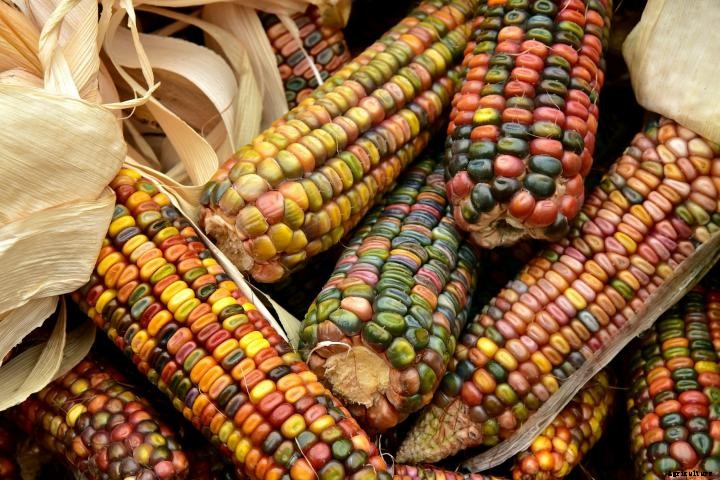
Corn can be a feast for the eyes, too! Look for these ornamental varieties:
- 'Glass Gem': Sporting multi-colored, semi-transparent kernels, this is a favorite for kids.
- 'Painted Mountain': Looking for the classic "maize" colors? This variety has a great diversity of natural tones. Check out our video to learn more about growing and using painted mountain corn.
Harvest/Storage
How to Harvest Corn
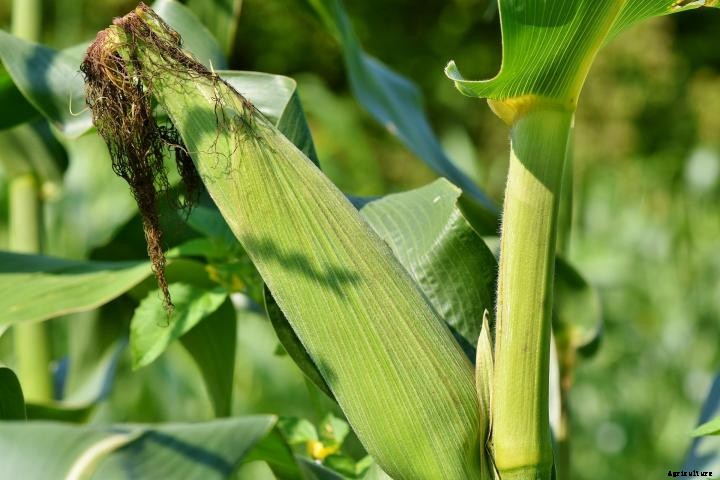
- Harvest when tassels begin to turn brown and cobs start to swell. Kernels should be full and milky.
- Pull ears downward and twist to take off stalk.
- Sugary (su) varieties begin to lose their sweetness soon after harvesting, so use them as soon as possible.
- Prepare for eating or preserving immediately after picking.
How to Store Corn
- Sweet corn freezes well, especially if removed from ears before freezing. Learn how to properly freeze corn.
- Corn kernels can also be harvested for other purposes, like corn-filled therapy packs.
Wit and Wisdom
- Baby corn is produced from regular corn plants that are harvested early, while the ears are immature. Regular sweet corn, sugar-enhanced sweet corn, and supersweet corn varieties can be used, along with a few varieties that are specific for baby corn.
- Corn sometimes produces aerial roots a few inches above the soil. These are not meant to absorb water or nutrients, but rather to stabilize the tall stalk.
- If your corn shucks harder than usual, prepare for a cold winter.
- Corn is one of the Three Sisters; its growing style pairs perfectly with beans and squash. Learn more about companion planting.
- Corn is great for eating but also has so many other uses including medicinal. Learn more about corn for natural health.
- Learn more fun, witty facts about corn.
Recipes
Summer Corn Salad
Cooking Notes
- If too much hot pepper or spice has been added to a soup or stew, adding a can of sweet corn can help.
- Popcorn is also a favorite snack if you have leftover kernels. Learn how to make homemade popcorn here.


