Not only is garden celery better-tasting than store-bought types, but also it's less chemically-laden. In cool spring and summer regions, plant celery in early spring. In warm spring and summer regions, plant celery in mid to late summer for harvest in late autumn or early winter. Here's our advice on sowing, growing, and harvesting celery.
For us, celery is a staple in the garden because it's so useful in the kitchen—for stews, stirfries, soups, and salads.
This cool-weather crop requires 16 weeks of cool weather to come to harvest. Celery is considered a hardy biennial, but it's grown as an annual which is mainly grown for its edible 12- to 18-inch stalks. It's not difficult to grow celery but you do need start celery from seed indoors; transplants are hard to find and do not always succeed.
There are two types of celery. Trenching celery needs soil mounded up against the stems as they grow to produce crisp, pale stems. To make this easier trenching celery is typically planted into trenches, hence the name, but some gardeners aid this blanching process using cardboard tubes, pipes or collars. The alternative is to grow self-blanching celery, which requires none of these extra steps. This makes it a lot easier to grow, and the stems are just as tasty!
Enjoy our video all about growing celery and then follow the planting, growing, and harvesting instruction below
Planting
Soil Preparation
- Select a site that receives full direct sunlight.
- Celery needs compost-enriched soil. Loosen the soil to a depth of 12 to 15 inches with a garden fork or tiller. Mix 2 to 4 inches of aged manure and/or compost into the soil. Or, work in some 5-10-10 fertlizer. The soil should retain moisture, bordering on wet but still draining.
- Celery prefers a soil with a pH between 5.8 and 6.8. Get a soil test if you're not sure of your soil pH.
- It's important for celery to grow in moisture retentive soil that doesn't drain too quickly. Wild celery grows in boggy ground, so you’ll need to ensure consistent moisture for this thirsty vegetable, while a sunny spot should ensure good, even growth.
Sowing Seeds Indoors
- Due to a long growing season, it's best to start celery seed indoors. For a spring crop, start seeds 10 to 12 weeks before the last spring frost date. (For a fall crop, start seeds in time to transplant seedlings 10 to 12 weeks before the first autumn frost date.)
- Note: The seeds are tiny, so you’ll need to sow with care and a keen eye.
- Before planting, soak seeds in warm water overnight. This will speed germination.
- Fill seed flats or pots with good-quality seed starting mix then gently firm it level.
- Press soaked seeds into seed-starting soil; to get good germination do not cover with soil. The easiest way to sow the seeds is to carefully tap the packet above the surface of the potting mix and watch carefully as the seeds fall. Ideally you want them to fall about an inch apart. Once you’re done, firm the seeds into place.
- Cover starter trays/pots with plastic wrap to retain moisture. Germination should occur in about a week but it can take up to three weeks; be patient.
- Soon after seedlings appear, place a fluorescent grow light 3 inches above them for 16 hours a day (plants need dark, too).
- Maintain an ambient temperature of 70° to 75°F during the day and 60° to 65°F at night.
- Mist regularly.
- When seedlings are 2 inches tall, transplant them to individual peat pots or to deeper flats with new potting soil. In flats, set the plants at least 2 inches apart.
- Harden off seedlings before transplanting by reducing water slightly and putting them outdoors for a couple of hours each day.
Transplants in the Ground
- Plant celery outdoors when the soil temperature reaches at least 50°F and nighttime temperatures don't dip down below 40°F. (Cold weather after planting can cause bolting.)
- Begin acclimatizing celery to the outdoors two weeks before planting: Leave your plants outside for progressively longer each day, taking care to bring them back under cover if frost threatens.
- Work organic compost into the soil prior to planting. (Learn more about soil amendments and preparing soil for planting.) Or mix in fertilizer (about one pound of 5-10-10 per 30 square feet).
- Water thoroughly.
Care
- Celery requires lots of water. Make sure to provide plenty of water during the entire growing season, especially during hot, dry weather. If celery does not get enough water, the stalks will be dry and small.
- Add plenty of compost and mulch around the plants to retain moisture. Sidedress with a nutrient rich organic fertilizer are establishing to help to give them a boost. Comfrey pellets are great, as are coffee grounds, tickled into the soil between plants. You could also lay a mulch of organic matter such as compost between your plants. This will keep the roots cool, help to feed your plants, and lock in that all-important soil moisture.
- Keep celery weeded but be careful when weeding as celery has shallow roots and could easily get distrubed.
- Tie growing celery stalks together to keep them from sprawling.
- Start earthing up trenching varieties once the stems reach about a foot tall, banking the soil up by about three inches (8cm) each time until you can hill up no more.
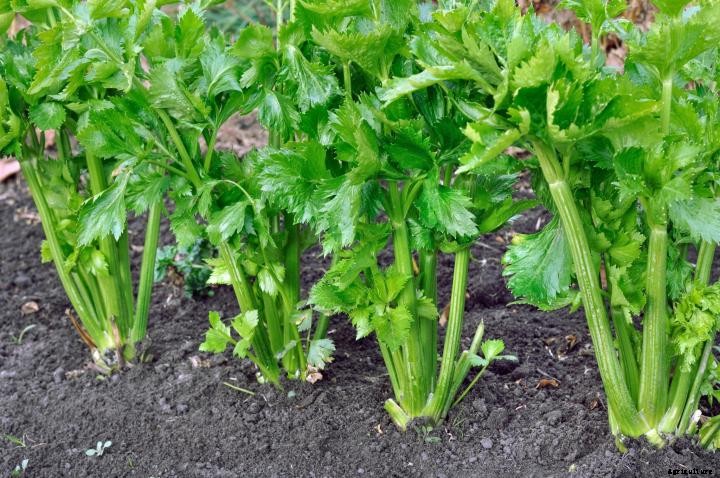
Image: Garden celery. Photo credit: Yuris/Shutterstock.
Pests/Diseases
Celery is pretty trouble-free but watch out for slugs early on. Beer traps will tempt slugs away from young plants and the unfortunate victims can be disposed of as necessary.
- Flea beetles
- Slugs and snails
- Earwigs
To control pests, cover the plants with garden fabric (row covers) during the first four to six weeks of the growing season
Recommended Varieties
- ‘Utah 52-70R Improved’ is good for gardeners with limited space. Will only reach 18 inches tall.
- ‘Alfina’ has slender stalks and is a dark green, quick-growing variety (60 days to maturity).
- ‘Conquistador’ is tolerant of higher temps and watering shortage.
Harvest/Storage
- Harvest celery from summer and through the autumn until the first hard frosts stop growth. In milder areas celery may overwinter, producing occasional stems throughout the coldest months then picking up again in spring before finally stretching to flower.
- You can harvest plants whole but cutting or picking individual stems as required will keep plants producing over a longer period.
- The parts of celery that are harvested are mainly the stalks, which will be above ground.
- Pick the stalks whenever you want. Young celery is as good as the mature product.
- Harvest stalks from the outside in. You may begin harvesting when stalks are about 8 inches tall.
- Celery can be kept in the garden for up to a month if soil is built up around it to maintain an ideal temperature. Celery will tolerate a light frost, but not consecutive frosts.
- Tip: The darker the stalks become, the more nutrients they will contain. Texture changes with color; dark green stalks will be tougher.
- Keep celery in a plastic bag in the refrigerator. Celery stores really well; you can keep it for many weeks with no trouble.
Wit and Wisdom
- Keep in mind the grocery store celery is lighter in color and bigger than homegrown celery because the commercial varieties are grown in greenhouses and/or protected from the sun; they often carries a lot of pesticides, too.
- Celery stalks can be frozen. Cut the stalks into half-inch pieces and store in freezer-grade bags.
- The ancient Romans believed that celery had healing powers, especially when it came to headaches.
- Bland or boring? You may be delighted to discover that celery has many benefits. See why celery is heathy and happening.


