
Welcome to Modern Agriculture!

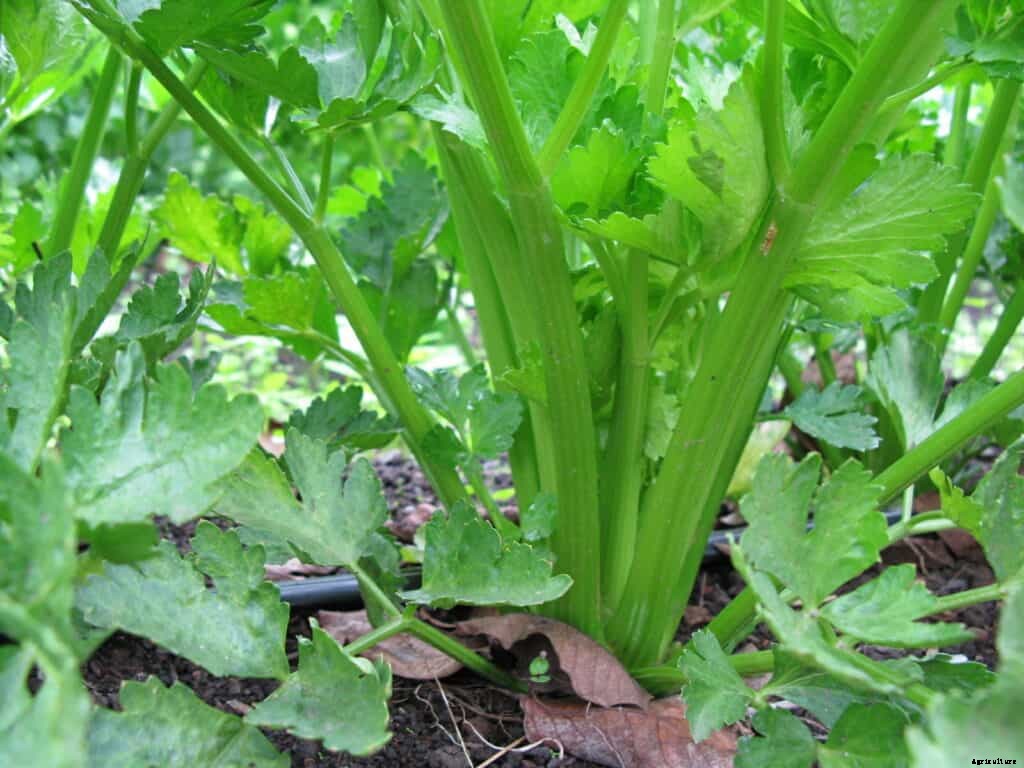 Celery is a cool-weather crop. It requires 16 weeks of cool weather to come to harvest.
Start celery seed indoors 8 to 10 weeks before the last frost in spring. Set transplants in the garden 2 to 3 weeks before the average last frost date when seedlings have 5 to 6 leaves.
In cool spring and summer regions, plant celery in early spring. In warm spring and summer regions, plant celery in late summer for harvest in late autumn or early winter.
Description. Celery is a hardy biennial grown as an annual. It has a rosette of 12- to 18-inch (30-45cm) stalks, topped with divided leaves. Celery is grown for its stalks, leaves, and seeds.
Celery Yield. Plant 5 plants per household member.
Site. Grow celery in compost-rich, moisture-retentive soil that borders on wet but still drains. Celery prefers soil with a pH between 5.8 and 6.8. Celery has a low tolerance for heat and prefers a cool, cloudy location where growing temperatures range between 60°F and 70°F (15-21°C). Plant celery where the growing season offers 4 months of cool weather.
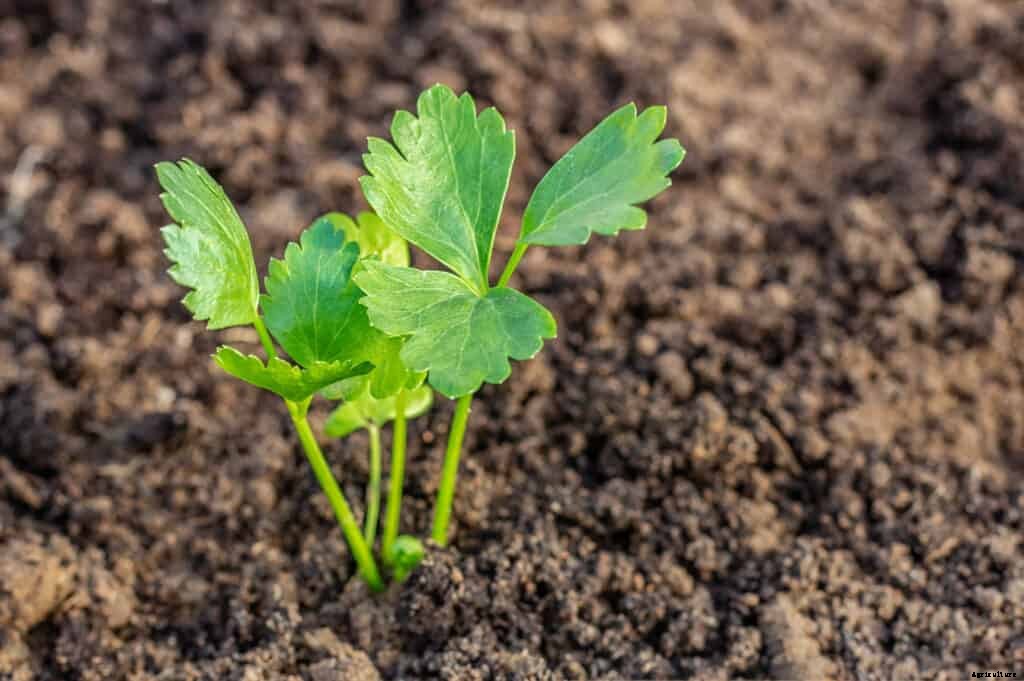
Celery Planting Time. Celery is a cool-weather crop. It requires 16 weeks of cool weather to come to harvest. Start celery seed indoors 8 to 10 weeks before the last frost in spring. Set transplants in the garden 2 to 3 weeks before the average last frost date when seedlings have 5 to 6 leaves. (To delay transplanting time and slow growth, cut seedlings down to 3 inches (7.6cm) tall and then allow them to grow on.) Cold weather will inhibit growth as will warm weather. Temperatures below 50°F (10°C) for more than 12 hours may cause celery to bolt. In cool spring and summer regions, plant celery in early spring. In warm spring and summer regions, plant celery in late summer for harvest in late autumn or early winter.
Planting and Spacing Celery. Sow celery seed ¼ to ½ inch deep, 6 to 10 inches (15-25cm) apart; space rows 24 inches (61cm) apart. Transplant seedlings started indoors into trenches 3 to 4 inches (7.6-10cm) deep set 6 to 10 inches (15-25cm) apart. As plants grow mound up soil around the stems to blanch them. Plant self-blanching celery in blocks 6 to 12 inches (15-30cm) apart; planting closer will give a higher yield but more slender stalks.
Companion plants. Lettuce, spinach, English peas. Avoid pumpkins, cucumbers, and squash.
Container Growing Celery. Celery can be grown in an 8-inch (20cm)container. Set celery on 10-inch centers in large containers. To blanch celery growing in a container, tie paper, or cardboard cylinders around the stalks.
Water and Feeding Celery. Keep celery well-watered during all phases of growth. Lack of water will slow growth, cause stalks to become stringy, and encourage plants to send up flower stalks. Celery is a heavy feeder. Add aged-compost to planting beds before planting and side-dress plants with compost at midseason.
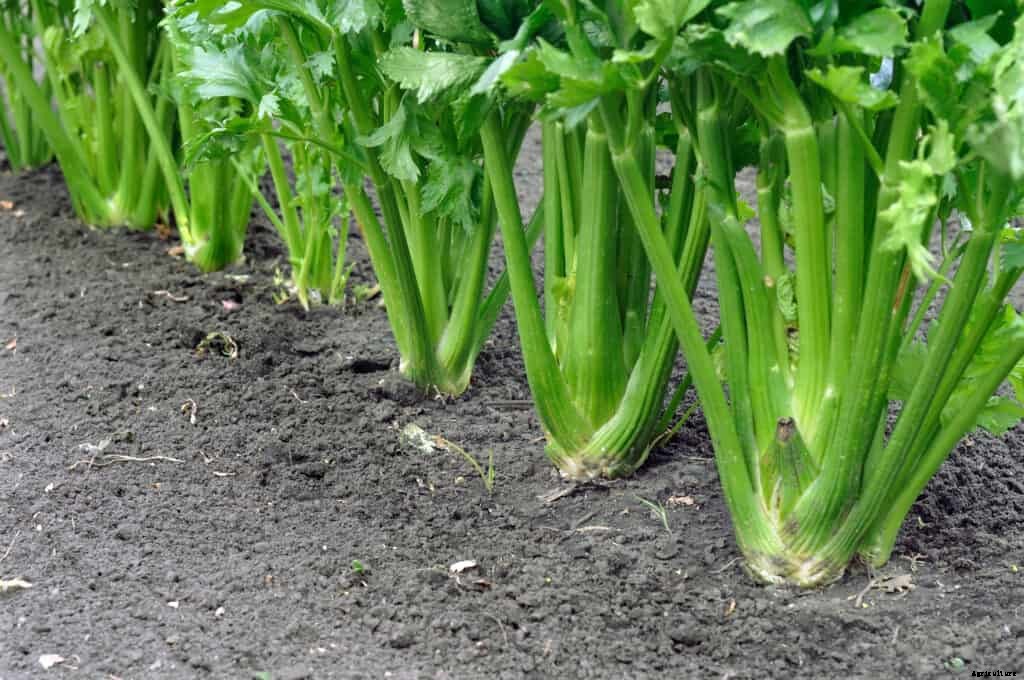
Celery Care. Keep celery planting beds weed-free to avoid competition for moisture and nutrients. Keep cultivation shallow so as not to damage roots. Blanch celery to enhance its sweet flavor and whiten stalks. Celery that is not blanched can be bitter tasting. Blanching is achieved by covering the stalks with soil, straw, or paper cylinders rolled up to the top of the stalks to protect them from the sun, which encourages them to produce chlorophyll and turn green. Blanch celery up to 10 to 14 days before harvesting. Celery that sits too long after blanching will become pithy and may rot.
Celery Pests. Celery usually encounters no serious pest problems but can be attacked by celery leaf miner and slugs (during blanching).
Celery Diseases. Pink rot, black heart, and blight can attack celery. Make sure there are adequate magnesium and calcium in the soil to discourage these diseases.
Celery Harvest. Time from planting to harvest is 100 to 130 days from transplants about 20 days longer from seed. A 10-foot (3m) row should yield about 20 heads of celery. Start harvesting before the first hard frost when the head is about 2 to 3 inches (5-7.6cm)in diameter at the base. Cut off the head at or slightly below the soil level.
Storing and Preserving Celery. Celery will keep in the refrigerator for up to two weeks. Leaves cut for use as an herb will keep in the refrigerator for up to one week. Celery can be dried, canned, and frozen. Seeds can be used as an herb.
‘Golden Plume’ (85-116 days); ‘Golden Self-Blanching’ (80-118 days); ‘Green Giant’ (95-115 days); ‘Summer Pascal’ (‘Tall Fordhook’) (115 days); ‘Red Celery’ (120 days); ‘Starlet’ (120 days); ‘Utah 52-70’ (125 days); ‘Ventura’ (80-100 days); ‘French Celery Dinant’ (Chinese celery) (55 days).
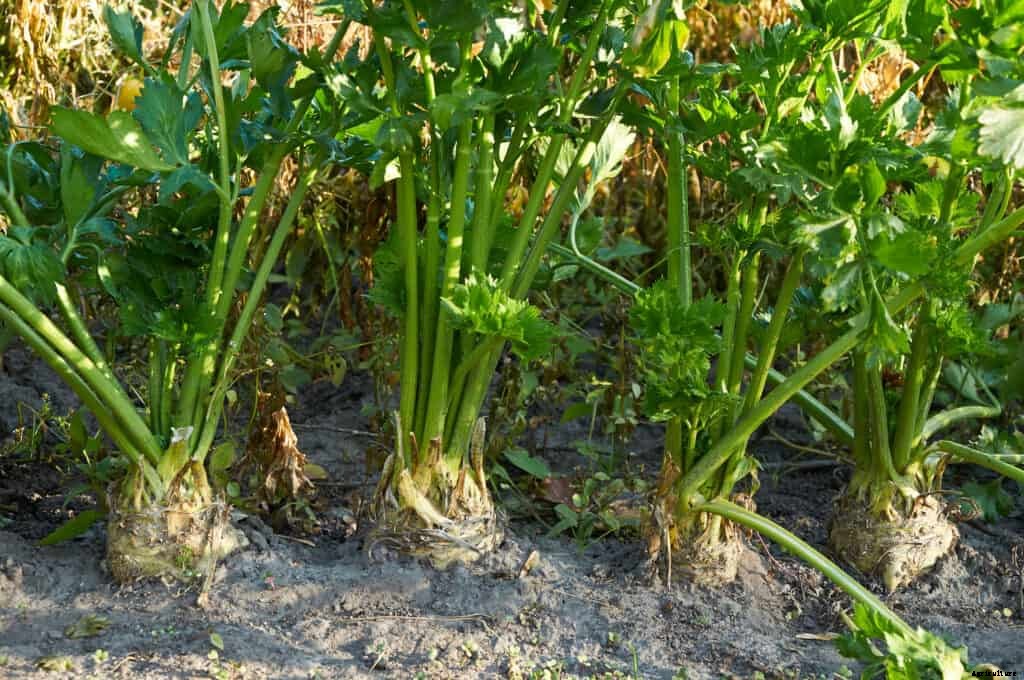
Celeriac (Apium graveolens var. rapaceum) also called celery root and knob celery is a relative of celery. The edible part of celeriac is its enlarged, knobby base which is part stem and part crown. Grow celeriac as you would celery; it is easier to grow than celery. Celeriac is ready for harvest when the base is 2 to 4 inches thick.
Celery botanical name. Apium graveolens dulce
Origin. Europe
Grow 80 vegetables and herbs: KITCHEN GARDEN GROWERS’ GUIDE available at Amazon.com.


