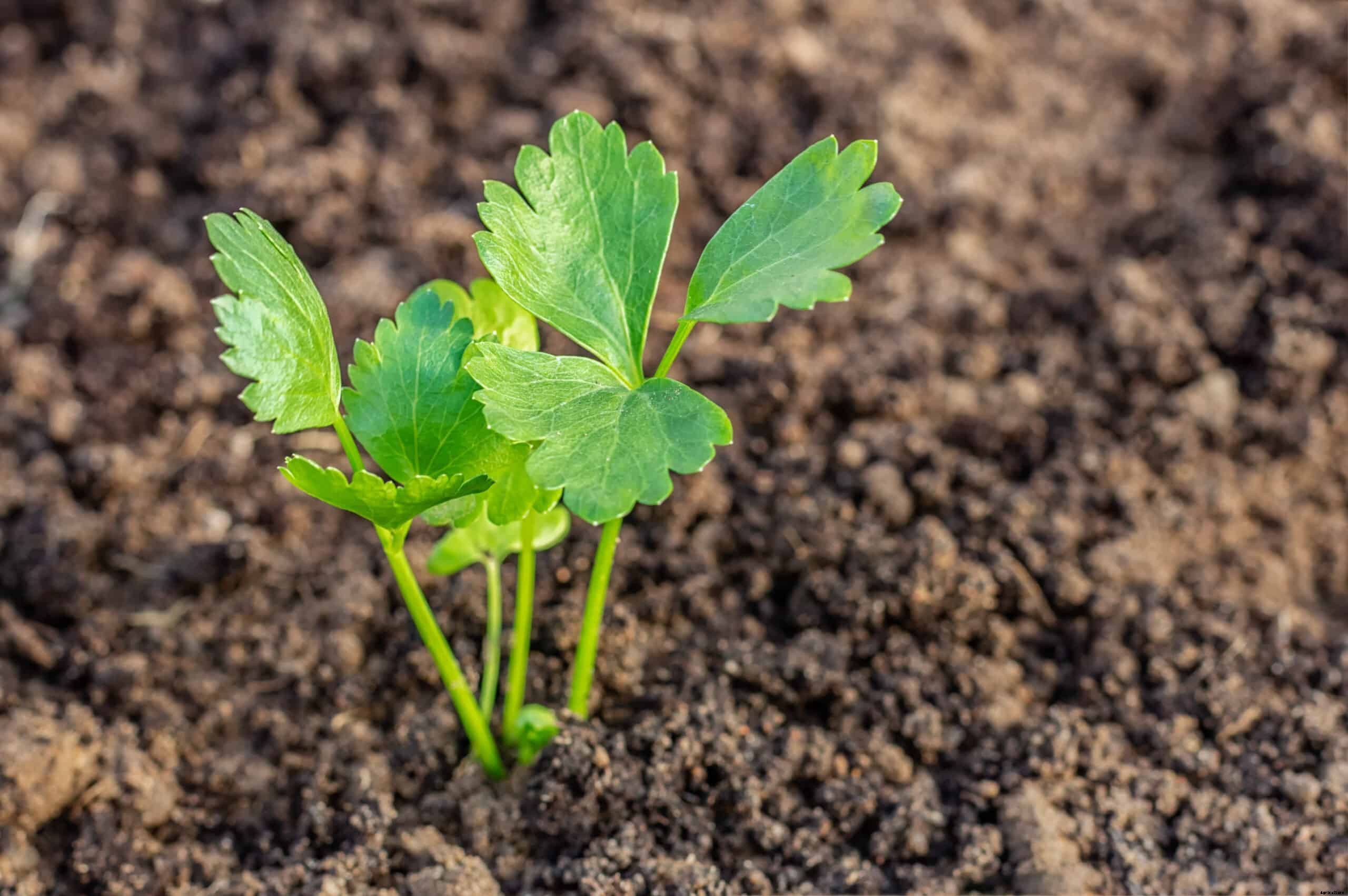
Celery is a cool-season crop. It grows best where daytime temperatures are consistently greater than 55°F (13°C) but not consistently warmer than 80°F (26°C).
Where temperatures are very warm, celery will grow stringy; where temperatures fall below 50°F, celery will send up flower stalks and become bitter flavored.
Start celery indoors 14 to 6 weeks before the last expected frost in spring. Transplants can go in the garden two weeks before the last expected frost. Sow seed in midsummer 14 to 12 weeks before the first frost for an autumn harvest.
Celery matures in 98 to 130 days from seed sowing depending on the variety.
Celery Sowing and Planting Tips
- Seed is viable for 5 years.
- Sow seed indoors 14 to 6 weeks before the last spring frost. Set out seedlings when they reach 3 inches (8 cm) tall about the time of the last frost.
- Sow seed ⅛ inch deep (3 mm).
- Seed will germinate in 10 days at 75°F (24°C); soak seed overnight in water before sowing.
- Blanching celery varieties should be plants in a trench 12 inches (30 cm) deep by 18 inches (45 cm) wide. This will allow for stalks to be gathered and wrapped in wax paper and the trenches to be filled in about midseason; this is part of the blanching process.
- Self-blanching varieties do not require trenches or efforts to blanch the stalks.
- Harden plants by reducing water for 7 to 10 days before transplanting.
- Use row covers to keep plants warm for a month after transplanting if necessary.
- Space plants 6 to 8 inches (15-20 cm) apart in all directions.
- Add aged compost to planting beds in advance of sowing; compost will feed the soil and aide moisture retention.
- Celery grows best when daytime temperatures are in the 60s°
- Celery prefers a pH range of at least 5.8 to 6.8.
- Grow celery in full sun; celery tolerates partial shade.
- Avoid planting celery where carrots, dill, fennel, parsley, or parsnips have grown recently.
- Fertilize with an organic fertilizer such as fish emulsion at half strength.
- Common pests include aphids, cabbage loopers, celery worms, slugs, weevils, spider mites and whiteflies.
- Common diseases include blight, damping off, leaf spot, and celery mosaic.
Interplanting: Grow celery with beans, cabbage family plants, lettuce, spinach, and peas.
Container Growing Celery: Grow self-blanching varieties in a container at least 10-12 inches (25-30) wide and deep.
Celery Planting Calendar
- 12-10 weeks before the last frost in spring: start seed indoors.
- 3-2 weeks before the last frost in spring: transplant seedlings into the garden; minimum soil temperature should be 40°
- Sow seed indoors every 6 to 8 weeks for succession crops.
- 8 weeks after the last spring frost: transplant seedlings into the garden for autumn and winter harvest.
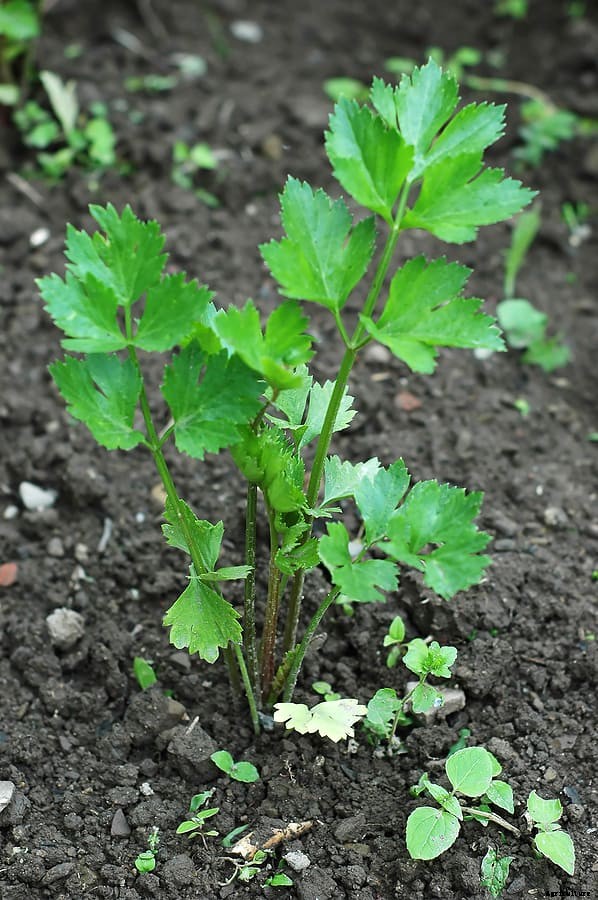
Recommended Celery Varieties
- ‘Conquistador’ is tolerant of temperature and moisture stress.
- ‘Ventura’ is disease tolerant and early to harvest.
- ‘Tango’ is an early variety.
Celery types: There are two types of celery: blanching and self-blanching. Blanching varieties require the exclusion of sunlight from their leaf stalks in order to blanch or turn white. Self-blanching varieties spontaneously lose the chlorophyll in their leaf stalks and do not require trenches for blanching.
Botanical Name: Apium graveolens var. dulce
Celery is a member of the Apiaceae also called Umbelliferae family, other members of this family include carrots, dill, fennel, parsley, and parsnips.


