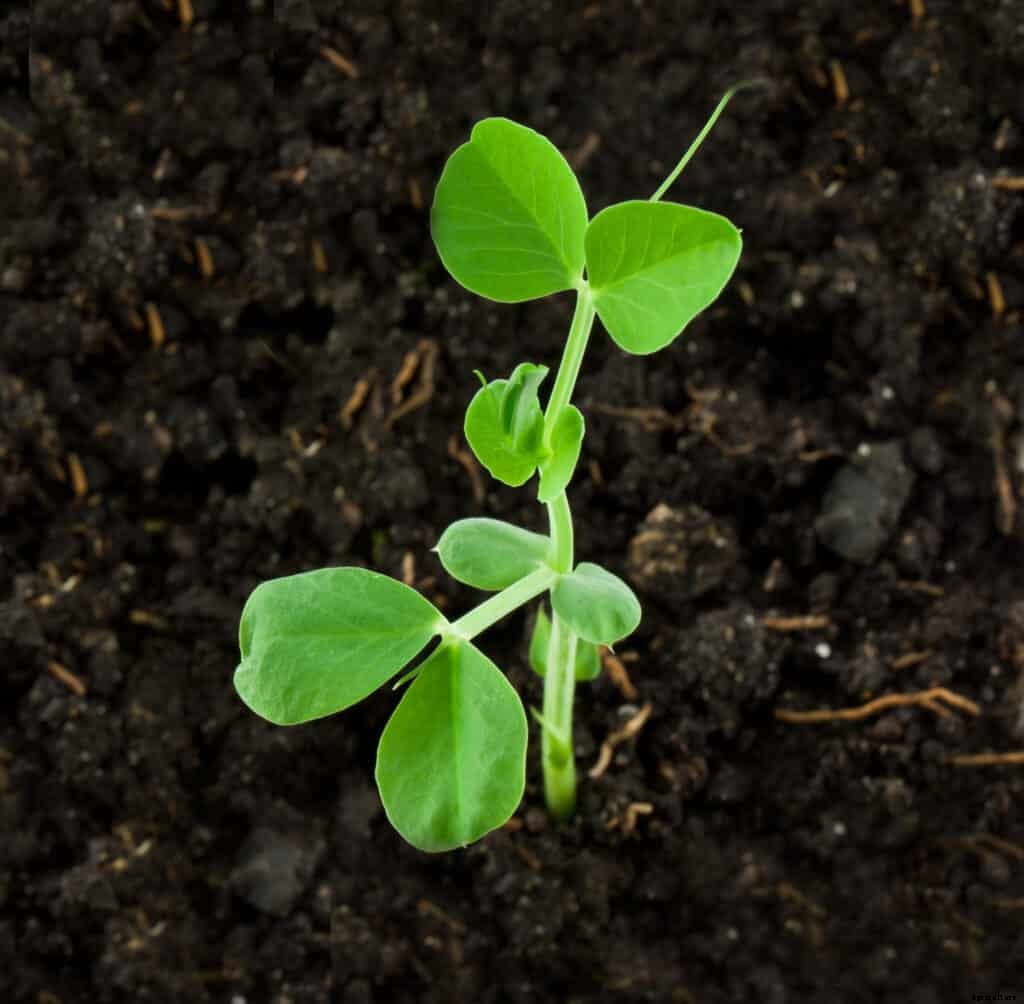
Peas are a cool-weather crop.
Sow pea seeds in early spring as soon as the soil can be worked or in late summer. Grow peas so that they come to harvest when the weather is cool.
Peas can be classified by how large they grow: dwarf, medium, or tall. The taller the plant grows the larger the yield. Tall varieties require a long growing time; smaller varieties require less growing time.
Peas mature in 55 to 70 days depending upon the variety.
Peas also can be classified by use. Some peas are for shelling, some have edible pods, and others can be shelled or eaten pod and all. Shelling peas can be used fresh or dried and cooked. Edible pod peas are often called snow or sugar peas. Peas that are shelled and eaten fresh are called green peas, garden peas, or English peas.
Peas Sowing and Planting Tips
- Grow peas from seeds or seedlings.
- Seed is viable for 3 years.
- Sow seed indoors 8 to 6 weeks before the last frost in spring then transplant seedlings to the garden when they are 4 weeks old and a few weeks before the last expected frost; peas can withstand a light frost.
- Direct sow peas directly in the garden as soon as the soil can be worked in spring or in late summer.
- Peas must mature before the weather gets hot. Late planting can cause poor results.
- For a spring crop, sow seeds in spring 8 to 6 weeks before the last frost.
- For an autumn or winter crop, sow seeds from late summer through autumn.
- Peas will germinate in 9 days at 60°F (16°C) or in 35 days at 40°F (4°C); the optimal soil temperature for starting seeds is 75°F (24°C).
- The optimal soil temperature for growing peas is 50° to 75°F (10-24°C).
- Sow seed in peat pots 2 to 3 weeks before planting out if you want to start plants indoors.
- Sow seed ½ to 1 inch (2.5 cm) deep.
- In the garden, space peas 2 to 3 inches (5-7.5 cm) apart; later thin successful plants to 4 inches (10 cm) apart.
- Install wire or strong supports between posts for bush varieties. Install sturdy poles, wire fence, or a trellis supported by posts for pole varieties.
- When sowing peas, put poles, vine nets, wire fencing, or trellis in place for plants to climb.
- Sow seed every 3 weeks until late spring for an uninterrupted harvest.
- Keep the soil just moist. Letting the soil dry out will interrupt pod development.
- Fertilize with fish emulsion or a soluble complete fertilizer at half strength.
- Add aged compost to planting beds in advance of transplanting.
- Peas prefer a soil pH range of 5.5 to 6.8.
- Grow peas in full sun for best yield.
- Common pest enemies include aphids, cabbage loopers, cabbage maggots, cucumber beetles, flea beetles, snails, and slugs.
- Common diseases include bacterial blight, downy mildew, fusarium wilt, leaf curl, powdery mildew.
Interplanting: Plant peas with carrots, celery, chard, corn, cucumber, eggplant, potatoes, spinach, and strawberry.
Container Growing Peas: Peas will grow in containers, but it takes space to produce a reasonable crop. Choose a container at least 12 inches (30 cm) deep.
Peas Planting Calendar
- 6-5 weeks before the last frost in spring as soon as the soil can be worked: direct-sow in the garden.
For a Fall Harvest:
- 12-10 weeks before the first frost in fall: sow quick-maturing variety in the garden.
Types of peas: Peas are indeterminate (climbing) or determinate (bush or dwarf). The taller the plant grows, the larger the yield. Tall types require a fairly long, cool spring and often do not mature until summer. Tall peas should be grown on poles, fences, or trellises.
Some peas are for shelling, some have edible pods, and others can be shelled or eaten pod and all. Shelling peas can be used fresh or dried and used in soups. Edible pod peas are called snow or sugar peas. Peas that are shelled and eaten fresh are called green peas, garden peas, or English peas.
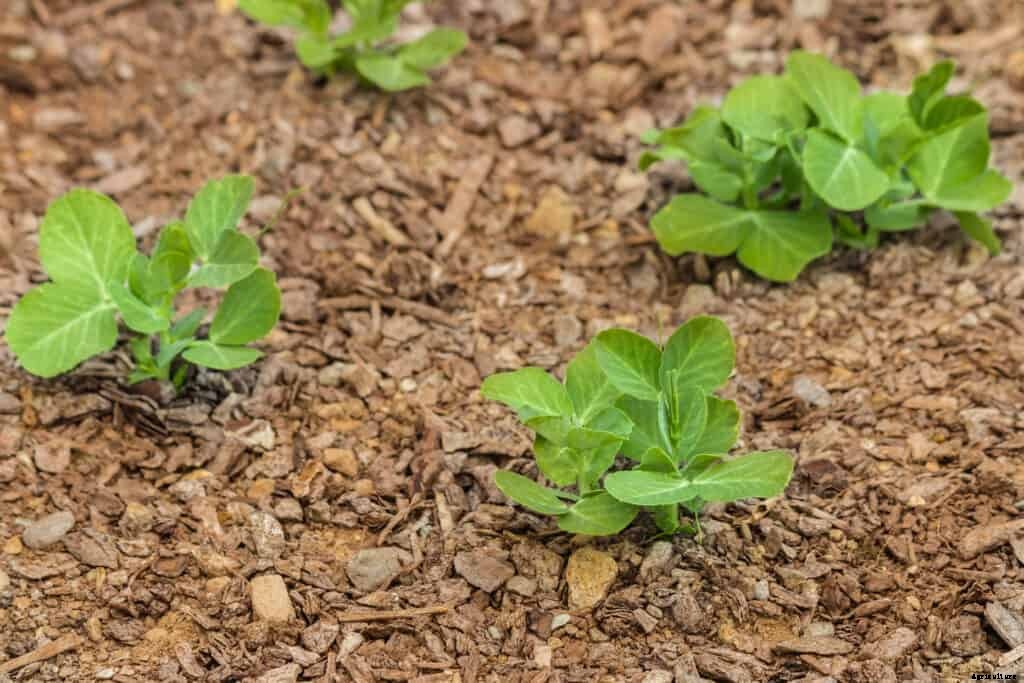
Recommended Pea Varieties
There are many varieties of bush and pole peas:
- Garden peas: ‘Knight’ and ‘Dakota’ are harvested early; ‘Lincoln’ is a sweet heirloom; ‘Green Arrow’ is a flavorful climber; ‘Tall Telephone’ is a sweet climber; ‘Alaska’ is a short-season variety; ‘Little Marvel’ and ‘Wando’ are small bush varieties.
- Snow peas: ‘Oregon Giant’ is large podded; ‘Mammoth Melting Sugar’ is long podded.
- Sugar peas: ‘Super Sugar Snap’ is a sweet climber; ‘Sugar Snap’ is a pole pea; ‘Sugar Ann’ is a bush pea.
Botanical Name: Pisum sativum var. macrocarpon
Peas are a member of the Fabaceae family.


