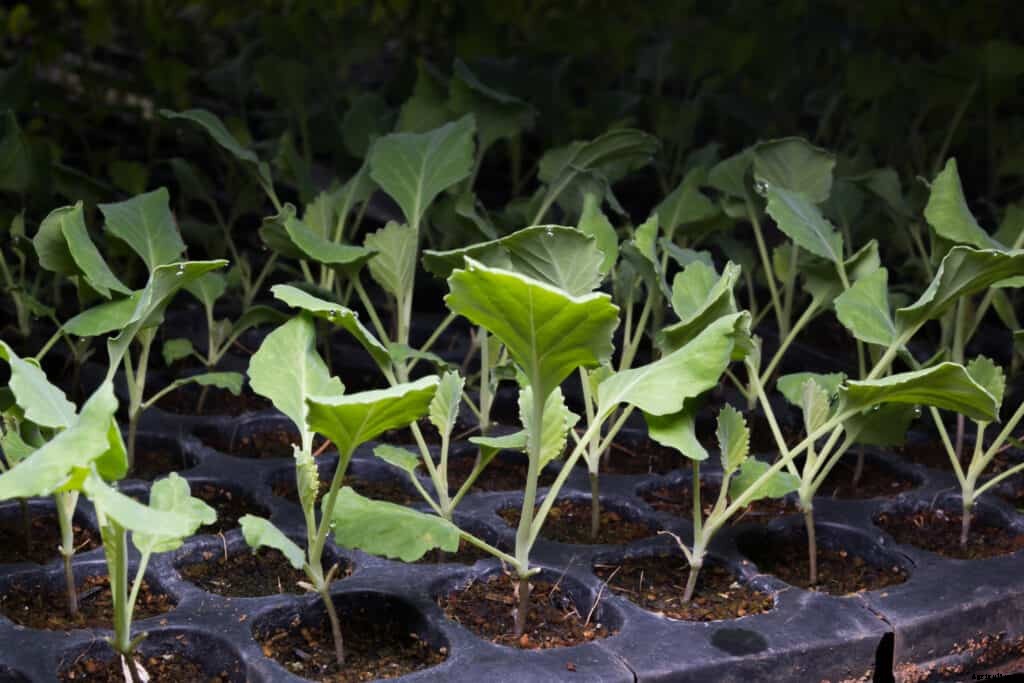
Kale grows best in the cool weather of spring and fall. Mature kale plants can tolerate temperatures as low as 10 to 20°F (-12 to -7°C).
Time kale seed sowing so that plants come to harvest before very warm and hot weather; hot weather will trigger bolting and seed-stalk formation.
Bolting can be slowed by picking the oldest leaves first, but the flavor of kale will suffer in warm and hot weather. The best-flavored kale has been touched by frost.
Kale matures in 55 to 65 days depending on the variety.
Kale Sowing and Planting Tips
- Kale is grown from seeds or transplants.
- Seed is viable for 4 years.
- Start kale indoors 10 to 6 weeks before the last spring frost; sow seed in early spring or late summer or a fall or winter crop.
- Sow seed ¼ to ½ inch (6-13mm) deep.
- Sow seeds 4 inches (10cm) apart; later thin seedlings to 16 to 18 inches (40-45cm) apart; use the thinnings in salads. Make sure there is good air circulation around maturing plants to avoid disease.
- Space plants 16 inches (40cm) apart in a staggered pattern or in rows 18 inches apart.
- Kale grows best in full sun but can tolerate light shade.
- Kale prefers a soil pH between 6.0 and 7.0.
- Seed germinates in 5 to 7 days at or near 70°F (21°C); sometimes seed can take up to 2 weeks to germinate if the soil is cold.
- If sowing seed in summer for fall harvest, place the seed in a folded damp paper towel placed in a plastic bag and kept in the refrigerator for 5 days before sowing.
- Keep the soil evenly moist until seeds germinate then keep the soil moist until seedlings are well established; once plants are established mulch with straw to keep the roots cool and moist.
- Add aged compost to planting beds in advance of sowing; compost will feed the soil and aide moisture retention.
- Kale grows best when daytime temperatures are in the 60s°
- Kale can tolerate light frosts in the spring and freezes in the fall.
- Kale planted in the fall can winter over under straw and will begin growing again early in spring.
- Avoid planting kale where cabbage, broccoli, Brussels sprouts or cabbage family crops have recently grown.
- Make successive sowings every few weeks for an extended harvest.
- Fertilize with an organic fertilizer such as fish emulsion at half strength.
- Aphids and flea beetles can attack kale.
Interplanting: Interplant kale with beets, leaf lettuce, onions, spinach, and Swiss chard.
Container Growing Kale: Grow kale in a container a minimum of 8 inches (20 cm) wide and deep.
Kale Planting Calendar
- 6-4 weeks before the last frost in spring: start seed indoors for transplant out later.
- 4-2 weeks before the last frost in spring: transplant seedlings into the garden.
- 2 weeks before the last frost in spring direct sow in the garden; minimum soil temperature should be 45°
For Fall Harvest:
- 14-12 weeks before the first frost in fall: start seed indoors.
- 10-8 weeks before the first frost in fall: transplant seedlings into the garden.
- 10-6 weeks before the first frost in fall: transplant seedlings into a plastic tunnel or cold frame.
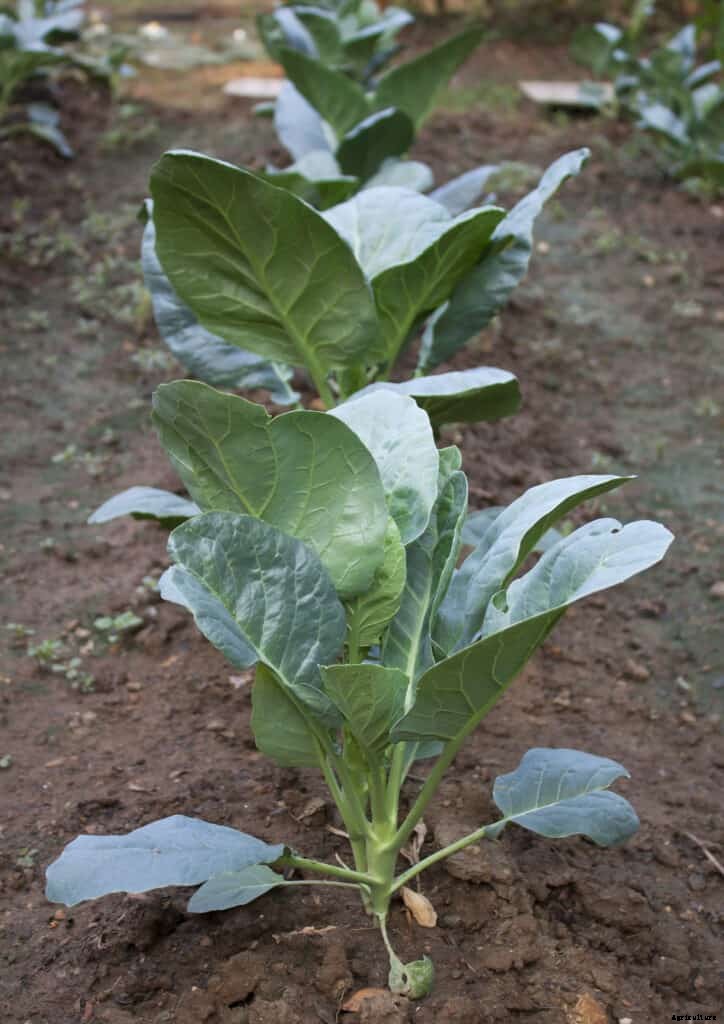
Recommended Kale Varieties
- ‘Red Russian’ purple stems, flat, smooth, grey-green leaves.
- ‘Toscano’ also called dinosaur kale, dark green, savoy leaves.
- ‘Winterbor’ ruffly, blue-green leaves.
Botanical Name: Brassica oleracea
Kale is a member of the Brassicacea (Cruciferae) or cabbage family.


