Learn how to grow Swiss chard—or simply "chard"—a green known for its bright and colorful stems. A great choice for fall gardens, Swiss chard is prolific—leave plenty of room in the garden bed! It has a mild flavor, adding nutrition and color to salads, pastas, pizzas, quiches, sandwiches, and more. Here's how to plant, grow, and harvest Swiss chard in your garden!
About Swiss Chard
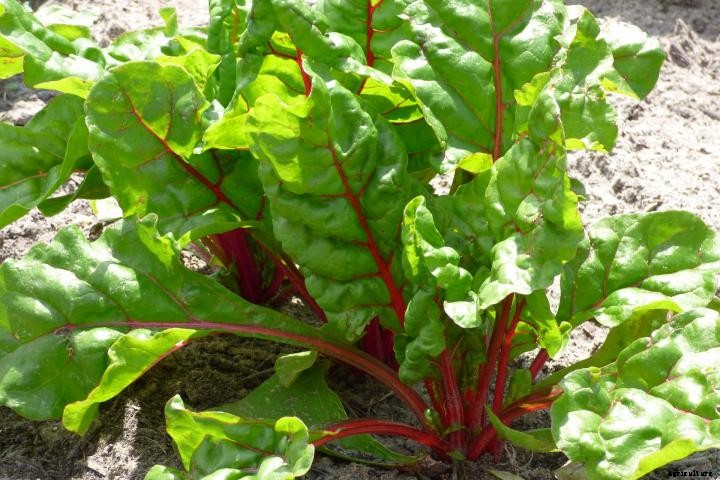
Swiss chard is a member of the beet family and both its stems and leaves can be eaten cooked or raw. Chard may also go by the names leaf beet, seakale beet, silver beet, and spinach beet. Best known for its bright and colorful stems, Swiss chard comes in a rainbow of hues—pink, yellow, orange, red, and white.
Typically grown as a cool-season crop because it grows quickly and easily during the cooler temperatures of spring and fall, chard is tolerant of hotter temperatures, too. Its growth will slow down in summer, but chard's higher heat tolerance makes it a great salad green to grow when it gets too hot out for the others.
Chard is a superfood, high in vitamins A, C, and K. It doesn't have that bitter taste that a lot of other greens have, and it makes a good substitute for spinach or kale, if you're not a fan of those superfoods.
On top of all its virtues as a garden vegetable, chard is a lovely edible ornamental plant to mix with landscaping! Its rainbow of colors are beautiful! Why, you could even use chard in a vase or bouquet, mixed with flowers or on its own. Why should flowers have all the fun?
Planting
When to Plant Swiss Chard
- Prepare your soil with mix aged manure and/or compost at least two weeks before planting, if not the prior season.
- For the spring season, plant chard seeds 2 to 3 weeks before the last spring frost date.
- When ready to plant, apply 5-10-10 fertilizer to the area.
- To speed germination, soak seeds in water for 24 hours prior to planting.
- Continue planting seeds at 10-day intervals for a month. Chard is best treated as a "cut-and-come-again" crop. This harvesting technique involves taking only a few older leaves at a time from each plant, allowing younger leaves to continue growing for additional harvests later in the season.
- For a fall harvest, plant chard seeds about 40 days before the first fall frost date. (Many varieties will tolerate a light frost.)
Choosing and Preparing a Planting Site
- Chard will tolerate partial sun, but grows best in full sun.
- Ensure that your soil is well-draining and rich by mixing in compost before planting. If your soil is particularly poor, apply a balanced fertilizer (10-10-10) to the planting site.
- Chard prefers a soil pH between 6.0 and 7.0 (slightly acidic to neutral).
How to Plant Swiss Chard
- To speed up germination, soak seeds in water for 24 hours before planting.
- Sow the seeds 1/2 to 1 inch deep, spacing them 2 to 6 inches apart in rows.
- Space rows about 18 inches apart.
- Like beet seeds, chard seeds actually come in clusters of a few seeds, which results in multiple seedlings emerging from a single planting hole.
- Once the plants reach 3 to 4 inches tall, thin them to about 6 to 8 inches apart (or 9 to 12 inches apart if you desire larger plants). Snip them with scissors and enjoy the young seedlings as a snack!
- Note: Because chard is grown for its leaves, thinning isn't as important as it is with beets, which need space for their large, round roots to expand. Crowded chard plants just tend to produce smaller leaves.
- To grow (not merely start) chard indoors, soak seeds for 24 hours in water. Plant in rich potting soil in a container with drainage holes. Place the container in a sunny window. Water to keep the soil damp.
Check out this video to learn how to grow Swiss chard:
Care
How to Grow Swiss Chard
- When plants are 3 to 4 inches tall, thin to 4 to 6 inches apart or 6 to 12 inches if plants are large.
- Use scissors to avoid disturbing nearby plant roots—and harvest the cuttings!
- Chard usually does just fine without the use of fertilizer, but if yours seems to be staying small, consider applying a balanced fertilizer halfway through the season.
- Water Swiss chard evenly and consistently to help it grow better. Water plants often during dry spells in the summer.
- Mulch the plants to help conserve moisture and supress weeds.
- When plants are about 1 foot tall, cut leaves back to 3 to 5 inches to encourage new tender growth. If chard plants become overgrown, they become less flavorful.
Pests/Diseases
- Aphids
- Leaf miners
- Cercospora leaf spot
- Slugs
Recommended Varieties
- 'Bright Lights': Dark green leaves on multicolor stems; bolt resistant but less frost-hardy.
- 'Fordhook Giant': Dark green leaves, white stems; compact plants.
- 'Lucullus': Green leaves, white stems; heat-tolerant.
- 'Peppermint': Green leaves, pink-and-white striped stems; bolt-resistant; good for containers.
- 'Rainbow': Red, pink, white, yellow, orange, and striped leaves and stems.
- 'Rhubarb': Dark green leaves, deep-red stems; sow after risk of frost has passed or it may bolt.
- 'Ruby Red': Green leaves, bright-red stems; sow after risk of frost has passed or it may bolt.
Harvest/Storage
How to Harvest Swiss Chard
- You can start harvesting when the plants are 6 to 8 inches tall, depending on which size leaves you desire. Cut off outer leaves 1-1/2 inches above the ground with a sharp knife. Avoid damaging the plant's center.
- Use the "cut-and-come-again" harvesting technique, taking the largest, oldest leaves and leaving the young ones to continue growing.
- Harvest regularly, and the plants will produce continually.
- To extend the harvest, lift the plant, with roots in the soil, and transfer to a container in a greenhouse. Maintain the temperature at around 50°F. Initially, the chard will appear limp, but it should rebound.
How to Store Swiss Chard
- Rinse off Swiss chard leaves and store them in the refrigerator in ventilated plastic bags.
- To use, draw a sharp knife along the ribs to separate the leaves.
- The leaves are eaten as greens. You can cook them like spinach or eat them raw.
- You can cook the ribs like asparagus.
Wit and Wisdom
- Swiss chard originated in—you guessed it—Mediterranean Europe! Oddly enough, chard is not native to Switzerland at all. According to legend, a Swiss botanist was responsible for determining chard's scientific name and the "Swiss" just stuck!
- Embrace your leafy greens! Learn more about the health benefits of going green!
Cooking Notes
Chard can be used in salads to add color, in smoothies, in soups and stews, on pizzas, in sandwiches in place of lettuce, in quiches, and anywhere you use spinach or kale (especially if you dislike the latter).
Swiss chard holds it shape well when cooked and adds a nutritious boost.


