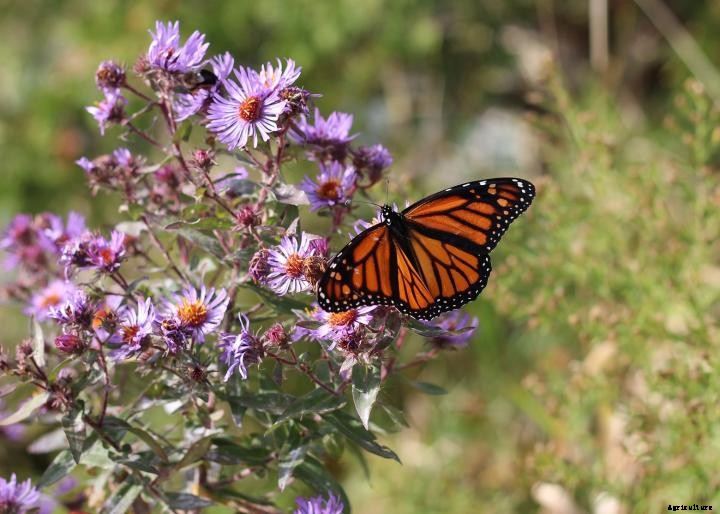
Asters are daisy-like perennials with starry-shaped flower heads that range in color from white to blue to purple. They bring delightful beauty to the garden in late summer and autumn, when many of our summer blooms may be fading. Here's how to grow asters in your garden!
About Asters
There are quite a few species and varieties of asters out there! The two most commonly encountered asters in the home gardening world are the New England aster (Symphyotrichum novae-angliae) and the New York aster (S. novi-belgii), but you will see a range of hybrid varieties available in showy pinks, blues, and purples at garden centers. "Wild type" species native to your region may also be available and are generally a wise choice for the ecologically-minded gardener, despite them not being quite as flashy as the cultivated varieties in some cases. Learn more about recommended varieties further down this page.
Asters attract great numbers of bees and butterflies, providing the pollinators with an important late-season supply of nectar. Thanks to the aster's late bloom time, they are sometimes called "Michaelmas daisies," which refers to the holiday of the same name that occurs annually on September 29!
The plant is versatile and can be used in many places—borders, rock gardens, or wildflower gardens, to name a few. Depending on the variety, the plant's height can range from 8 inches to 8 feet, so you should be able to find one suitable for your garden.
Planting
Choosing and Preparing a Planting Site
- Asters prefer climates with cool, moist summers—especially cool night temperatures. In warmer climates, plant asters in areas that avoid the hot mid-day sun.
- Select a site with full to partial sun.
- Soil should be moist but well-drained, and loamy.
- Mix compost into the soil prior to planting. (Learn more about soil amendments and preparing soil for planting.)
Planting Asters
- While asters can be grown from seed, germination can be uneven. You can start the seeds indoors during the winter by sowing seeds in pots or flats and keeping them in the refrigerator for 4 to 6 weeks to simulate winter dormancy. They need this period of colder weather to kickstart germination.
- Sow seeds one inch deep in soil, placing them in a sunny spot in your home. Plant young plants outside after the danger of frost has passed in the spring. (See local frost dates.)
- The best time to plant young asters is in mid- to late spring. Fully-grown, potted asters may be planted as soon as they become available in your area (typically in the fall).
- Space asters 1 to 3 feet apart, depending on the type and how large it's expected to get.
- Give plants plenty of water at the time of planting.
- Add mulch after planting to keep soil cool and prevent weeds.
Care
How to Grow Asters
- Add a thin layer of compost (or a portion of balanced fertilizer) with a 2–inch layer of mulch around the plants every spring to encourage vigorous growth.
- If you receive less than 1 inch of rain a week, remember to water your plants regularly during the summer. However, many asters are moisture-sensitive; if your plants have too much moisture or too little moisture, they will often lose their lower foliage or not flower well. Keep an eye out for any stressed plants and try a different watering method if your plants are losing flowers.
- Stake the tall varieties in order to keep them from falling over.
- Pinch back asters once or twice in the early summer to promote bushier growth and more blooms. Don't worry, they can take it!
- Cut asters back in winter after the foliage has died, or leave them through the winter to add some off-season interest to your garden.
- Note: Aster flowers that are allowed to mature fully may reseed themselves, but resulting asters may not bloom true. (In other words, you may not get the same color flowers that you originally planted!)
- Divide every 2 to 3 years in the spring to maintain your plant's vigor and flower quality.
Pests/Diseases
Susceptible to:
- Powdery mildew
- Rusts
- White smut
- Leaf spots
- Stem cankers
- Aphids
- Tarsonemid mites
- Slugs and snails
- Nematodes
Recommended Varieties
The most common asters available in North America are the New England aster (Symphyotrichum novae-angliae) and the New York aster (Symphyotrichum novi-belgii). Both of these plants are native to North America and are great flowers for pollinators. We recommend planting a native species of aster over a non-native species when possible, so talk with your local Cooperative Extension or garden center about which species are best suited to your area.
North American Asters
- New England asters (S. novae-angliae): Varieties have a range of flower colors, from magenta to deep purple. They typically grow larger than New York asters, though some varieties are on the smaller side.
- New York asters (S. novi-belgii): There are many, many varieties of New York asters available. Their flowers range from bright pink to bluish-purple and may be double, semi-double, or single.
- Blue wood aster (S. cordifolium): Bushy with small, blue-to-white flowers.
- Heath aster (S. ericoides): A low-growing ground cover (similar to creeping phlox) with small, white flowers.
- Smooth aster (S. laeve): A tall, upright aster with small, lavender flowers.
European/Eurasian Asters
- Frikart's aster (Aster x frikartii) 'Mönch': Hailing from Switzerland, this mid-sized aster has large, lilac-blue flowers.
- Rhone aster (A. sedifolius) 'Nanus': This aster is known for its small, star-shaped, lilac-blue flowers and compact growth.
See more aster variety recommendations.
Harvest/Storage
- Asters work well as cut flowers! Here's how to cut and keep flowers fresh.
Wit and Wisdom
- Asters, one of September's birth flowers, were once burned to ward off serpents.
- The name "aster" comes from the Ancient Greek word for "star"—a reference to the plant's star-shaped flowers.


