
Welcome to Modern Agriculture!

Although amaryllis can be purchased at any stage of development, for many, the real fun is growing the flower from a bulb. Amaryllis bloom about 8 to 10 weeks after planting, in case you'd like them to flower in time for Christmas! These big bulbs are easy to bring into bloom, and even a novice can expect success.
Like daffodils or tulips, the amaryllis plant starts out as a bulb—often sold as part of a kit containing the bulb, a heavy pot, and some growing medium (ideally, a sterile, soilless planting mix). They are naturally a spring-blooming bulb, producing flowers at some point between late winter and mid-spring (February to April in the Northern Hemisphere). However, amaryllis are commonly forced to bloom earlier in winter, in time for the winter holidays.
After the flowers die back, the plant's large leaves soak up sunlight for the rest of spring and summer, providing them with the energy they'll need to bloom again in the following spring. With the arrival of autumn, the leaves die back and the bulb goes dormant until later winter, when the blooming process is begun anew.
Amaryllis... or Not?
Historically, there has been some confusion regarding the name of this plant. Most amaryllis varieties grown today are hybrids and are not "true amaryllis"; they are instead part of the genus Hippeastrum, which are native to tropical parts of South America, from Brazil into the Andes. The true amaryllis—members of the genus Amaryllis—are native to South Africa and are also known as belladonna lilies (despite not being true lilies). That being said, both Hippeastrum and Amaryllis are part of the amaryllis family, so they are all amaryllis in some sense!
The name "amaryllis" comes from the Greek word amarysso, which means “to sparkle.”
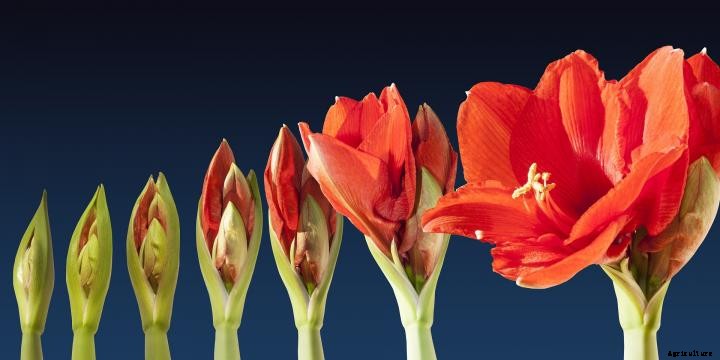
When shopping for amaryllis bulbs, you can buy the boxed kits that contain a bulb, a pot, and some soil. These make a nice gift, though there are usually not a lot of color choices—generally they offer red, pink, and white. The flowers are usually the smaller variety though they should bloom just fine if you follow directions.
Some garden centers offer larger bare bulbs that give you more choice of variety and larger sizes, and each one usually produces 2 or more flower spikes. Each spike will produce 2 to 4 large, trumpet-shaped blossoms.
Amaryllis bulbs are classified by size, which is determined by measuring around the outside of the bulb at its widest point. Generally, the larger the bulb, the more flowers the plant is capable of producing.
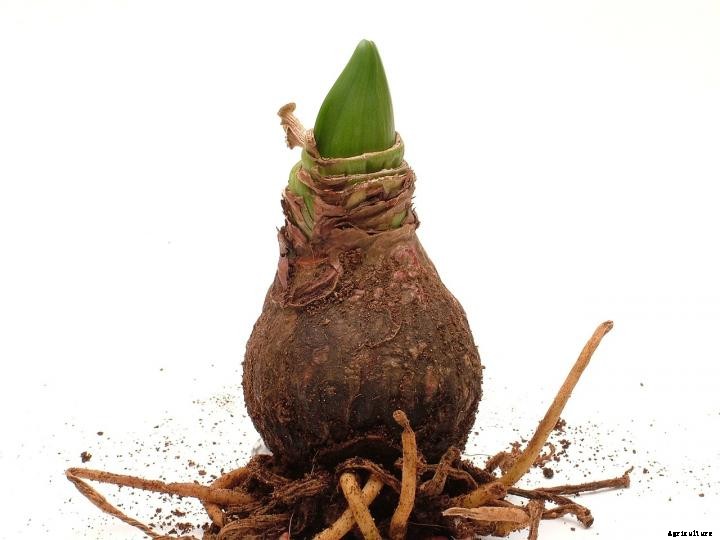
Another good reason for choosing a bare bulb is that you can see the condition of the bulb without having to rummage around in a box. Make sure it is heavy and firm—not moldy, squishy, or injured. It should have some fairly long fleshy roots attached, too.
Tip: For a continuous display, start a few bulbs at 2-week intervals. As one finishes blooming, the next will be reaching its peak.
Care
One of the most frequently asked questions after the holidays is, "Now that my amaryllis has finished flowering, how can I get it to bloom again?" Yes, those bulbs can take center stage again next Christmas if given proper care.
After blossoming, the bulb needs to grow and store food for next season's bloom. Often, the bulbs actually shrink in size from the stress of blooming and will need time to recover lost nutrients.
Once the blossoms have faded, cut off the flower stalk, but keep the leaves growing by placing the pot in a warm, sunny spot. Water regularly and fertilize weekly with a balanced houseplant fertilizer. This is when next year's buds are formed within the bulb.
It takes a minimum of four leaves to produce one flower stalk, because the buds form in the axils of every fourth bulb scale. Keep the plant growing all summer long; you can even move it outside for the summer. Bring it in at the end of August and cut OFF the watering. Let it dry out to induce a period of dormancy. Put the pot in a cool (around 50°F), dark place. Pull off any dried up leaves.
To induce flowering in time for Christmas, bring the plant into a warm, sunny location and resume watering around in early to mid-November.
We would recommend repotting it at this time to give the bulb better soil. Or, if you don't feel like it, just scrape off the top 2 inches or so of loose soil and replace it with fresh soil. In about 6 to 8 weeks, the amaryllis should be in full bloom again.
When grown as a houseplant, careful inspection when purchasing bulbs and proper care will prevent most insect pests as well as diseases.
Recommended Varieties

