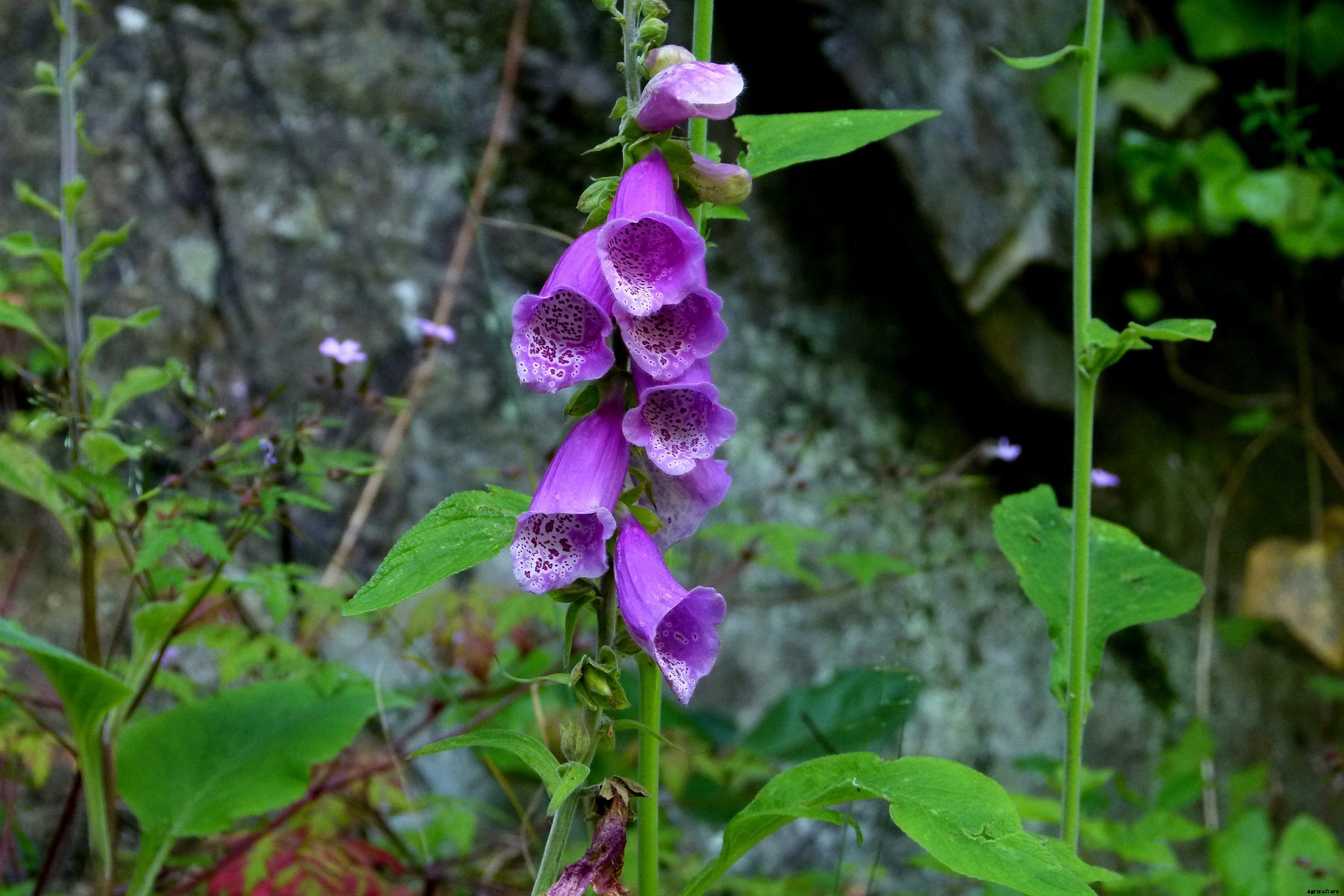
Foxglove is a stunning flower with tubular blossoms that have speckled throats. The plant creates a dramatic effect with its tall spires of flowers.
Common foxglove is a biennial, which means they form a rosette and leaves in their first year, bloom in their second year, and then die. Foxglove reseed easily, so plant foxgloves two years in a row for flowering plants. Also, new perennial varieties of foxglove have been developed that flower in year one.
In a flower bed, foxglove can grow up to 5 feet, so they tend to look best at the back of the flower bed. Ensure the planting location has rich, neutral to slightly acid soil with good drainage. It should be planted while temperatures are still slightly cool.
Please note: All parts of foxglove are poisonous. Historically, compounds from the plant have been used in heart medication; depending on the species, ingestion of Digitalis can induce symptoms ranging from nausea to cardiac arrythmia.
Planting
Foxglove prefers moist, well-drained soil high in organic matter and grows best in full sun with light afternoon shade.
If you don't have rich soil, add compost and mulch the area well.
Set bigger container plants out in spring or fall.
To plant:
- Prepare the soil by mixing in a 3- to 4-inch layer of compost.
- Space containers 1 to 2 feet apart.
- Dig the hole twice the diameter of the container the plant is in.
- Place the plant in the hole with the top of the root ball level with the soil surface.
- Fill in around the root ball and firm the soil.
- Water thoroughly.
Foxglove is easy to grow from seed.
- Sow seeds outside in containers in late-spring or sow seeds in late summer in the garden where plants are desired to grow.
- Seeds need light to germinate, so do not cover.
Any seedlings should be planted into the garden bed in early fall so that they can establish the root system before cold weather arrives.
Care
- Keep soil moist.
- Add a thin layer of compost around the plant each spring.
- Tie tall varieties to a stake to keep the flower stalks upright.
- Cut the center flower stalk back after flowering for a chance for additional flower stalks to develop later in the season.
- Leave the flower stalk on the plant if you want it to reseed.
Pests/Diseases
- Aphids can be a problem.
- The plant may also be affected by powdery mildew.
Recommended Varieties
There are many foxglove cultivars and a few hybrids commonly available. Here are a few of our favorites.
- ‘Foxy’ grows 2-3 feet tall and blooms reliably from seed the first year. Blooms are white, cream and rose.
- ‘Candy Mountain’ has strong stalks with large, upturned flowers. The blooms change from rose to purple as they age.
- The ‘Camelot’ series has 4 foot tall flower stalks and blooms in shades of lavender, rose and white. This variety blooms from seed the first year
- ‘Alba’ has pure white flowers on tall sturdy stalks.
Wit and Wisdom
- Foxglove is a deer-resistant plant due to its toxicity.
- This is a poisonous plant. All parts are poisonous. Take caution planting if you have children or pets.
- Digitalis comes from the Latin word for finger (digitus), referring to the shape of the flower. Purpurea refers to the color of the flowers, which often is purple.
- Foxglove leaves were used in the treatment of heart failure in the 18th century and were once the source of heart stimulants.
- Each foxglove plant can produce 1 to 2 million seeds.


