Our Roses Growing Guide covers everything you need to know—from planting to deadheading the blooms to pruning. We also share our recommendations on the best types of roses to grow, as well as tips on controlling common rose pests such as Japanese beetles.
About Roses
June's birth flower is the rose! And it's not surprising as rose shrubs are often at their very best during this month, but many types will flower from late May through early fall.
Rose bushes come in a variety of forms, from climbing roses to miniature rose plants. One way to group roses into classes is according to their date of introduction:
- Old roses—also called "old-fashioned roses" and "heirloom roses"—are those introduced prior to 1867. These are the lush, invariably fragrant roses found in old masters’ paintings. There are hundreds of old rose varieties—whose hardiness varies—providing choices for both warm and mild climates.
- Modern hybrid roses, introduced after 1867, are sturdy, long-blooming, extremely hardy and disease-resistant, and bred for color, shape, size, and fragrance. The hybrid tea roses, with one large flower on a long cutting stem, are one of the most popular hybrids.
- Species, or wild roses, are those that have been growing wild for many thousands of years. These wild roses have been adapted to modern gardens and usually bloom from spring to early summer. Most species roses have single blossoms.
See 3 easy roses for beginners!
Choosing from all the possibilities can be a daunting task. Take your time and wander through nurseries to enjoy the beauty of roses!
Planting
When to Plant Roses
If you order bare-root roses from a mail-order company, order with your planting date in mind. Bare-root roses should be planted soon after they arrive. They are usually shipped in the early spring when plants are fully dormant, well before they have leafed out. They’ll look like a bundle of sticks on arrival. Note that they are not dead—simply dormant! Check that the packing material is moist and keep them in a cool dark place until ready to plant.
- In colder regions, plant bare-root roses as soon as the soil is workable in the spring.
- In warmer regions, plant bare-root roses in the early spring or late fall, as long as the plant is dormant.
If you are buying potted roses, it's best to plant them by late spring for best results. However, you can plant them almost any time during the growing season—just be sure to keep them well watered, especially during summer!
Selecting and Preparing a Planting Site
- Plant roses where they will receive a minimum of 6 hours of sun per day. Morning sun is especially important because it dries the leaves, which helps prevent diseases. Roses grown in partial sun may not die at once, but they weaken gradually, producing subpar blooms and overwintering poorly.
- Remember that light changes as the angle of the sun shifts throughout the season. If you live in the northern half of the U.S., choose a site that will offer full sun year-round. The more sun you have, the more flowers your plants will produce. In the southern half of the U.S., choose spots with a little bit of afternoon shade. This protects blossoms from the scorching sun and helps your flowers last longer.
- If you live in a colder climate, consider growing roses close to the foundation of your home. This provides plants with some degree of winter protection. Walkways are also good spots, provided there is full sun.
- If you're planning for multiple roses, be sure not to crowd. Good air circulation helps prevent fungal diseases such as powdery and downy mildew.
- Roses need a soil that drains well but holds onto moisture long enough for the roots to absorb some. One of the worst mistakes you can make is to not provide adequate drainage. Roses do not like wet, cold feet.
- Roses like loose, loamy soil leaning more toward sandy. Too much clay and the roots can become waterlogged. If you are not starting out with a loose, loamy soil, you will need to do some amending.
- Roses prefer a slightly acidic soil pH between 5.5 and 7.0. A pH of 6.5 is just about right for most home gardens.
- An accurate soil test will tell you where your pH currently stands. Acidic (sour) soil is counteracted by applying finely ground limestone; alkaline (sweet) soil is treated with ground sulfur. Learn more about soil amendments.
Planting Roses
- Wear sturdy gloves to protect your hands from prickly thorns. Have a hose or bucket of water and all your planting tools nearby.
- Soak bare-root roses in a bucket of water for 8-12 hours before planting.
- Prune each cane back to 3-5 buds per cane. Any cane thinner than a pencil should be removed.
- If planting container grown roses, loosen the roots before planting.
- When you plant the rose, be sure to dig a much bigger hole than you think you need (for most types, the planting hole should be about 15 to 18 inches wide) and add plenty of organic matter such as compost or aged manure.
- Water liberally after planting.
- Mound up loose soil around the canes to protect the rose while it acclimates to its new site.
- Some old-timers recommend placing a 4-inch square of gypsum wallboard and a 16-penny nail in the hole to provide calcium and iron, both appreciated by roses.
- Don’t crowd the roses if you plan to plant more than one rose bush. Roses should be planted about two-thirds of the expected height apart. Old garden roses will need more space, while miniature roses can be planted closer.
Watch How To Properly Plant a Rose!
Care
Deadheading Roses
After roses bloom, be sure to deadhead religiously if you want to prolong flowering. Every leaf has a growth bud, so removing old flower blossoms encourages the plant to make more flowers instead of using the energy to make seeds.
- It's worth deadheading at least once a week and even daily in midsummer.
-
To deadhead, cut back to the first leaf below the spent flower. A new shoot will then grow from this point.
-
As well as deadheading religiously, keep the beds clean. Remove any debris around the rose bush that can harbor disease and insects.
- Late in the season, stop deadheading rugosas so that hips will form on the plants; these can be harvested and dried on screens, away from sunlight, then stored in an airtight container.
- Stop deadheading all your rose bushes 3 to 4 weeks before the first hard frost so as not to encourage new growth at a time when new shoots may be damaged by the cold.
Watering Roses
- Diligently water your roses. Soak the entire root zone at least twice a week in dry summer weather. Avoid frequent shallow sprinklings, which won’t reach the deeper roots and may encourage fungus. In the fall reduce the amount of water, but do not allow roses to completely dry out.
- Roses love water—but don’t drown them. That is, they don’t like to sit in water, and they’ll die if the soil is too wet in winter. The ideal soil is rich and loose, with good drainage. One of the worst mistakes you can make is to not provide adequate drainage.
- Use mulch around your roses. To help conserve water, reduce stress, and encourage healthy growth, apply a 2- to 4-inch layer of chopped and shredded leaves, grass clippings, or shredded bark around the base of your roses. Allow about 1 inch of space between the mulch and the base stem of the plant. See our Mulching Guide for more information.
Feeding Roses
- Artificial liquid fertilizers tend to promote plant growth that is soft and tender, and this type of foliage can attract aphids and other pests. Instead, rely on compost and natural fertilizers to feed your plants before and throughout the blooming cycle.
- Once a month between April and July, you could apply a balanced granular fertilizer (5-10-5 or 5-10-10). Allow 3/4 to 1 cup for each bush, and sprinkle it around the drip line, not against the stem. See our fertilizer guide for more information.
- In May and June, you could scratch in an additional tablespoon of Epsom salts along with the fertilizer; the magnesium sulfate will encourage new growth from the bottom of the bush.
- Banana peels are a good source of calcium, sulfur, magnesium, and phosphates—all things that roses like. (Note that it will take longer for your roses to reap the benefits from bananas than it would with pure soil amendments.) Here are three ways to serve them up:
- Lay a strip of peel at the base of each bush.
- Bury a black, mushy banana next to each bush.
- Chop up the peels, let them sit for two weeks in a sealed jar of water, and pour the mixture under each bush.
Pruning Roses
- When pruning, be judicious. If you prune too hard in autumn, plants can be damaged beyond recovery. Instead, wait until spring, when plants begin to leaf out for the new season. (Roses are often not the earliest plants in the garden to respond to spring’s warming temperatures, so be patient.) Give the plant time to show its leaf buds then prune above that level.
- Destroy all old or diseased plant material. Wear elbow-length gloves that are thick enough to protect your hands from thorns or a clumsy slip, but flexible enough to allow you to hold your tools. Always wear safety goggles; branches can whip back when released.
- Don't cut back or move roses in summer, as they might suffer and die in the heat. Large rose canes can be cut back by as much as two thirds, and smaller ones to within 6 to 12 inches of the ground.
- Use pruning shears for smaller growth. Use loppers, which look like giant, long-handle shears, for growth that is more than half an inch thick. A small pruning saw is handy, as it cuts on both the push and the pull.
- Not all types of roses are pruned the same way or at the same time of year. Learn more here: How to Prune Roses.
Winterizing Roses
- Do not prune roses in the fall. Simply cut off any dead or diseased canes.
- Clean up the rose beds to prevent overwintering of diseases. One last spray for fungus with a dormant spray is a good idea.
- Stop fertilizing 6 weeks before the first fall frost but continue watering during dry fall weather to help keep plants healthy during a dry winter.
- Add mulch or compost around the roses after a few frosts but before the ground freezes. Where temperatures stay below freezing during winter, enclose the plant with a sturdy mesh cylinder, filling the enclosure with compost, mulch, dry wood chips, pine needles, or chopped leaves (don’t use maple leaves for mulch, as they can promote mold growth).
Pests/Diseases
Good gardening practices, such as removing dead leaves and canes, will help reduce pests. If problems develop, horticultural oil and insecticidal soap can help control insects and mildews.
Possible rose pests and problems:
- Japanese Beetles
- Aphids
- Black Spot: Rose plant leaves with black spots that eventually turn yellow have black spot. This is often caused by water splashing on leaves, especially in rainy weather. Leaves may require a protective fungicide coating, which would start in the summer before leaf spots started until first frost. Thoroughly clean up debris in the fall, and prune out all diseased canes.
- Powdery Mildew: Leaves, buds, and stems will be covered with a white powdery coating. Mildew develops rapidly during warm, humid weather. Prevent mildew by pruning out all dead or diseased canes in the spring.
- Botrytis Blight: This gray fungus will cause the flower buds to droop, stay closed, or turn brown. Prune off all infected blossoms and remove any dead material. Fungicide application may be necessary.
- Spider Mites
- Thrips
- Rust
- Stem Borers
- Deer: Roses are a delectable tidbit, so try planting lavender near your roses. Not only will you have the makings of a nice potpourri, but the scent of lavender will discourage browsers. You can also spread human or dog hair around the garden area or check our list of deer-resistant plants to protect your roses.
In general, avoid rose issues by buying disease-resistant varieties and cleaning up debris, weeds, fallen leaves and any diseased plant material as soon as possible.
Also, speak to your local Cooperative Extension or trusted nursery about a spray program with products approved in your state.
Recommended Varieties
Traditionally, roses were notoriously challenging to grow. However, roses have changed. There are now many modern easy-to-grow types of roses available. Here are some of our favorites:
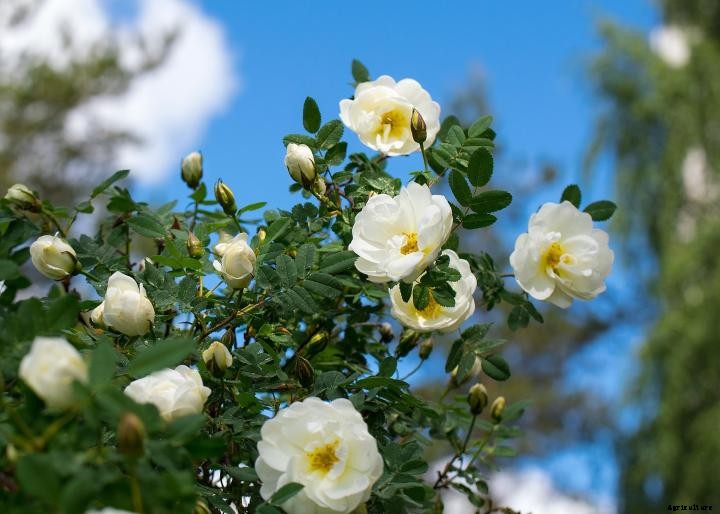
- Rugosas, with their showy, bright-pink, white, or lavender 5-petal blooms, are great for hedges and wherever a barrier is needed in an exposed or difficult site. They are disease-resistant and cold hardy to Zone 3. Many are fragrant and produce colorful hips. ‘Jens Munk’ blooms through most of the summer.
- Pink roses such as ‘Carefree Wonder’ are well-rounded shrub roses cold hardy to Zone 5. They grow about 3 feet tall and require only a little shaping in early spring.
- Yellow roses such as ‘Harrison’s Yellow’ blooms early, brightly, and sweetly, and will survive Zone 4 winters.
- Hybrid musk roses grow to 5 to 6 feet tall. This shrub rose has attractive foliage and clusters of many small to medium-size flowers. ‘Buff Beauty’ has clusters of fragrant apricot-yellow blooms.
- Flower Carpet roses are excellent for ground cover. Once established, they can provide up to 2,000 flowers from spring till fall. They’re extremely low maintenance, drought tolerant, and have exceptional disease resistance!
See 3 easy roses for beginners!
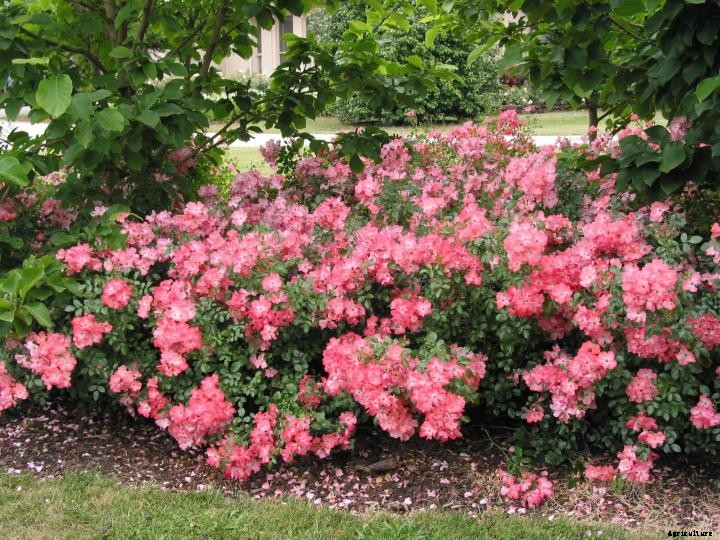
Flower Carpet Roses are continual bloomers dripping in flowers and require no spraying!
See also our list of disease-resistant rose varieties.
Wit and Wisdom
- Roses are edible! Rose petals are brewed for tea blends and sometimes used in gargles and tonics to treat congestion, sore throats, and stomach disorders.
- Rose water is a refreshing skin splash. Try a flower facial! Gentle, aromatic steam cleanses your pores. For oily skin, add a few rose petals to boiling water in a heatproof bowl. Make a bath towel tent and lean your face about 10 inches above the water. It should feel warm, not hot. After 10 minutes, rinse your face with cool water, then blot dry.
- Red roses symbolize love and desire, but roses come in a variety of colors and each has their own meaning. For example, the white rose’s meaning is purity and innocence. See flower meanings.
- Roses are also one of the beautiful June birth flowers.
- It is believed that the cultivation of roses began about 5,000 years ago in China.
- During the Roman Empire, rose gardens were established in the Middle East.
- In the 17th century, kings and queens considered roses legal tender for purchases.
- Roses have a long and symbolic history.
And I will make thee beds of roses,
And a thousand fragrant posies.
–Christopher Marlowe (1564-93)
Recipes
Rose Hip Jam
Cooking Notes
The tart reddish-orange hips of rugosa roses are used for jams, jellies, syrups, pies, teas, and wine. Check out our Rose Hip Jam recipe.
Rose petals are edible and can be tossed into salads for color, candied to decorate cakes, or distilled to make rose water. Make sure the rose petals are pesticide free.


