With bright blooms that go from mid-summer to early fall, sunflowers say "summer" like no other plant. Plus, 2021 has been designated the "Year of the Sunflower"! What better way to celebrate than growing some yourself? Our Sunflower Growing Guide covers everything from planting to cutting flowers to harvesting seeds.
About Sunflowers
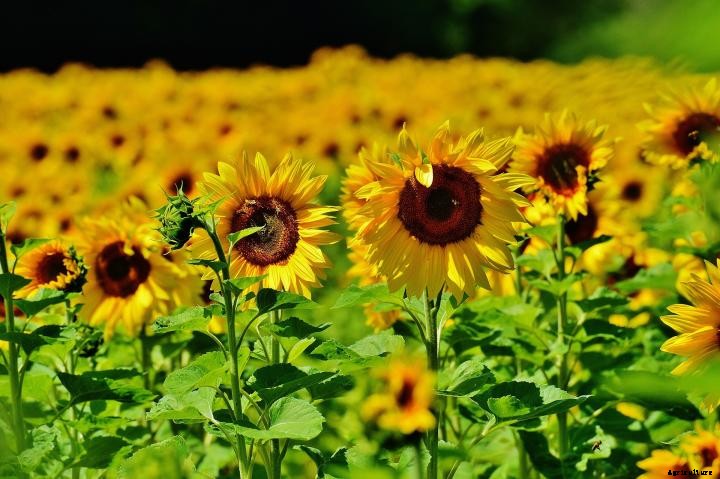
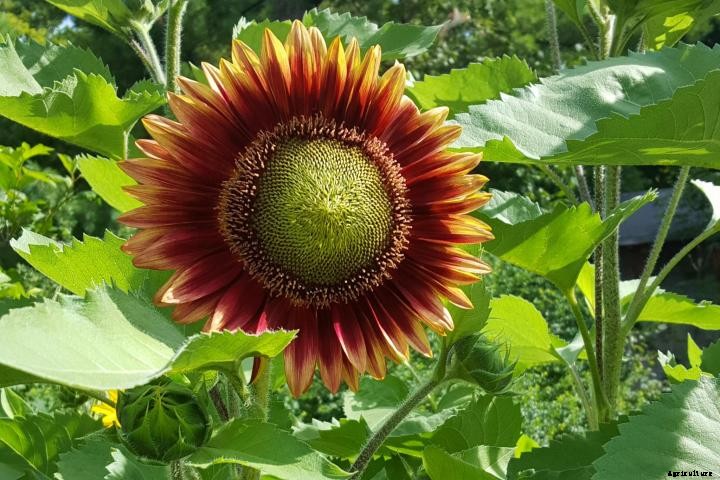
The sunflower (Helianthus annuus) is an annual plant with a large daisy-like flower face. Its scientific name comes from the Greek words helios ("sun") and anthos ("flower"). The flowers come in many colors (yellow, red, orange, maroon, brown), but they are commonly bright yellow with brown centers that ripen into heavy heads filled with seeds.
Sunflowers are heliotropic, which means that they turn their flowers to follow the movement of the Sun across the sky east to west, and then returns at night to face the east, ready again for the morning sun. Heliotropism happens during the earlier stages before the flower grows heavy with seeds.
There are tons of varieties of sunflowers available today, so there's bound to be one that fits your garden. Choose between those with branching stems or single stems, those that produce ample pollen for pollinators or are pollen-free (best for bouquets), those that stay small or tower above the rest of the garden, or those that produce edible seeds!
2021: Year of the Sunflower
The National Garden Bureau has designated 2021 the Year of the Sunflower! It's hard to not love these lovely flowers. Very few plants are as heat-tolerant, resistant to pests, and simply beautiful. Sunflowers make excellent cut flowers and many are attractive to bees and birds, too.
At the end of the season, it's easy to harvest sunflower seeds for a tasty snack or for replanting (see instructions below). Learn more about why you should start growing these happy flowers in your garden.
Here and yonder, high and low,
Goldenrod and sunflowers glow.
–Robert Kelley Weeks (1840–76)
How Long Do Sunflowers Take to Bloom?
A fairly fast-growing flower for their size, most sunflower varieties mature in only 80 to 95 days. The largest sunflower varieties grow to over 16 feet in height, while smaller varieties have been developed for small spaces and containers and rarely grow larger than a foot tall! The flower heads can reach over 12 inches in diameter within the large seeded varieties.
Planting
When to Plant Sunflowers
- It's best to sow sunflower seeds directly into the garden (or outdoor containers) after the danger of spring frost has passed anytime after soils have warmed to at least 50°F (10°C).
- In most regions, this will fall between April and mid-July. In the south, this will probably occur in mid-March or early April.
- Sunflowers dislike having their roots disturbed, which is why we recommend direct-sowing instead of transplanting.
Choosing & Preparing a Planting Site
- Find a sunny spot! Sunflowers grow best in locations with direct sunlight (6 to 8 hours per day); they require long, hot summers to flower well.
- Choose a location with well-draining soil. It shouldn't pool water after it rains.
- Sunflowers aren't picky but the soil can't be too compact. They have long tap roots that need to stretch out; in preparing a bed, dig down 2 feet in depth and about 3 feet across.
- They're not too fussy when it comes to soil pH either. Sunflowers thrive in slightly acidic to somewhat alkaline soil (pH 6.0 to 7.5).
- Sunflowers are heavy feeders, so the soil needs to be nutrient-rich with organic matter or composted (aged) manure. Or, work in a slow release granular fertilizer 8 inches deep into your soil.
- If possible, plant sunflowers in a spot that is sheltered from strong winds, perhaps along a fence or near a building. Larger varieties may become top-heavy and a strong wind can be devastating.
- Before planting, decide whether or not you want to grow a fun sunflower tower.
Planting Sunflower Seeds
- Sunflowers should be planted 1 to 1-1/2 inches deep and about 6 inches apart after the soil has thoroughly warmed. If you wish, you can plant multiple seeds and thin them to the strongest contenders when the plants are six inches tall.
- Give plants plenty of room, especially for low-growing varieties that will branch out. Make rows about 30 inches apart. (For very small varieties, plant closer together.)
- A light application of fertilizer mixed in at planting time will encourage strong root growth to protect them from blowing over in the wind.
- Experiment with plantings staggered over 5 to 6 weeks to keep enjoying continuous blooms.
- If you see birds scratching around for the seeds, spread netting over the planted area until seeds germinate. See more ways to keep birds away from your garden.
Check out this video to learn how to plant sunflowers:
Care
Caring for Sunflowers
- While the plant is small, water around the root zone, about 3 to 4 inches from the plant. To protect the plant, it may help to put snail or slug bait around the stem.
- Once the plant is established, water deeply though infrequently to encourage deep rooting. Unless the weather is exceptionally wet or dry, water once a week with several gallons of water.
- Feed plants only sparingly; overfertilization can cause stems to break in the fall. You can add diluted fertilizer into the water, though avoid getting the fertilizer near the plant's base; it may help to build a moat in a circle around the plant about 18 inches out.
- Tall species and cultivars require support. Bamboo stakes are a good choice for any plant that has a strong, single stem and needs support for a short period of time.
Pests/Diseases
- Birds and squirrels will show interest in the seeds. If you plan to use the seeds, deter critters with barrier devices. As seed heads mature and flowers droop, you can cover each one with white polyspun garden fleece.
- If you have deer, keep them at bay with a tall wire barrier. Curious deer may bite the heads off of young sunflowers.
- Sunflowers are relatively insect-free. A small gray moth sometimes lays its eggs in the blossoms. Pick the worms from the plants.
- Downy mildew, rust, and powdery mildew can also affect the plants. If fungal diseases are spotted early, spray with a general garden fungicide.
Recommended Varieties
Everyone is familiar with the huge sunflowers that grow on towering eight-foot-tall stalks. But did you know that some varieties top off at a modest 15 inches?
- The towering 'Mammoth' variety is the traditional giant sunflower, sometimes growing to more than 12 feet tall. Its seeds are excellent for snacks and bird feeders, too.
- 'Autumn Beauty': One of the most spectacular cultivars, the 'Autumn Beauty' has many 6-inch flowers in shades of yellow, bronze, and mahogany on branching stems up to 7 feet tall.
- 'Sunrich Gold': A great flower for bouquets and arrangements, this sunflower grows to be about 5 feet tall and produces a single 4- to 6-inch flower. The big, no-mess, pollenless flowers have rich, golden-yellow rays and green-yellow centers.
- 'Teddy Bear': Just 2 to 3 feet tall, this small sunflower is perfect for small gardens and containers. The fluffy, deep-gold, 5-inch blossoms last for days in a vase.
Harvest/Storage
Cutting Sunflowers for Bouquets
- For indoor bouquets, cut the main stem just before its flower bud has a chance to open to encourage side blooms.
- Cut stems early in the morning. Harvesting flowers during middle of the day may lead to flower wilting.
- Handle sunflowers gently. The flowers should last at least a week in water at room temperature.
- Arrange sunflowers in tall containers that provide good support for their heavy heads, and change the water every day to keep them fresh.
Harvesting Sunflower Seeds
At the end of the season, harvest sunflower seeds for a tasty snack and or to replant or to feed the birds in the winter! Read all about harvesting sunflowers here.
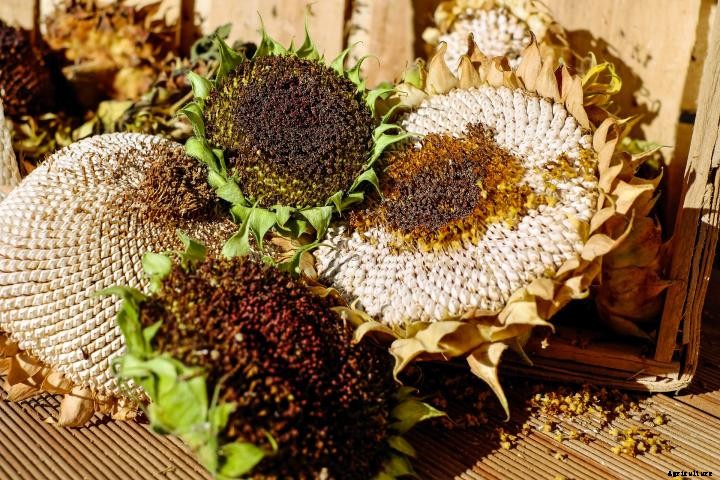
- Let the flower dry on or off the stem until the back of the head turns brown, the foliage turns yellow, the petals die down, and the seeds look plump and somewhat loose.
- With sharp scissors or pruners, cut the head off the plant (about 6 inches below the flower head). Place in a container to catch loose seeds.
- Lie the sunflower head on a flat, clean surface and grab a bowl to hold the seeds.
- To remove the seeds, simply rub your hand over the seeded area and pull them off the plant or you can use a fork. Another way to remove them is to rub the head of the sunflower across an old washboard or something similar. Just grip the head and rub it across the board as if you were washing clothes.
- If you are going to harvest the seeds for roasting, you can cover the flowers with a light fabric (such as cheesecloth) and a rubber band to protect the heads from the birds.
- Alternatively, you can cut the flower head early and hang the heads upside down until the seeds are dry; hang indoors or in a place that's safe from birds and mice.
- Rinse sunflower seeds before laying out to dry for several hours or overnight.
- If you're saving seeds to replant, store them in an airtight container in a cool, dry place until you are ready to plant.
Learn how to roast seeds in the cooking notes below.
Wit and Wisdom
- Some people call sunflowers the "fourth sister," in reference to the Three Sisters: corn, beans, and squash.
- Some cultures see sunflowers as a symbol of courage.
- Sunflowers were not only used for cooking by Native Americans, but also for healing (the oil was used to cure skin ailments) and making clothing (yellow dye was made from the flower petals and black or blue dye from the seeds).
- Need a bird feeder? Save whole, dry sunflower heads and set them out in winter. Birds will gladly pick at the delicious seeds!
- Save thick sunflower stems and dry them for winter kindling.
- An anonymous buyer paid over $39 million in 1987 for Vincent van Gogh's Sunflowers.
- The tallest sunflower ever recorded was grown in Germany in 2014. It measured in at a stunning 30 feet and 1 inch tall!
- Kansas is "The Sunflower State."
Cooking Notes
Just one ounce of sunflower seeds contains about 6 grams of protein and 14 grams of oils. The fats are almost entirely unsaturated with 9g of polyunsaturated and 3g of monounsaturated fats per ounce (NSA). The oil is high in linoleic acid and is a good source of vitamin E.
- Some varieties produce small black seeds that are used in cooking oil, margarine, cosmetics, and animal feed; they are the best sunflower seeds for attracting the greatest variety of songbirds.
- The bigger, striped seeds are grown for snacking and as an ingredient in bread and health foods. They, too, are used for feeding birds, especially larger species, such as jays and mourning doves.
How to Roast Sunflower Seeds
Re-soak seeds overnight in salted water. Run through a strainer and dry on a layer of paper towels.
Bake for 25 to 30 minutes at 325 degrees on a baking sheet. Seeds should be spread out in a single layer. Stir frequently during the baking and remove seeds when they look slightly browned. Don't burn!
That's it! You can all some olive oil, salt, spices to your roasted seeds if you wish.
Or, you can also make suet cakes for the winter birds! See how to make suet.


