Geraniums are a longtime favorite of gardeners. They are easy to grow, colorful, and emit a lovely scent. Here's how to grow geraniums in your home and garden!
(Note: This page is about plants in the genus Pelargonium, commonly called geraniums or storksbills. This not a page on "hardy geraniums," also called cranesbills.)
Although they may be kept outdoors during the warmer part of the year, geraniums are typically kept indoors to overwinter. Alternatively, if provided with enough light, they can bloom indoors all year long.
Geranium or Pelargonium? A Case of Mistaken Identity
The plants that we commonly call "geraniums" were introduced to Europe by Dutch traders who brought them from South Africa in the early 18th century. Because these new plants resembled the hardy wild geraniums already growing in Europe, botanists mistakenly grouped them together into the same genus.
In 1753, Swedish botanist Carl Linnaeus classified them under the genus Geranium. When it was later discovered that these new “geraniums” differed from European geraniums in the shape of their petals, the number of stamens, and other factors, they were reclassified under Pelargonium, meaning “stork’s bill”—a reference to the long, sharply pointed shape of their seedpod.
Their original common name stuck, however, and we still say “geranium” when we actually mean “pelargonium."
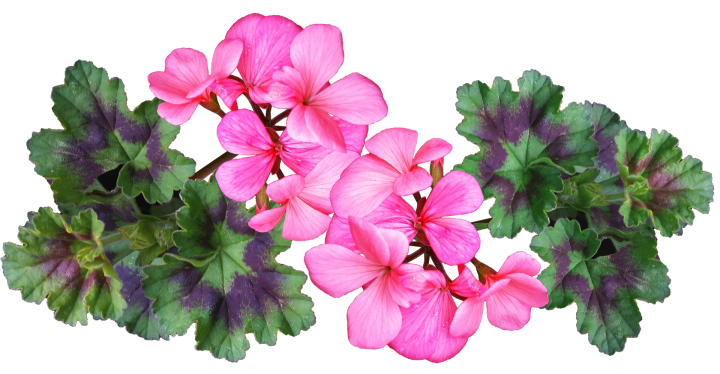
Planting
- Geraniums may be grown as houseplants or as annual flowers. During the warmer months of the year (between your local frost dates), they can be kept outdoors in a sunny location.
- If keeping geraniums as houseplants, be sure to bring them indoors in late summer or early fall, when nighttime temperatures start to regularly dip below 55°F (13°C).
- When buying geraniums, pay close attention to color and size. Healthy leaves will have no discoloration on or below them and stems will be sturdy, not straggly. Be sure to avoid any plants with obvious signs of pests as well. Common houseplant pests include mealybugs, whiteflies, and spider mites.
- Place plants in pots with drainage holes to avoid root rot.
- Use a well-draining potting mixture (not heavy, clayey soil) when planting in containers. Geraniums do not like to sit in soggy, compacted soil.
- For maximum bloom, place the plants in an area where they will get 4-6 hours of sunlight.
Care
How to Care for Geraniums
- Allow soil to dry to some extent between waterings, then water thoroughly.
- During the winter, water much less, but do not let the roots dry out entirely. Geraniums do best when given a period of dormancy through the winter months, during which they use less water and do not grow much. See below for more overwintering instructions.
- To encourage blooming, deadhead spent flowers regularly.
- To promote bushiness and curtail legginess, pinch back the stems.
- During active growing months, fertilize every 2 weeks or so. Use a water-soluble fertilizer at half strength. Don't fertilize in winter, when the plant should be dormant.
- Geraniums can be re-potted in spring to encourage new growth—or if they look like they need to be refreshed.
Overwintering Geraniums
- Geraniums that have spent the summer outdoors can be kept as houseplants, provided they get lots of sun. In northern climes, the sun may not be strong enough in late winter to stimulate buds on some varieties.
- Before the first fall frost (find your local frost dates here), lift the plants and, using a sharp, clean knife, cut the stems back in a shapely fashion to about 6 to 8 inches. They should not have to support great masses of leaves in the low-sunlight environment they are about to enter. Save a few stems as cuttings to root—an easy way to multiply your plants.
- Transplant the “mother plant” to the smallest pot possible—enough to just fit the roots—using regular potting soil to fill.
- Keep the plants in shade for a week, then place them in a sunny spot (they need all the sun they can get) and keep them cool.
- During winter, geraniums grow best with night temperatures of 50° to 60°F (10° to 16°C) but will survive if they drop to 32°F (0°C) and/or rise above 80°F (27°C), as long as they are kept relatively dry.
- When new growth appears in the spring, cut off all the old leaves.
The only thing more difficult than getting the new growth to appear is keeping it. And here’s some help with that:
- Water only when the leaves show signs of drooping and provide only small amounts. Do not fertilize or feed the plants. It is critical that these plants get rest.
- If you want your overwintered geraniums to bloom for Memorial Day, pinch them back in February. Once warm weather returns and all danger of frost has passed, take the plants outdoors and transplant them to beds or pots, as you wish.
Pests/Diseases
Common problems can be low light or over- or underwatering. The leaves will turn yellow as an indication you are watering too little or too much. In this case, try to even the watering out and move the geraniums to a brighter place.
Recommended Varieties
- The Common or Zonal Geraniums (Pelargonium x hortorum) thrive in containers (as well as outdoors).
- Ivy-Leaf Geraniums (Pelargonium peltatum) are very popular for hanging baskets, window-boxes, and containers.
Harvest/Storage
How to Root Stem Cuttings
Most geraniums root easily from stem cuttings in soil, coarse sand, water, perlite, or other rooting material.
- Using a sharp, clean knife, make a slanted cut 4 inches below a stem tip, above a node where leaves emerge. Trim cutting to just below a node. Remove any buds, all but two or three leaves, and the leaflike stipules at the base of leaf stalks.
- Roll the stem cutting in newspaper or put it in the shade for 24 hours, so that the cut end will seal and not rot.
- Push the stem into a pot of moistened rooting medium and store it in a warm, shady place for 2 days. After that, give the cutting indirect sun. Moisten the medium only as needed.
Wit and Wisdom
- For minor cuts, apply crushed geranium leaves to stop the bleeding.
- In the language of flowers, scarlet geranium means silliness. Find out more flower meanings here.
- Geraniums are known to be toxic to Japanese beetles, so you won't have to worry about those pesky pests.
- Geraniums may cause indigestion or vomiting in young children and pets (cats, dogs), so keep the plants out of reach of curious pets and children.


