
Welcome to Modern Agriculture!

Here are tips on how to identify, control, and prevent blossom-end rot on your tomatoes and other garden plants.
Are your tomatoes rotting on the bottom? Unfortunately, they likely have blossom-end rot. It's a common problem on tomatoes, peppers, eggplants, and squash. Blossom-end rot is a disorder in which the tissue of the blossom end (the "bottom") of the fruit breaks down and rots, thus reducing quality of the fruit and the overall yield from the plant.
Blossom-end rot is caused by a lack of calcium in the plant. This lack of calcium may be due to low calcium levels in the soil or—more typically—soil that is over- or underwatered. When there are wide fluctuations in soil moisture, this reduces the plant's ability to take up calcium from the soil. When the demand for calcium exceeds the supply, the tissues in the fruit break down and blossom-end rot occurs.
In addition to watering issues, calcium deficiency during fruit formation may also be caused by:
Be aware of these causes when caring for tomatoes and other garden plants in order to prevent blossom-end rot.
Some blossom-end rot is more or less normal in the first tomatoes of the season, since the plants are usually under stress during the initial fruit set. It also tends to happen more often in plants grown in containers, as the soil is more susceptible to fluctuations in moisture.
If the damaged portion of the fruit is small, you can trim it off and enjoy the rest of the fruit. Hopefully, with the prevention tips below, the problem will fade!
 Identification
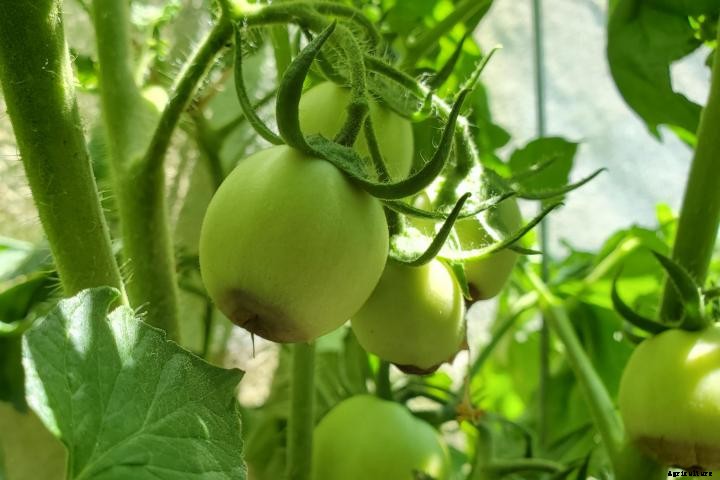
Usually, blossom-end rot appears while the fruit is still green or ripening, so it often affects the first fruits formed on the plants.
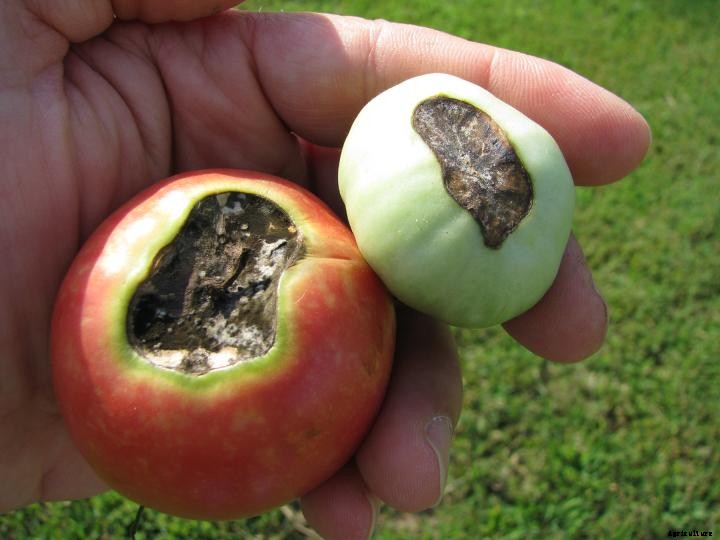
Blossom-end rot starts with a small, depressed, water-soaked area on the blossom end of the fruit (the bottom, opposite the stem). The spot starts off looking like a dark bruise. As the spot enlarges, it becomes sunken and turns black or dark leathery brown in color. Half the fruit may eventually be affected.
 Control and Prevention
As mentioned above, blossom-end rot is a condition caused by a lack of calcium. Unfortunately, the rot will not go away once a fruit is already affected, but following the advice below can stop the rot from progressing further and from affecting other developing fruit.


