
Welcome to Modern Agriculture!

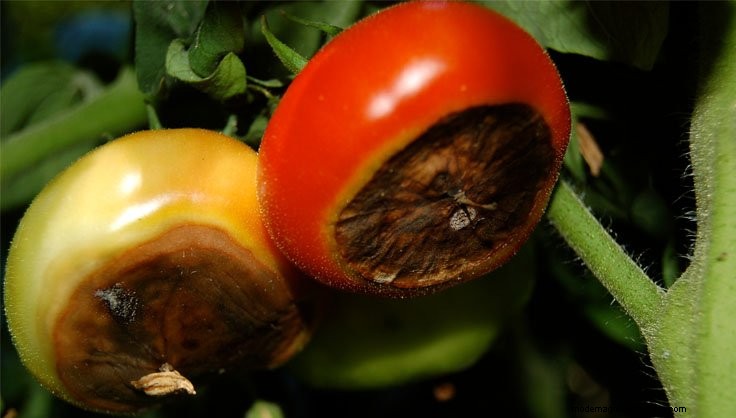 Blossom end rot.
A water-soaked spot at the blossom end of tomato fruits is the classic symptom of blossom-end rot. This relatively common garden problem is not a disease, but rather a physiological disorder caused by a calcium imbalance within the plant. It can occur in pepper, squash, cucumber, and melon fruits as well as tomatoes.
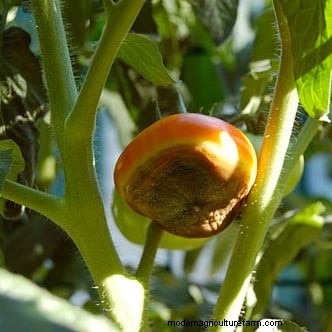 Photo: Susan Romanoff
Blossom-end rot is most common when the growing season starts out wet and then becomes dry when fruit is setting. Damage first appears when fruits are approximately half their full size. The water-soaked areas enlarge and turn dark brown and leathery. These areas will eventually begin to rot, so the fruit should be picked and discarded.
Several factors can limit a plant's ability to absorb enough calcium for proper development. These include: fluctuations in soil moisture (too wet or too dry), an excess of nitrogen in the soil, root damage due to cultivation, soil pH that's either too high or too low, cold soil and soil high in salts.
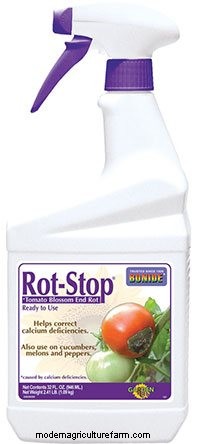 Tomato Rot Stop


