Here are tips on how to identify, control, and prevent the fungal plant disease white mold.
What Is White Mold?
White mold, also known as sclerotinia, is a fungal disease that affects over 360 different plants, including beans, peas, lettuce, and members of the cabbage family. White mold is sometimes called timber rot when it affects tomatoes. Mold symptoms appear on blossoms, stems, leaves, and pods that have water-soaked spots. Leaves will wilt, yellow, and die; pods may rot.
Host crops are most susceptible during flowering, but young seedlings are also very vulnerable. White mold typically infects the plants early in the spring or summer and then develops unnoticed for a while. White mold fungus releases spores when the weather is cool, and these spores can be carried by the wind and infect other plants. This is why it is so important to catch white mold and destroy infected plants quickly.
Identification
How to Identify White Mold Damage
White mold symptoms vary depending on the environment and type of plant, but here are some common ones:
- The stem might first appear to have a water-soaked part. At this point in the infection, the plant will look healthy from above.
- Wilting of individual stems, especially at the base with tan discoloration.
- Infected stems may appear to have tan to dark brown lesions on them. From these lesions, a dense, cotton-like growth will form under conditions of high humidity.
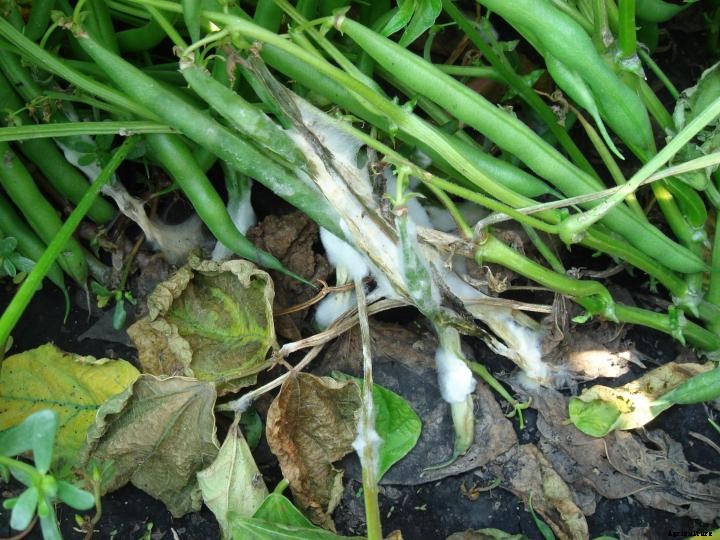
Photo Credit: The Ohio State University. White mold takes over a bean plant with its dense cotton-like growth.
Control and Prevention
How to Control White Mold
- As soon as you notice any diseased plants, destroy them immediately.
- If your soil is infected, remove as much of it as you can and replace it with clean soil.
- You can use a barrier, such as plastic or mulch, to cover the infected ground to prevent the spread of the disease.
Prevent White Mold
- Be sure to use well-drained soil and space your plants properly to avoid crowding. Also, remember to avoid areas with poor air circulation.
- When watering your plants, try not to water the tops of them. Or water the plants early in the day so they have the chance to dry before nightfall.
- You can also spray your plants with an approved fungicide to help prevent infection. Spray the plants right before they bud, then spray again a week later.
- Control your weeds. Weeds can host this disease and spread it to your plants.
- If possible, remove all crop residue after harvesting. If residue is left, this disease may develop in it. White mold spores are long-lasting, so they will survive the winter if given the chance.


