
Welcome to Modern Agriculture!

What are those little green bugs on your plants? They're probably aphids! Here are our best tips on how to identify and control aphids in the garden.
Aphids seem to find their way into every garden. They are small, soft-bodied insects that feed by sucking the nutrient-rich liquids out of plants. In large numbers, they can weaken plants significantly, harming flowers and fruit. Aphids multiply quickly, so it's important to get them under control before reproduction starts. Many generations can occur in one season.
The good news is that they tend to move rather slowly and aphid control is relatively easy.
IdentificationAphids are tiny (adults are under 1/4-inch), and often nearly invisible to the naked eye. Various species can appear white, black, brown, gray, yellow, light green, or even pink! Some may have a waxy or woolly coating. They have pear-shaped bodies with long antennae; the nymphs look similar to adults. Most species have two short tubes (called cornicles) projecting from their hind end.
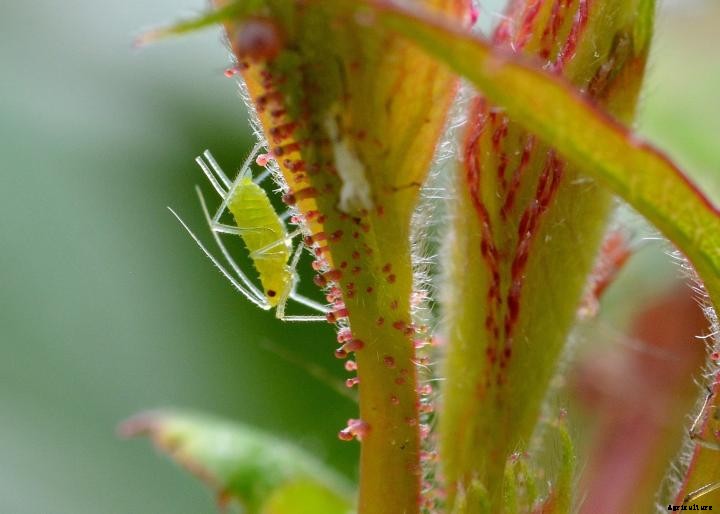
Adults are usually wingless, but most species can develop a winged form when populations become crowded, so that when food quality suffers, the insects can travel to other plants, reproduce, and start a new colony. Aphids usually feed in large groups, although you might occasionally see them singly or in small numbers.
While aphids in general feed on a wide variety of plants, different species of aphids can be specific to certain plants. For example, some species include bean aphids, cabbage aphids, potato aphids, green peach aphids, melon aphids, and woolly apple aphids.
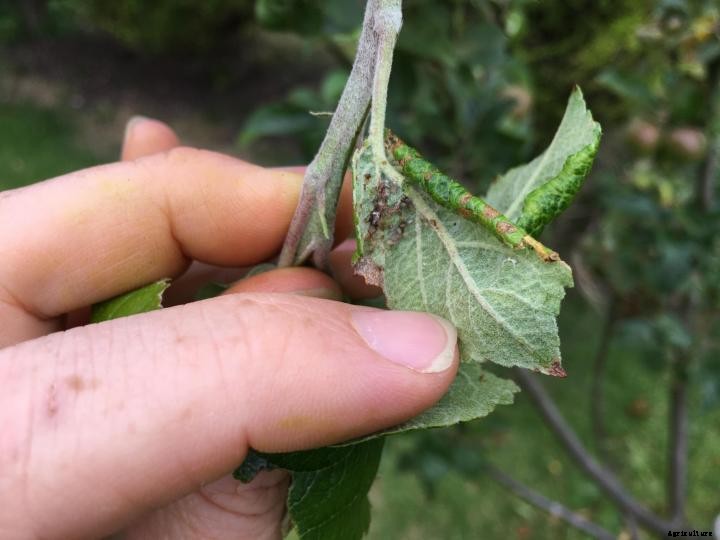
Nymphs and adults feed on plant juices, attacking leaves, stems, buds, flowers, fruit, and/or roots, depending on the species. Most aphids especially like succulent new growth. Some, such as the green peach aphid, feed on a variety of plants, while others, such as the rosy apple aphid, focus on one or just a few plant hosts.
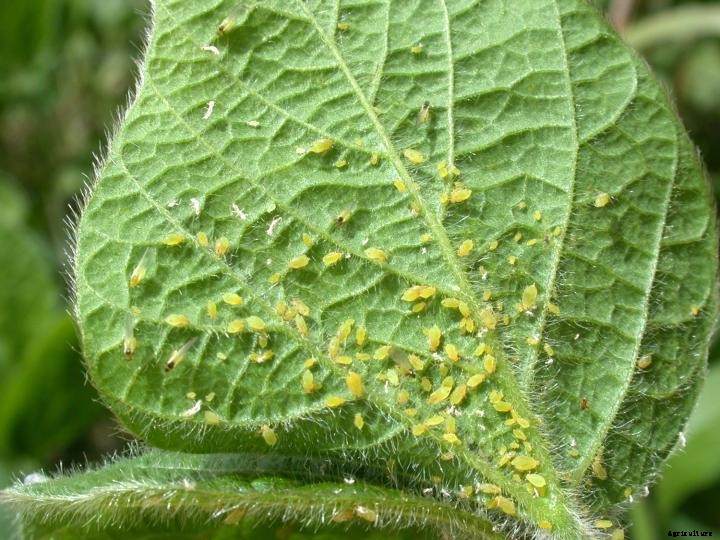 Control and Prevention
Isopropyl alcohol (also called isopropanol or rubbing alcohol) works fine and is easy to find, but be sure it doesn’t have additives. Ethanol (grain alcohol) seems to work best. Alcohol usually comes in 70 percent strength in stores (or 95 percent strength purchased commercially). To make an insecticidal spray, mix equal parts 70 percent alcohol and water (or, if using 95 percent alcohol, mix 1 part alcohol to 1 ½ parts water).
You can also add alcohol to a soapy emulsion to make it more effective. For example, in a spray bottle, combine 5 cups water, 2 cups alcohol, and 1 tablespoon liquid soap.
Caution: When applying an alcohol or soap spray, or a combination, always test a small area first, and apply in morning or evening, when the sun is not beating down. Watch the plant for a few days for any adverse reactions before applying more. Plants can be sensitive to alcohol and soap. Also, some soaps have additives that can damage plants—select the purest form.
Do you have more tips for controlling aphids? Let us know in the comments below!


![How To Get Rid Of Black Aphids [A Complete Guide]](https://modernagriculturefarm.com/article/uploadfiles/202211/2022111623082002_S.png)