
Welcome to Modern Agriculture!

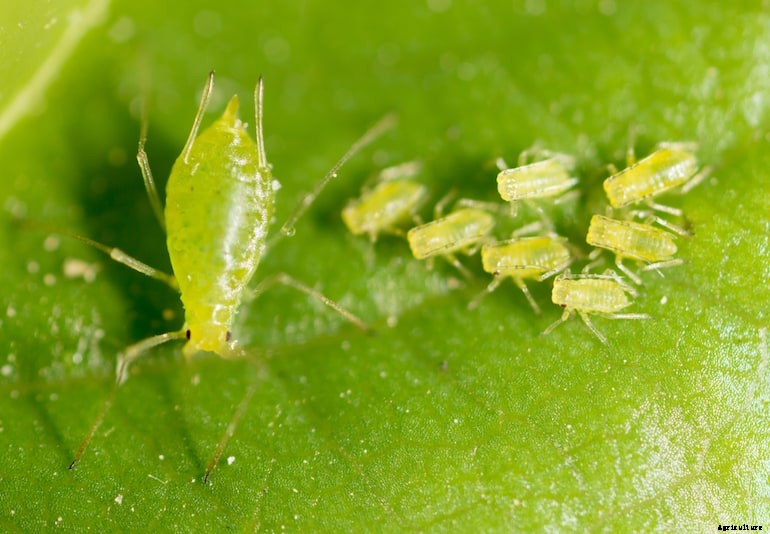 These small insects cause many problems in the garden
You’ll be able to spot aphid colonies around flower buds, the underside of new leaves and shoot tips. If you have an aphid infestation, you may also notice the following:
Some aphids feed on just one or two plant species. Others will eat several different types of plant. Most plants are susceptible to aphid damage - including fruit and vegetables, ornamentals, and houseplants.
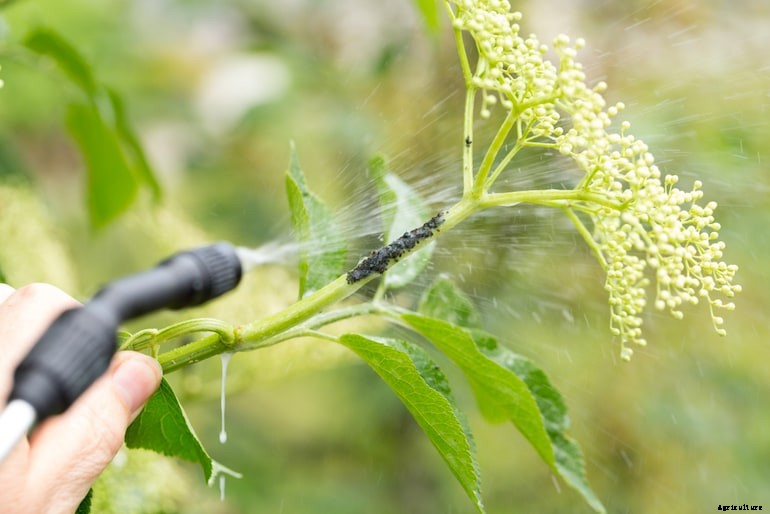 Spray aphids with cold water to dislodge them from plants.
Globe Artichokes are prone to blackfly. The most commonly used non-chemical remedy is to spray them with soapy water. You can buy insecticidal soaps but many people make up their own using a teaspoon of washing up liquid diluted in 3 litres of water. The aphids are unable to breath under a coating of soap and subsequently suffocate. If you intend to try this, then be sure to spray on a dull day as spraying in full sun is likely to scorch the foliage.
Other popular methods include squashing groups of them between your finger and thumb or blasting them with a hosepipe to knock them off of the plants, being careful to not damage your plants with the pressure of the water.)
As suggested above, you can try growing other plants as 'lures' that are more attractive to the blackfly than the artichokes. Just make sure that you destroy the blackfly when they appear on your 'lure' plants, otherwise you will just be increasing the local aphid population! You can spray the lure plants with an insecticide as long as you’re not intending to eat them.


