
Welcome to Modern Agriculture!

Back to the land – it’s officially back.
Magazines, conferences and books devoted to the DIY ethos abound. But learning practical skills doesn’t have to mean signing up for a lifetime of lumpy, beige bag dresses. Making your own dye is one those practical skills that brings fashionistas and homesteaders together.
And it’s possible to find all your fall wardrobe colors growing in the garden (or at the supermarket, we won’t tell). Anyone who can make a pot of tea can dye a skein of wool or yard of plain linen. Cool-weather crops like cabbage, fennel, stems and flowers, and red and yellow onion skins produce an amazing array of vibrant colors, including red, purple, green and yellow.
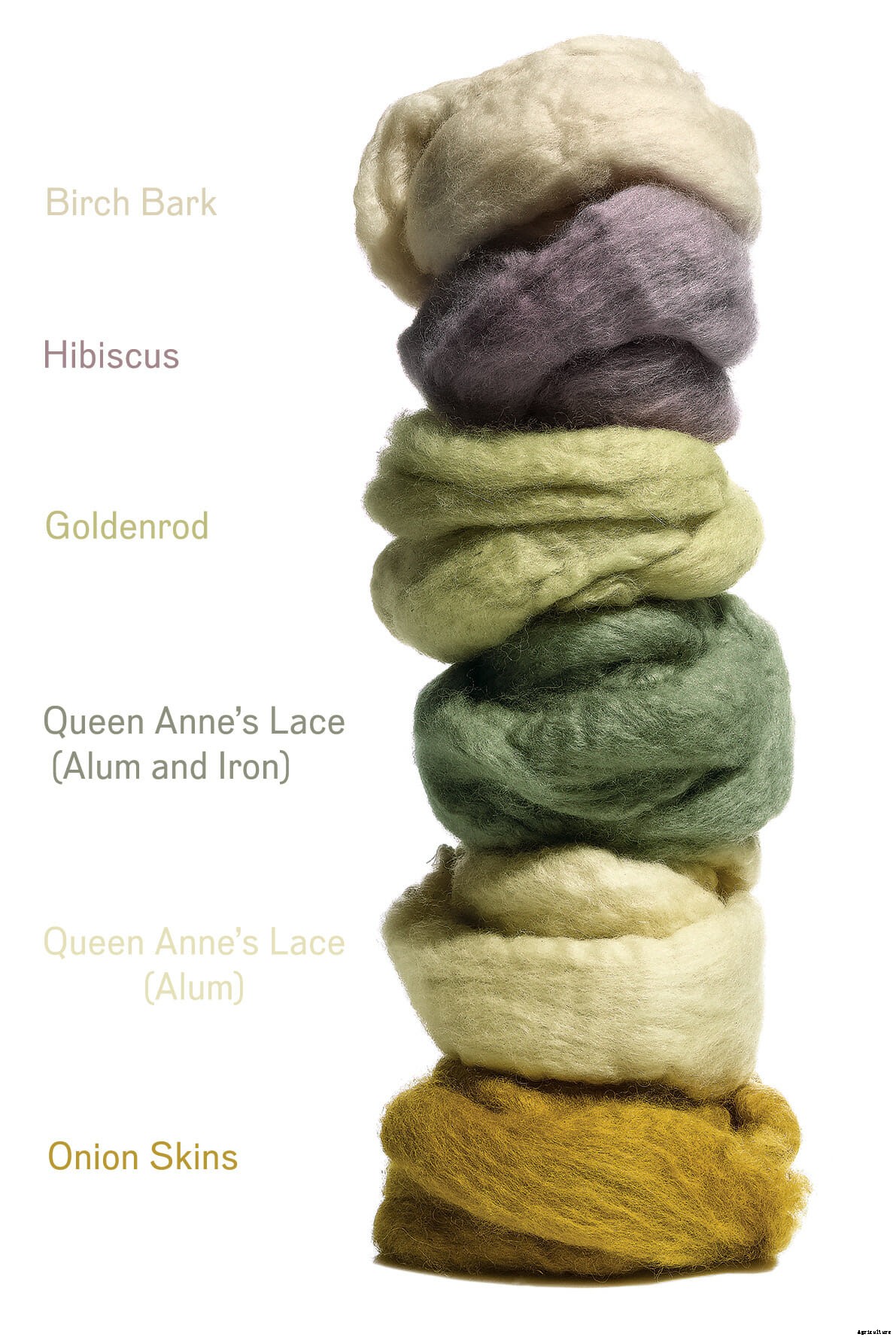
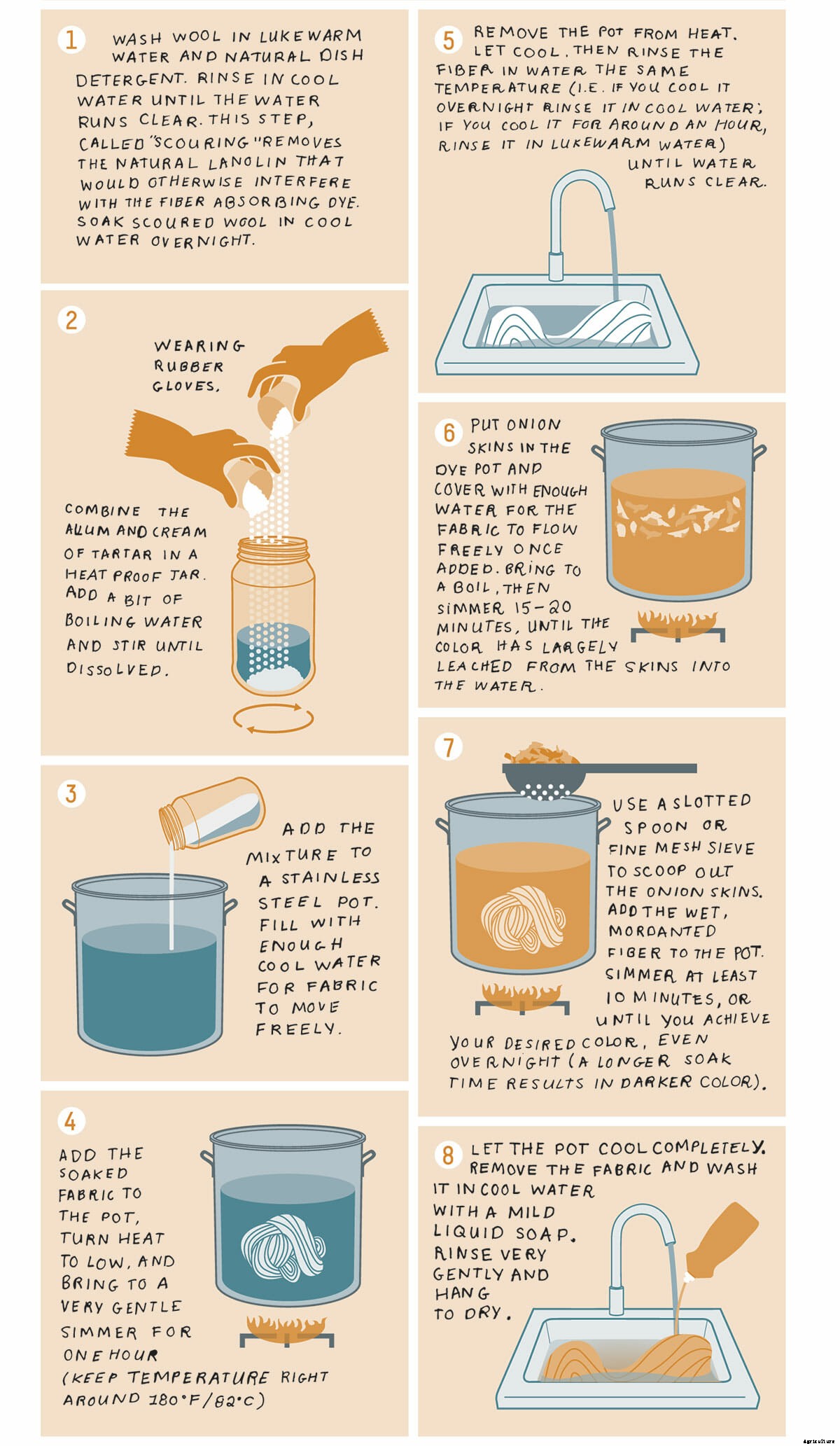
Here’s an easy project that even the least crafty can do, using onion skins. Consider this your base recipe. As you continue on your dyeing adventure, you’ll have to adjust the amount of water and mordant to suit the material used, but the basic steps are the same.
Metallic agents called mordants are needed by some fibers to help the dye adhere. Alum and iron are the two mordants considered safest by many natural dyers. They can both be sourced from natural dye suppliers, such as Earthues.
Keep equipment used in dyeing separate from that used in cooking.
You will need:
4 ounces wool yarn
1 teaspoon alum
1 teaspoon cream of tartar
4 ounces red or yellow onion skins
Photograph: Tom Schierlitz


