
Welcome to Modern Agriculture!

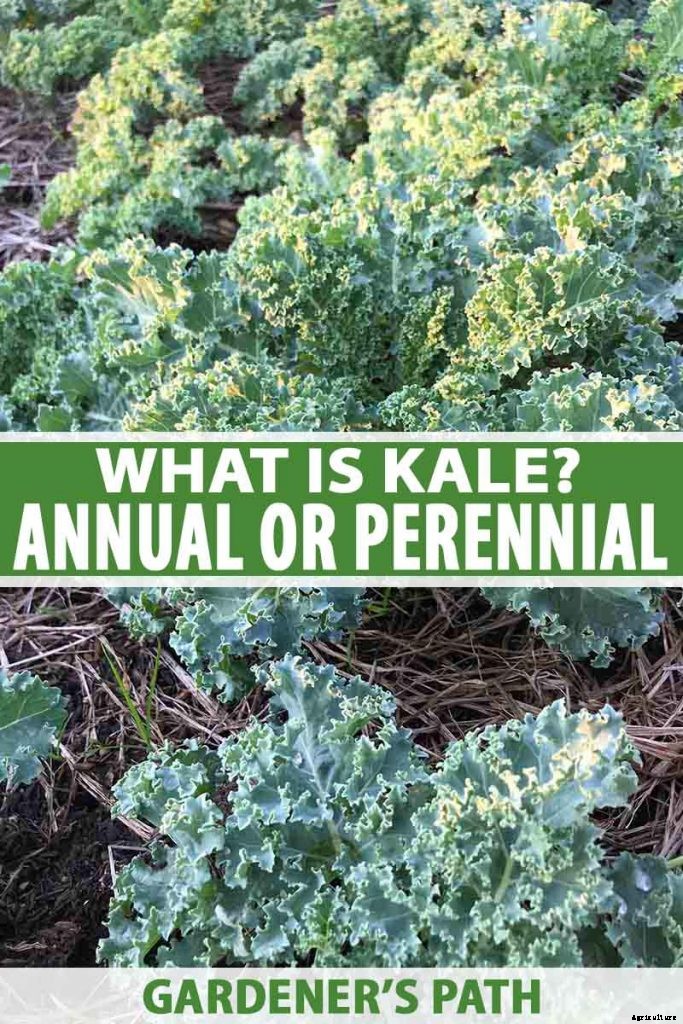
There are plenty of reasons why you might want to know whether kale, Brassica oleracea, the star of many a spring or fall veggie garden, is an annual or a perennial.
Armed with this knowledge, you will be able to answer some of the other questions you may have about growing this cruciferous crop in your garden.
Some of those questions may go along these lines:
Do you have to replant it every year? Can you harvest and save seeds from it the first year?
If it looks good at the end of summer, should you try to overwinter it, or should you pull it up and put it on the compost pile?
Excellent questions, indeed, and you will soon discover the answers. Before we get started, here’s a quick overview of what I’ll cover:
For gardening purposes, it’s important to know that annuals must be replanted every year, while longer-lived perennials will keep growing year after year.
You can learn more about the differences between annuals and perennials in our handy article.
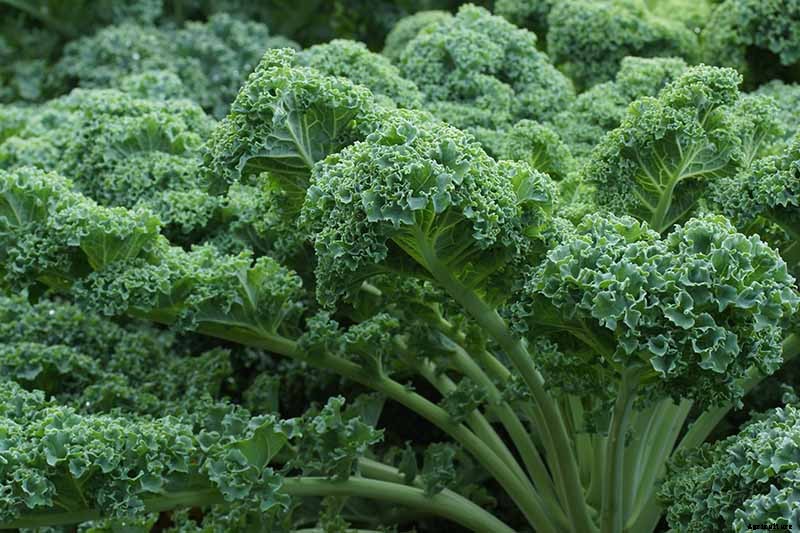
So which group does kale fall into?
The short answer – it depends what type you’re talking about! Some kale varieties are perennial, and I’ll get to them later, but most varieties are neither an annual nor a perennial.
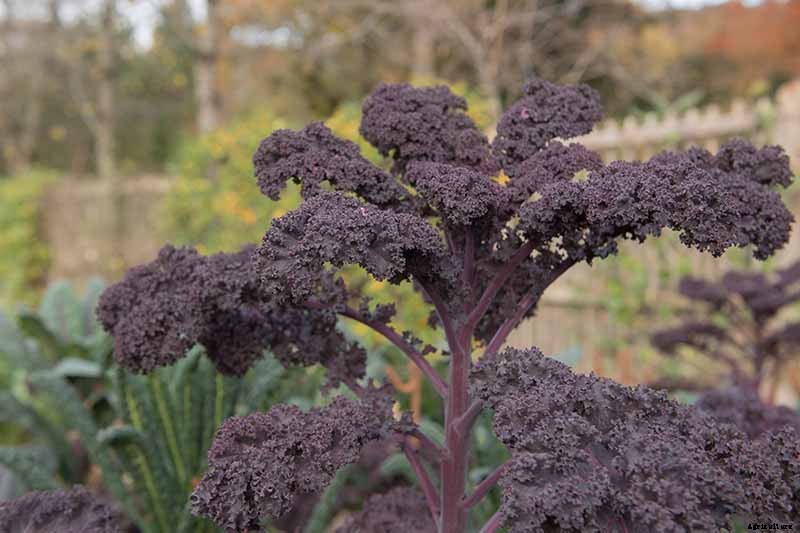
Unlike annuals that are destined to live and die in just one growing season, or perennials that live on year after year, some plants have a different fate.
Called “biennials,” these plants complete their reproduction (and entire life cycle) over a two-year period.
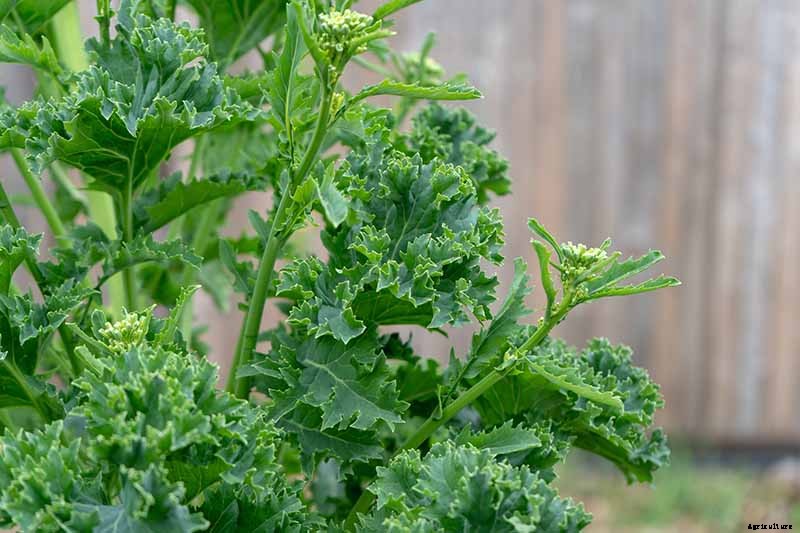
Kale is one such plant – and it finds itself in good company! Carrots, parsley, leeks, and hollyhocks are also biennial plants.
As biennials, in their first season in your garden, kale plants will put all their energy into leaf production, growing bushy and lush under the right conditions.
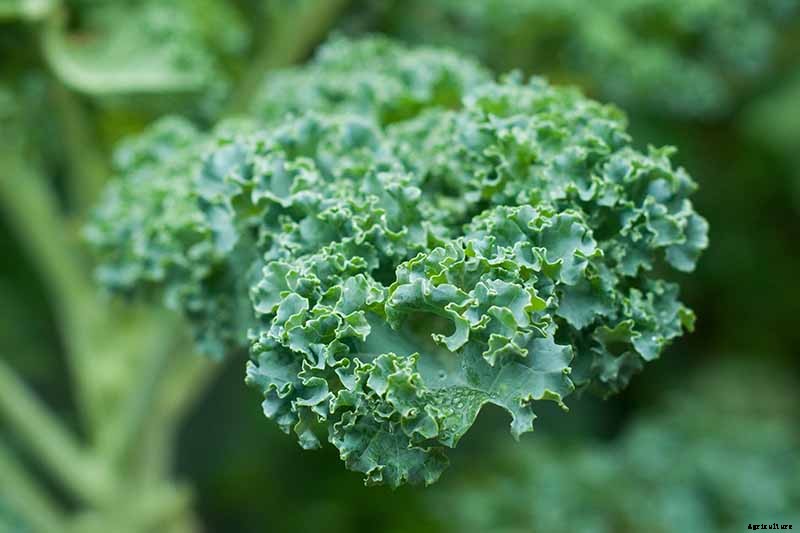
To learn more about how to grow kale, see our growing guide here.
In USDA Hardiness Zones 7-10, biennial kale will continue to produce edible leaves throughout the winter.
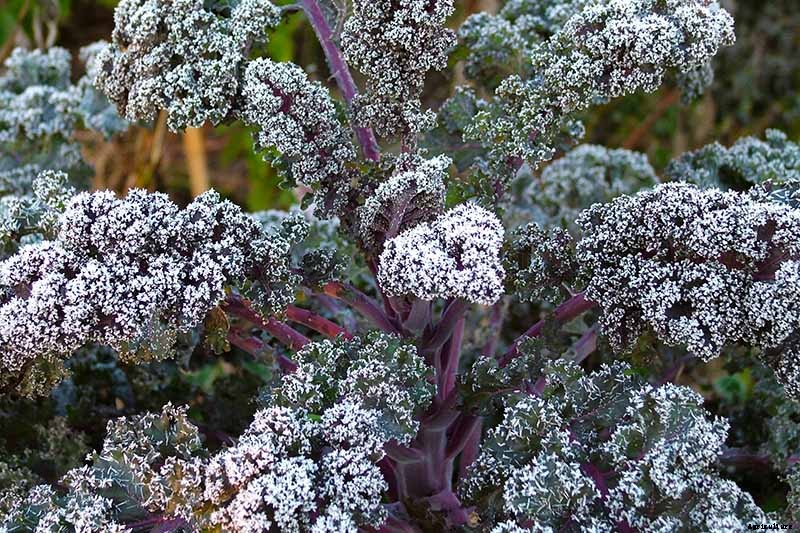
While in colder zones, these plants will go dormant during the winter – which means their leaves may die back, but their root systems will remain alive.
At this point, some gardeners may assume that the plant is dead.
How cold hardy are these biennial plants exactly?
It varies according to the cultivar, with the hardiest kale varieties being able to survive sub-zero temperatures. Most others continue to thrive through moderate freezes of 25-28°F.
After the first winter, your biennial kale plants will begin to put more of their energy into reproduction, and less energy into leaf growth.
Yes, this is the birds and the bees part – which is the whole reason why plants produce flowers in the first place.
The plant will bolt and flower, then eventually set seed before dying back.
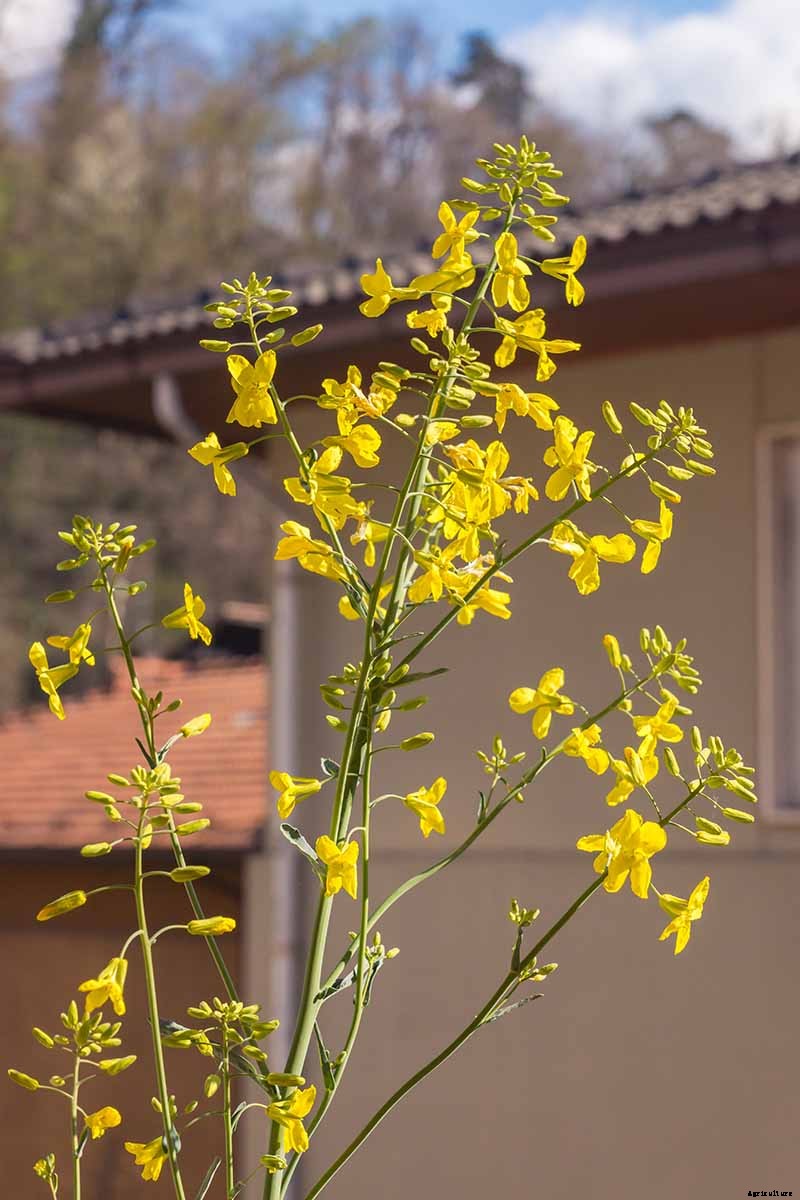
While the biennial is focused on reproduction in the second year, its edible leaves will not be as tender, so they may be better suited for use in cooking than eating raw.
However, some species and cultivars are more edible during the second year than others. The flower buds of Russian and Siberian varieties are more tender than other types and are often harvested and referred to as napini kale or kale rabe.
Shortly after your plants start flowering, you’ll begin to see long, slender seed pods developing.
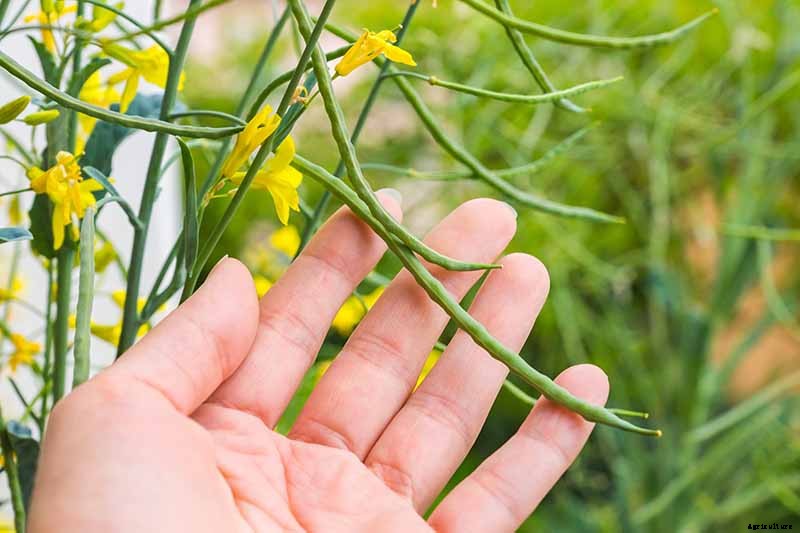
When these pods dry out, you can harvest them to save the seeds for sowing a new crop next season.
While most of the kale varieties a gardener is likely to encounter will be biennials, there are some types that are actually perennials. Here are a few of them:
Named after a French naturalist, ‘Daubenton’ is a short-lived perennial variety that doesn’t go to seed – instead it is propagated through cuttings. It is a cultivated variety that’s not found growing wild.
Living for 5-6 years, ‘Daubenton’ is perennial in USDA Hardiness Zones 6-9, and hardy down to 10°F.
When the plant starts to near the end of its life, a root cutting can be taken from it to start a new plant, so you can keep this variety growing in your garden for as long as you keep propagating it.
While it is very difficult to source root cuttings of ‘Daubenton,’ there is a variegated cultivar called ‘Kosmic’ that is available via Amazon.
‘Kosmic’
Sometimes known as perpetual kale, the leaves of this green vegetable are mild and nutty tasting, less bitter than its biennial relatives.
You’ll find ‘Kosmic’ root cuttings available via Amazon.
Also known as Jersey cabbage, tree cabbage, and a plethora of other local common names, ‘Walking Stick’ kale is native to the Channel Islands, an archipelago in the waters between France and England.
This cruciferous plant gets its vivid common name from its long stalks, which were traditionally dried and repurposed into – you guessed it – walking sticks.
‘Walking Stick’
Hardy down to 10°F or lower and perennial in USDA Zones 6-9, ‘Walking Stick’ prefers neutral or alkaline soils.
The proper harvesting of the leaves will encourage this plant to grow long stalks, which easily grow to 6-10 feet tall at maturity as a backyard garden plant, but can rise to a towering 20 feet tall with favorable conditions.
The leaves of this plant were traditionally used as animal fodder, but seed saving enthusiasts have brought it back as a culinary oddity.
To prepare, remove the tough mid-vein and cook the leaves as you would other kale for a sweet, nutty green.
You’ll find packs of 45 ‘Walking Stick’ seeds for sale at Hirt’s Gardens via Amazon.
Now, for something a little bit different.
Sea kale is a more distant relative of kale, but still a member of the Brassicaceae family, and is native to Northern European coastlines where it grows wild.
It is hardy in Zones 6-9 and will grow well in coastal areas of the Pacific Northwest, where the cool summers are similar to those of its native habitat.
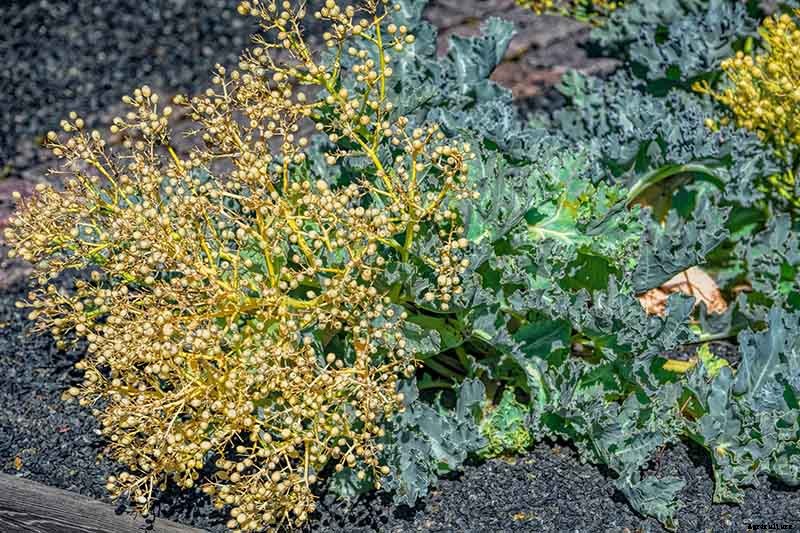
Of great interest to perennial vegetable gardeners, this plant grows well in sandy soil. It can be grown from seed, though the germination rate is low, so buy more than you think you need.
Sea Kale, C. maritima
If the young shoots and leaves from this plant are blanched while they are growing, or hidden from the sun to stop the process of photosynthesis, this gives them a pleasant nutty flavor when cooked.
You can find packs of 50 C. maritima seeds from Wicked Vegetables via Amazon.
Along with understanding kale’s status in the annual vs. perennial debate, by now you should be able to answer all of those other questions I mentioned at the beginning of the article with confidence.
Feels good, huh?
While most kale varieties you come across will be biennials, there are some perennial cultivars that would make exotic additions to your perennial beds.
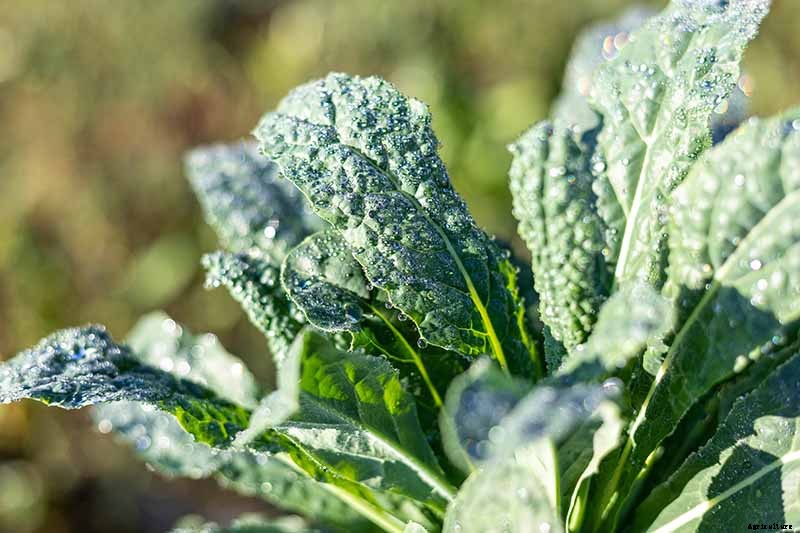
Now that you have a better understanding of the life cycle of this veggie, will you be sticking to biennial kale, or are you considering trying out one of the perennial varieties? Let us know in the comments.
And to continue your deep dive through the frilly leaves of this cruciferous plant, read on for more kale knowledge:


