
Welcome to Modern Agriculture!

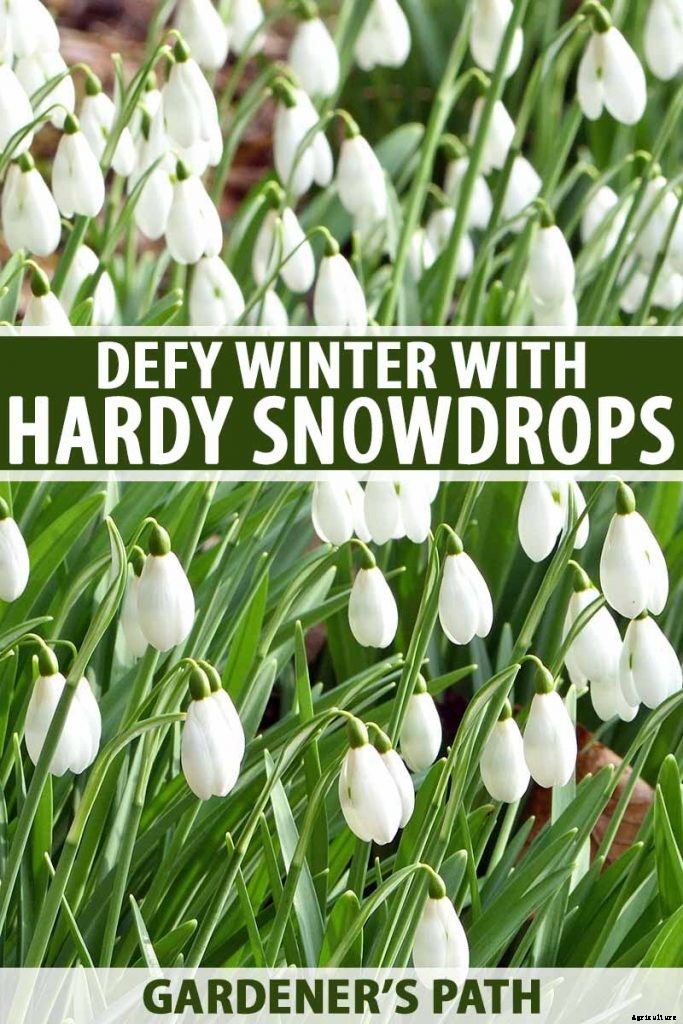
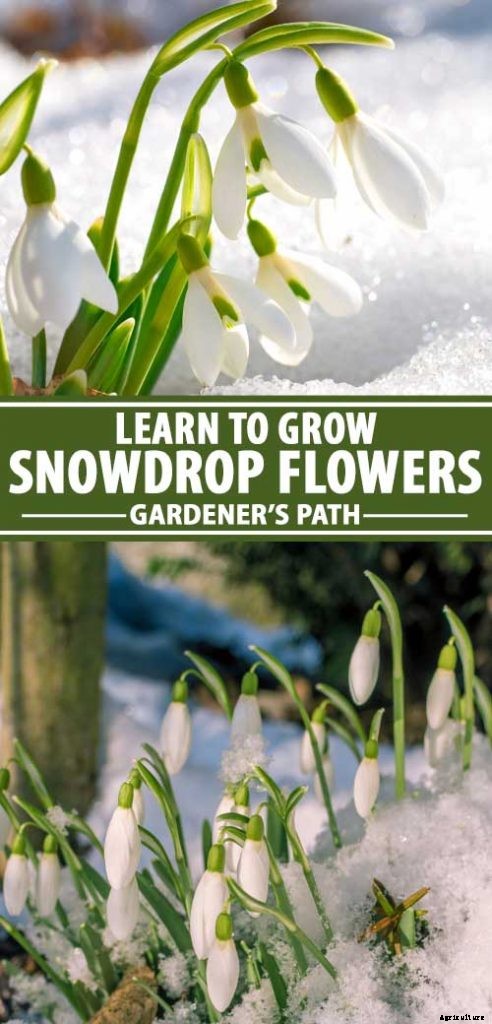
Are you pining for spring? Try growing Galanthus flowers. More commonly called snowdrops, they are some the first to bloom in the late winter and early spring.
They require almost no maintenance and can be grown in soil of nearly any pH level. They are deer and rabbit resistant and can fill in shady areas where many ground covers cannot grow.
Their snowy, nodding heads appear during the last frozen days of winter, often in the company of other early-bloomers like hellebores and crocuses, to herald the approach of spring.
Here’s what’s ahead in this article:
Galanthus or snowdrop flowers is a genus of 20 closely related species of bulbous perennial herbaceous plants that belong to the Amaryllidaceae family that includes alliums, amaryllis, and daffodils.
They are native to southern Europe, the Middle East, and Eurasia to include Turkey and Iran.
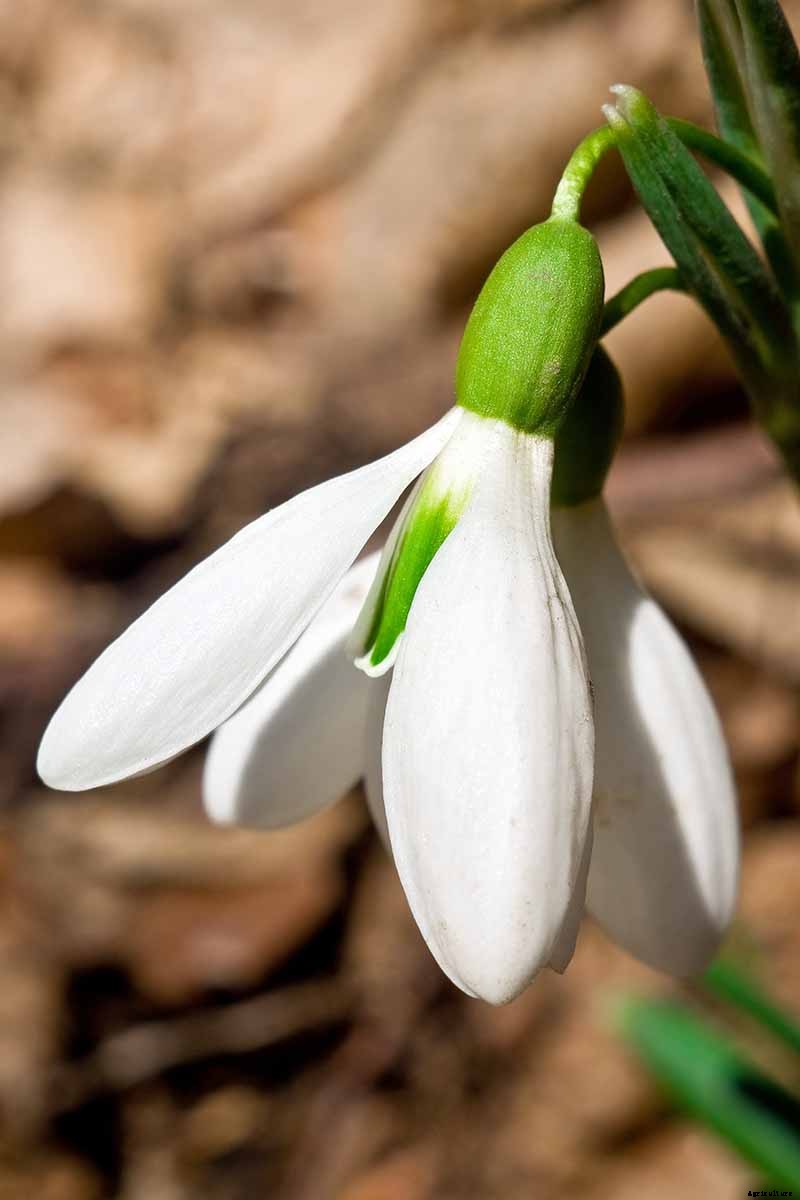
The plants are known for their early blooming white drooping bell shaped flowers that often push up through the snow.
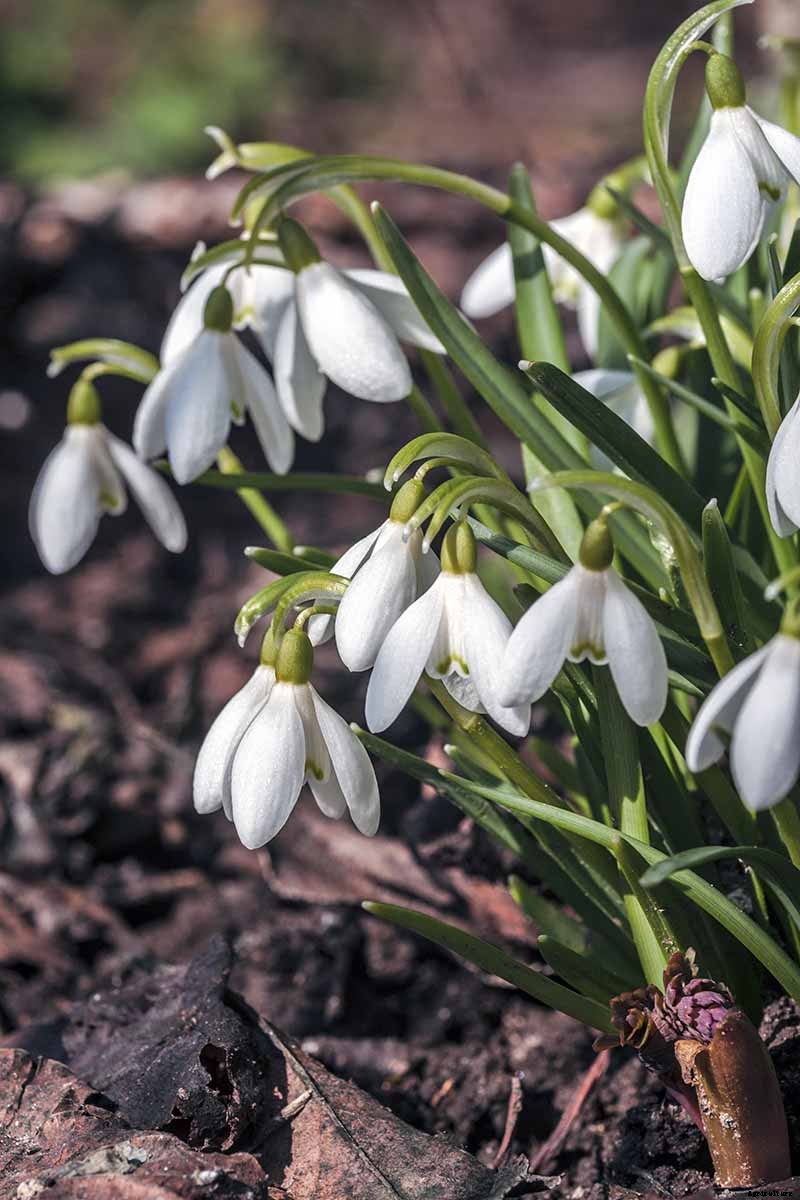
Each flower features six petaloids in two whorls with the inner petals having green splotches of varying size.
Snowdrop are a woodland flower suitable for planting in USDA Hardiness Zones 3-7.
They thrive underneath trees and shrubs in full winter sun and the filtered rays of early spring. The ideal soil for these plants is organically rich, moist, and well-draining.
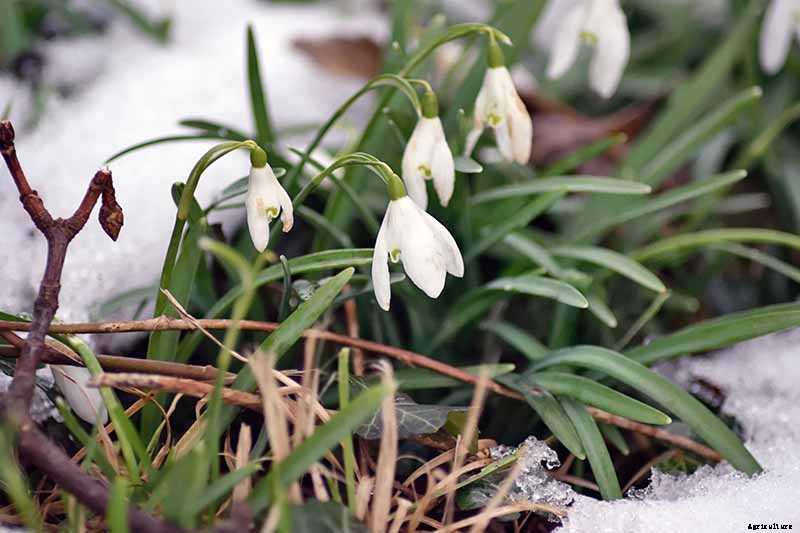
The white blossoms of this charmer have inner petals that are accented with what look like tiny green upside-down hearts. The kids in our family love to spot them in a snowy landscape.
Galanthus is often confused with snowflakes Leucojum and Acis which are closely related genera within the same tribe (Galantheae).
Snowdrops were first described by the classical Greek author, Theophrastus, in the fourth century BC in his “Historia plantarum, Enquiry into Plants.”
It wasn’t until 1753 that they were named Galanthus by Carl Linnaeus, a Swedish botanist and zoologist.
Despite being thought of as a quintessential British flower, it was likely introduced in the 16th century. Today, the flowers have naturalized in most of Europe and much of temperate North America.
Galanthus spreads by two methods: dropping seed, and generating bulb offsets. You may divide bulb perennials as desired to thin them out, pot them up, or share with friends. It is recommended to thin out every three years.
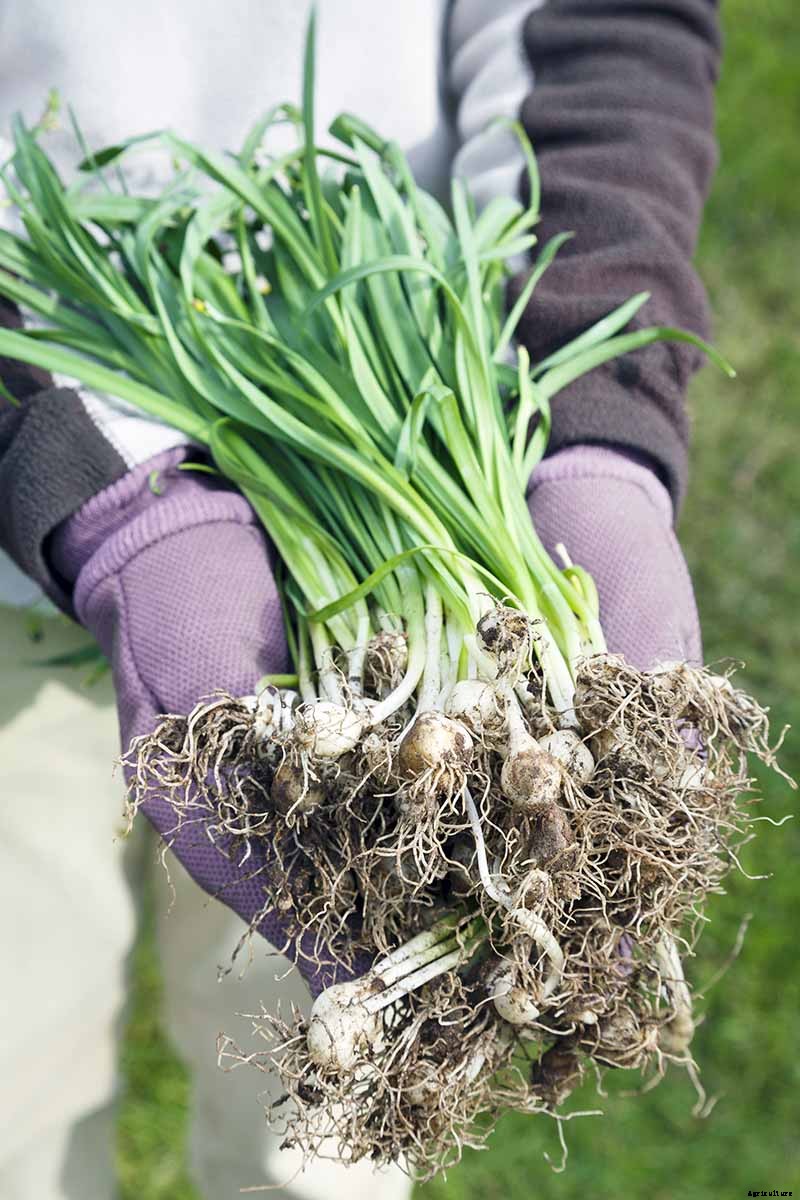
To do this, use your trowel to dig straight down about five inches around the clump you wish to remove.
Gently ease your trowel underneath to release its grip on the earth, and pull it up. Move this clump directly to a new location, or pot it up to share with friends.
This is an easy-care perennial, and planting bulbs in groups to encourage the formation of clumps is recommended.
Over the years, they will naturalize to form large drifts of blossoms that breathe life into the wintry landscape.
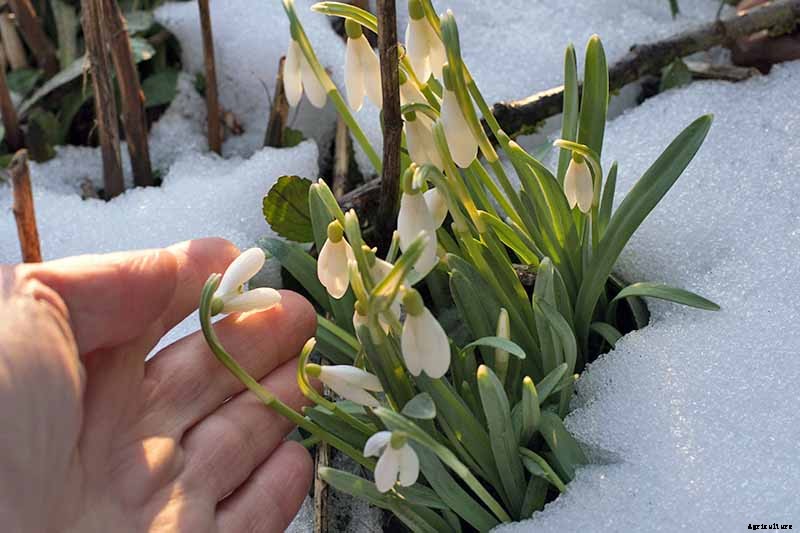
I like to tuck a few handfuls in unlikely places, near a garden gate or the front steps, to surprise visitors to my home with an early sign of spring.
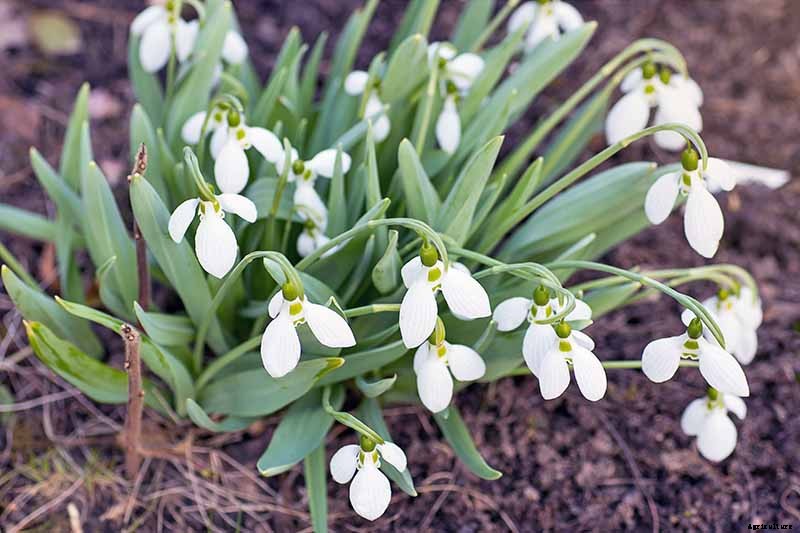
Plant in the spring or fall. Work the soil to a crumbly consistency and make holes about three inches deep.
Place one bulb in each hole with the pointed top facing up. Allow about three inches between each, and sow in groups of 10 or more.

Depending upon your soil conditions as determined by soil testing, you may incorporate some bone meal or your chosen fertilizer into the earth at this time. By the second year, maturity should bring blossoms. Be patient – it’s worth the wait!
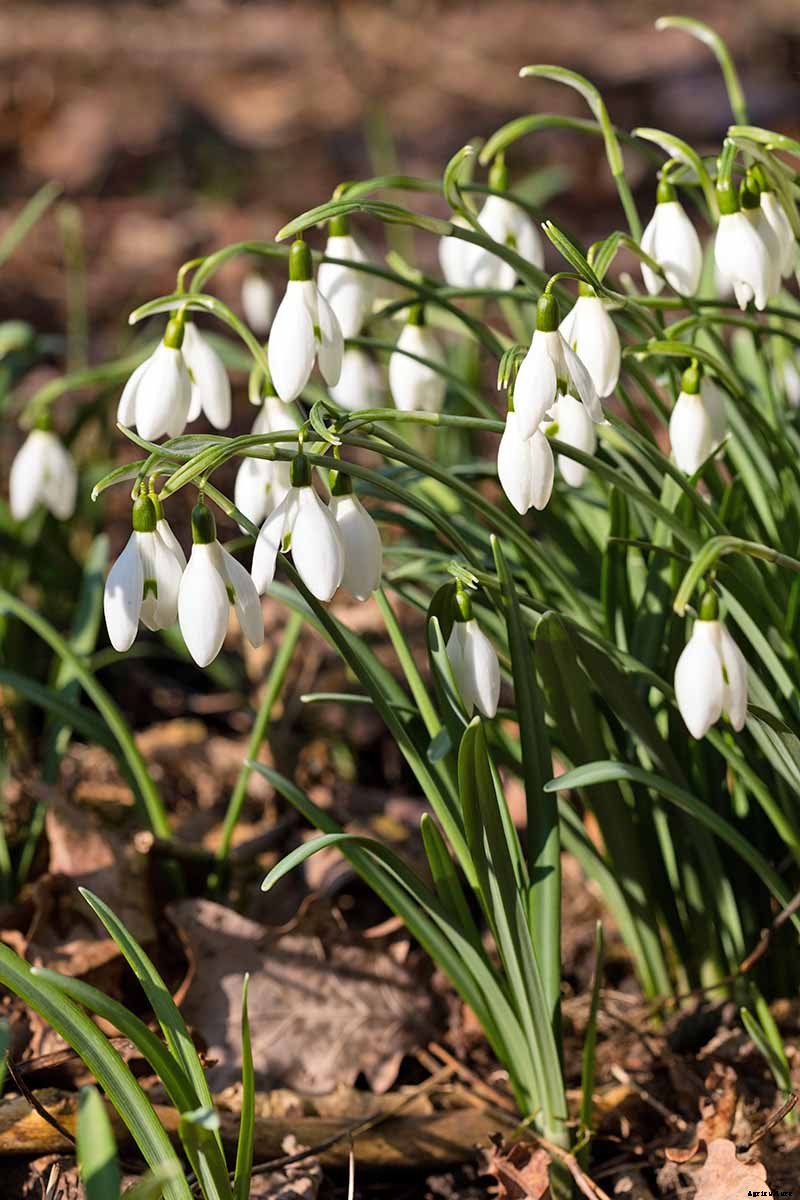
After blooming, allow the foliage to die off on its own. While it remains green, it will continue to provide nourishment to ensure beautiful flowers next season.
When it withers, you may remove it or let the other plants in the garden grow over it.
In addition to sowing in the garden, snowdrop grows well in containers with good drainage holes.
Start in February to force bulbs to bloom indoors. Place them side by side, planted three inches deep with their points facing up, in potting medium mixed with a little bone meal or fertilizer.
Set your pot in a cool cellar or enclosed porch to mimic the chill of winter.
Once you see foliage, bring it indoors and set it in a location that receives filtered, indirect sunlight. Keep the soil moist and wait for the blossoms!
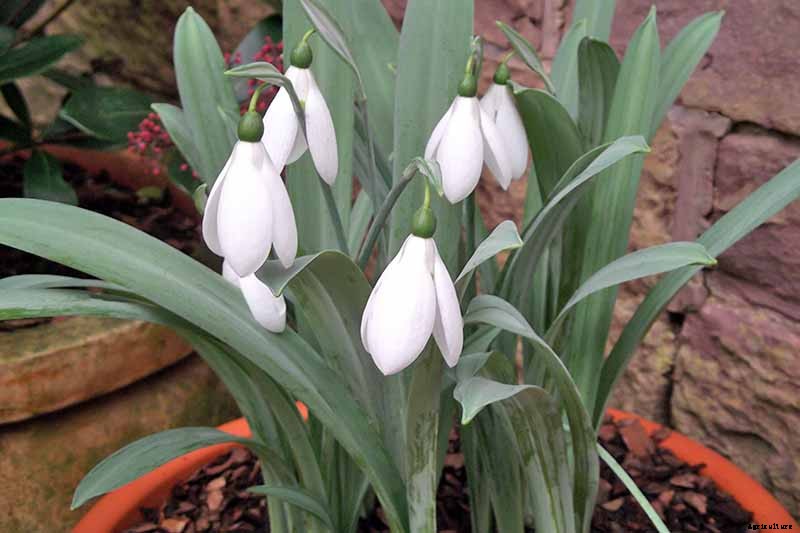
You may also try container cultivation outdoors, but remember that pots dry out and freeze at faster than the ground.
Choose a sheltered southern or western location, and be vigilant about watering and drainage.
Bulbs that don’t get enough moisture may wither, and those that become saturated may rot. Also, pots that don’t drain well may fill with water, freeze, and crack.
Galanthus is poisonous when ingested. Be careful when growing around pets and young children. Skin irritation has also been reported and gloves should be used when handling.
Very little care is required once you have a mature mass of Galanthus. It should multiply on its own and it blooms best when its a little crowded. Divide clumps once every three years or so.
As a perennial, snowdrop is a sound investment that returns bigger and better each year. And with the ability to generate new clumps that may be relocated, you can enjoy an excellent bang for your buck.
The trick is to start with quality plants, so here are two you can count on:
Galanthus nivalis is the most common variety and grows to around 3–6 inches (7–15 cm) tall, and blooms between January and May in the temperate regions in the northern hemisphere.
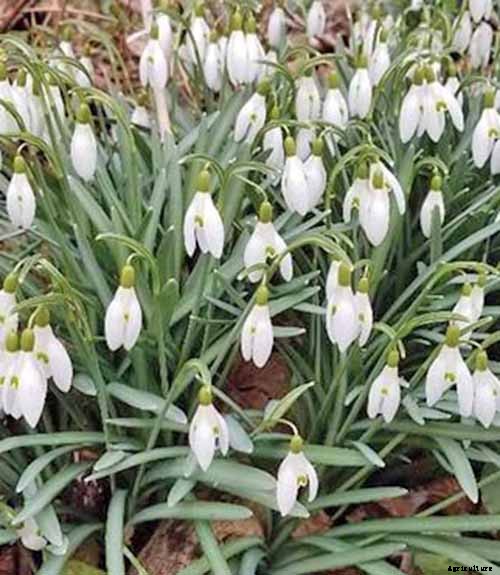
Galanthus nivalis Bulbs
This type has smaller blossoms and a light fragrance and is hardy to Zone 3.
G. nivalis is available from Burpee and each package contains 25 bulbs.
This variety, also called the giant snowdrop, boasts the largest, most fragrant blossoms. It has been known to reach a foot in height, and is hardy to Zone 3.

Galanthus elwesii Bulbs
It is native to Syria, Lebanon, Jordan, Israel and Palestine, Turkey and much of the eastern Mediterranean.
The center of the flowers also feature a green blotch, making it visually striking and a bit different than most of its other relatives.
G. elwesii is available from Burpee in packages of twenty-five bulbs.
Snowdrops have no serious insect or disease problems and are deer and rabbit resistant due to the toxicity of their vegetation.
Squirrels may occasionally forage dry bulbs and gray mold can be a problem during mild winters.
Damping off can occasionally affect seedlings in areas with too much moisture and poor drainage.
Are you ready to make snowdrop an integral part of your pre-spring landscape?
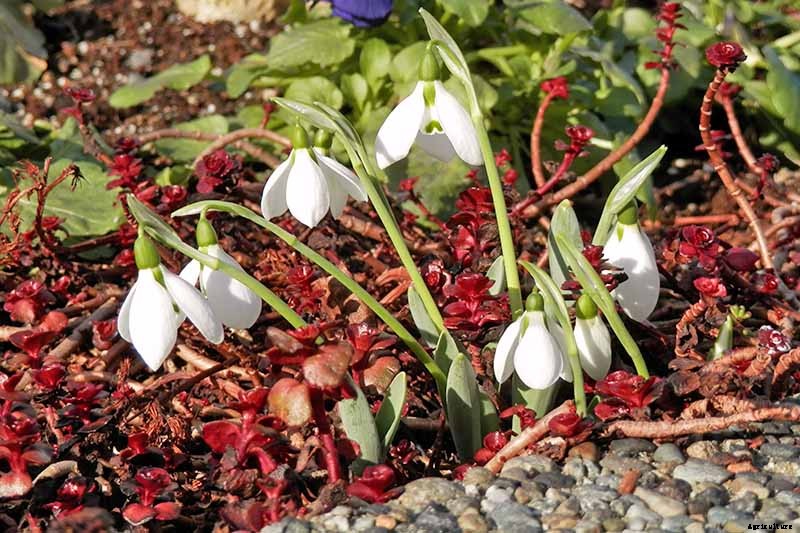
In addition to the fact that it’s pretty, hardy, rabbit and deer-resistant, and naturalizes readily, the Galanthus genus has a natural immunity to juglone toxicity.
This means you’ve finally found a plant to grow beneath your black walnut trees!
Order your bulbs in time for fall or spring planting, and enjoy gardens full of life that defy the chill of winter.
Are you eager to add this plant to your landscape? What are some of your other early-season favorites? Let us know in the comments below!
And don’t forget to check out our other articles on deer-resistant plants and gardening tips, including:


