
Welcome to Modern Agriculture!

A soil block is a cube of lightly compressed soil and nutrients that will grow one seedling. When the plant is ready to be transplanted, the entire block is planted into the soil. No root mangling will reduce transplant shock.
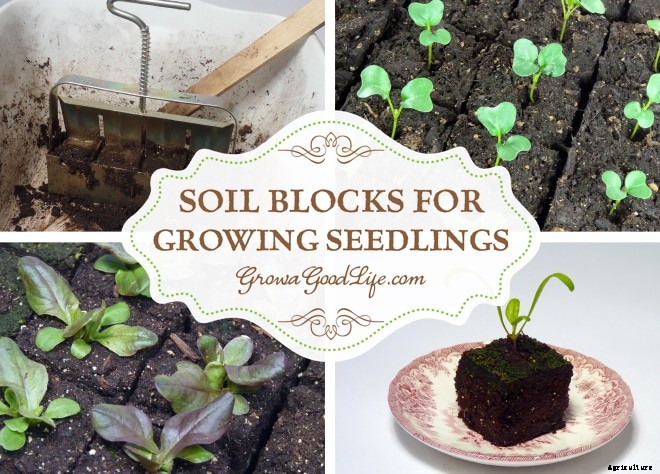
When I first began gardening, I purchased transplants from a local nursery and had a difficult time getting the seedlings out of their individual cells. Often times the plants were root bound and suffered from transplant shock because of my mangling.
Once I decided to grow my own transplants from seed and assembled a Grow Light System, using soil blocks for growing seedlings appealed to me. Since the soil block serves as the container and the soil, it is easy to transplant without injuring the roots.
I learned about soil blocks from reading Eliot Coleman’s book, The New Organic Grower. Part of the charm was that the soil blocker was an investment that would be used for many years to come. No need to invest in plastic cell packs that crack and break over time or peat pots that constrict the roots from growing. I also liked that transplanting soil blocks allows the seedlings establish quickly into the surrounding soil with no root damage.
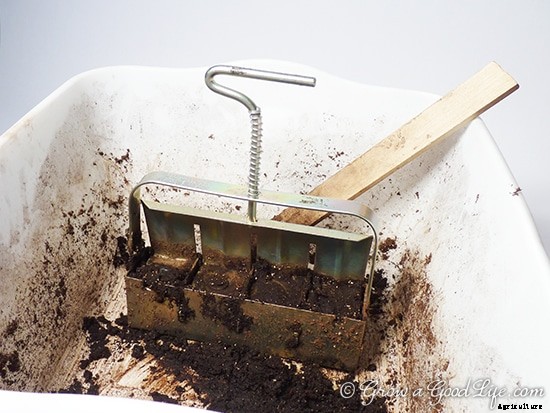
 A soil block is a cube of lightly compressed soil and nutrients that will grow one transplant. I start all my seedlings in soil blocks that I make with a 2-inch Soil Blocker that produces four soil blocks at once.
Soil blockers are the spring-loaded tools that form and compress the soil mixture into blocks. Once ejected, each block has an indentation at the top of the cube to plant your seed. Soil blockers are available different sizes but I use a 2-inch Soil Blocker. Soil Block Makers are available at Amazon and other places online. Seek out the quality Ladbrooke brand and it will last forever.
Eliot Coleman’s recommended soil block recipe is composed of peat, lime, coarse sand or perlite, fertilizer, compost, and soil.
Just like any recipe, this one can be altered and adjusted to accommodate the ingredients you have on hand. I have experimented with different mixtures and found that as long as the mixture holds together, it will be fine. I have settled on a mixture of organic seed starting mix, screened compost, perlite, and a little all-purpose granular organic fertilizer.
The ingredients can be easily found at your local garden center. I have linked to sources online for examples.
Use a 10?quart (2.5 gallon) bucket to measure the bulk ingredients and a standard measuring cup for the other ingredients. You can mix and store the soil block mix in a 12 or 15 gallon storage tote and scoop out as needed.
Ingredients for Soil Block Mix
Directions for Soil Block Mix
1. Add peat moss and lime to your large container. Mix thoroughly to combine.
2. Add perlite and organic granular fertilizer. Mix to combine.
3. Add the garden soil and compost. Mix and store until you are ready to use. This recipe makes about 8 gallons of soil block mix.
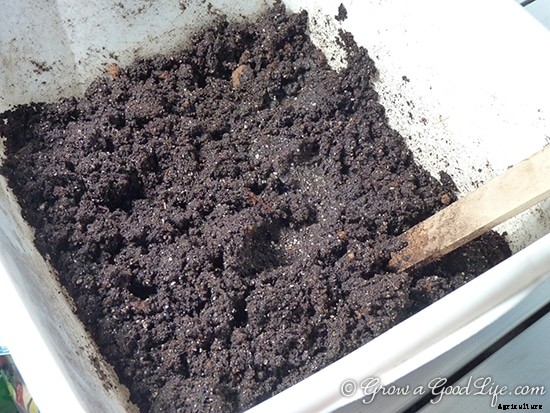
When you are ready to make your soil blocks. Scoop out the soil mix into a flat container, such as a dishpan. Add hot water and let it sit for a few hours or even until the next day. This gives the mixture ample opportunity to soak up as much water as it can.
Once mixed, the soil should look like peanut butter. Add more water, or reserved dry mix to adjust.
To make the blocks, pile the soil mix into a mound that is about double the height of the soil blocker. Then simply plunge the soil block maker into the mixture. Twisting the blocker helps compress the soil and release it from the mixture without sucking out the wet soil back out. Do this three times so cubes are filled tightly.
Scrape off the bottom of the soil block maker with a straight edge, then set the blocker in your seedling tray and release the soil blocks by pushing down on the handle and lifting the blocker.
The blocks should be firm. If the blocks crumble, add more water to the mix. If they slide out easily and fail to hold their shape, add more dry mix.
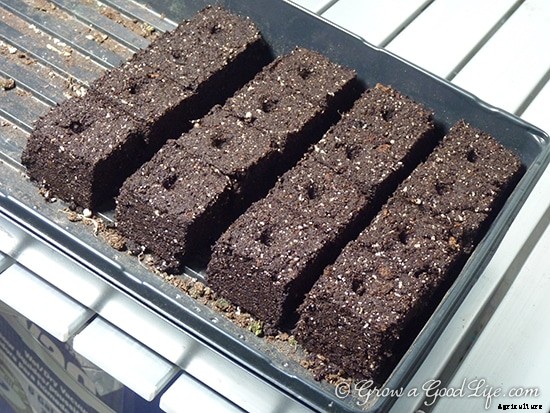
Plant your seeds directly in the depressions created by the soil blocker. Label the soil blocks using tape on the outside of the tray.
As an added bonus, the soil blocks are easy to move around and organize. If a block fails to germinate, it can simply be removed from the tray and recycled. Also, it is easy to know when it is time to transplant the seedling or pot up into larger containers because you will see the roots when they reach the edge of the block.
Out of all the gardening tools and gadgets I have purchased over the years, this soil block maker is one of the most useful. A soil block maker is a great investment that will serve you well for many years.


