
Welcome to Modern Agriculture!

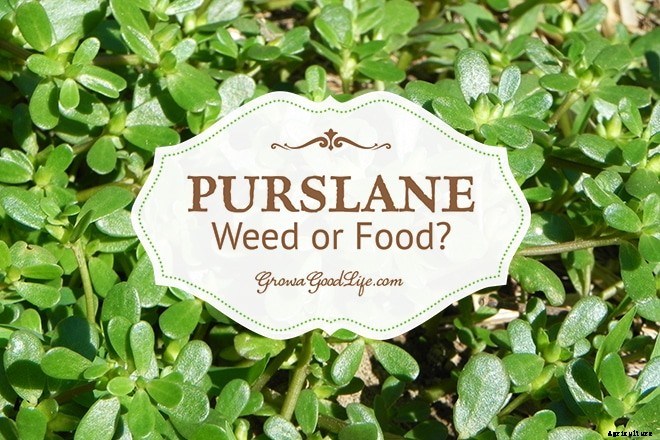
Common Purslane (Portulaca Oleracea), also known as pigweed, little hogweed, or Ma Chi Xian, is a low growing succulent member of the Portulacaceae family. It is considered an annual herb that grows in almost all corners of the world in various soil conditions. To most, it is a pesky weed that sprouts up between cracks in the sidewalks, in garden beds, open areas in paths.
I have received some comments on the Purslane that I am showing in the last few Harvest Monday posts July 6, 2014 and July 14, 2014. So I thought I would share some of the research and information I have learned about Purslane.
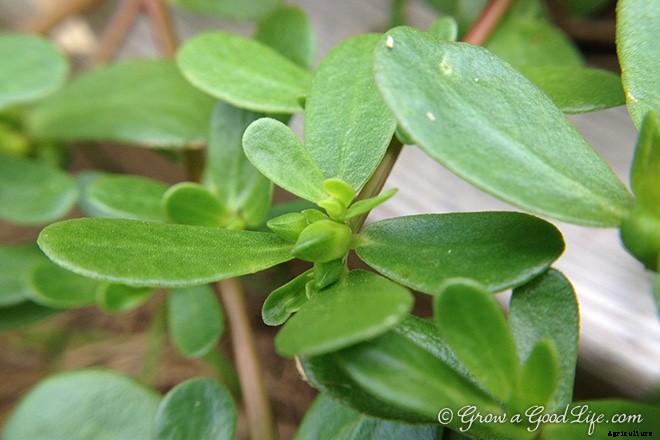
Close-up of Purslane’s succulent leaves and seed pods.
It is all a matter of perspective…A weed is considered to be any unwelcome or troublesome plant, especially one that grows abundantly where it is not wanted. While food is any nourishing substance that is eaten, drunk, or otherwise taken into the body to sustain life, provide energy, and promote growth.
Purslane is a rather abundant in my garden this year. It is growing in the newly constructed raised beds and in the paths. I’ve been weeding it in areas where it may compete for moisture and nutrients with crops, but have allowed it to grow in corners and in paths. The weeded plants are not tossed away. I have been plucking the succulent leaves and adding them to salads, stir fry, and scrambling them up with my morning eggs.
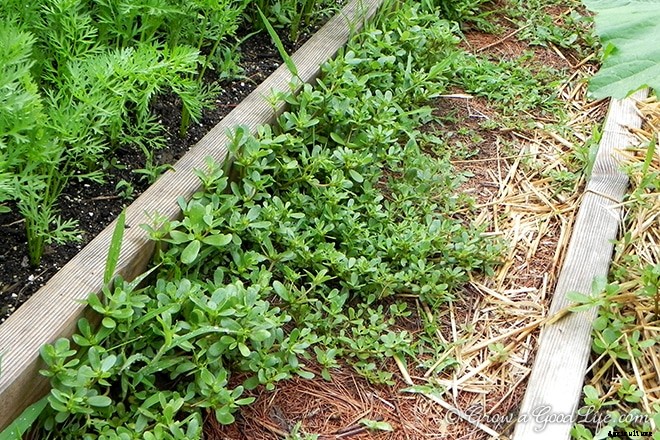
Purslane growing in the paths in between garden beds.
Purslane is packed with nutrition: Purslane is low in calories, high in fiber, an excellent source of the essential amino acids, and vitamins A, C and E. Purslane also has one the highest known concentrations of Omega-3 fatty acid in any plant. (source: HealthGuidance and USDA)
In his book, In Defense of Food: An Eater’s Manifesto Michael Pollan praises Purslane as one of the healthiest plants on the planet:
“Two of the most nutritious plants in the world are weeds—lamb’s quarters and purslane—and some of the healthiest traditional diets make frequent use of wild greens,” ~Michael Pollan, In Defense of Food: An Eater’s Manifesto
Purslane requires no effort to grow: Purslane grows freely and tolerates different light intensities, temperature ranges and soil types. There is no work involved in growing purslane. It is a free source of nutritious food. Purslane easily reproduces from stem pieces and seeds with no effort on our part. It’s succulent characteristic makes it very drought tolerant.
Purslane tastes good: Purslane’s succulent-like leaves have a refreshingly crisp, slightly lemon flavor with a nice crunch that make a wonderful addition to any salad. The stems have a tangy and peppery kick. Personally, I find the stems to be a little tough but the leaves are tossed onto pizza, scrambled up in eggs, added as a burger topping, and snacked on while I am in the garden.
In addition, Purslane has been used since ancient times to treat various health conditions. In Traditional Chinese Medicine, Portulaca Oleracea is called Ma Chi Xian and is used to aid in clearing heat, expelling toxins, and cooling blood. It is sour in taste and cold in nature and goes to meridians of liver and large intestine. (source: TCM Assistant and TCM Wiki)
I will continue to consume Purslane moderately in regular meals and encourage you to give this free food resource a try. I have gathered some Recipes for Purslane on Pinterest:
Follow Grow a Good Life’s board ~ Purslane Recipes ~ on Pinterest.
Further Reading:


