
Welcome to Modern Agriculture!

Summer squash are among the easiest and most productive plants to grow in the garden. They are fun to grow too since there are so many different shapes, colors, and varieties. Often times I find myself trying to squeeze in more varieties than I have room for in the garden.
Summer squash loves the summer heat, and usually begins producing within 60 days after planting and continues all season until frost, disease, or squash vine borer takes it out.
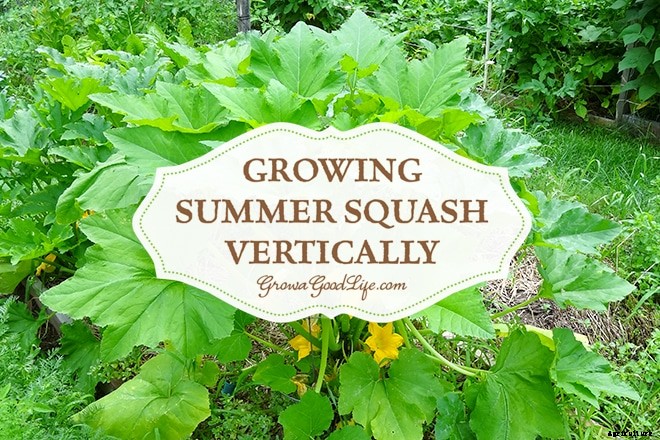
Squash is divided into two types, winter squash and summer squash. Summer squash differs from winter squash in that it is harvested young while it is still tender.
There are so many varieties of summer squash, including zucchini or courgette, patty pan or scallop, yellow crookneck, and yellow straight neck squash. Each type has many varieties, colors and shapes.
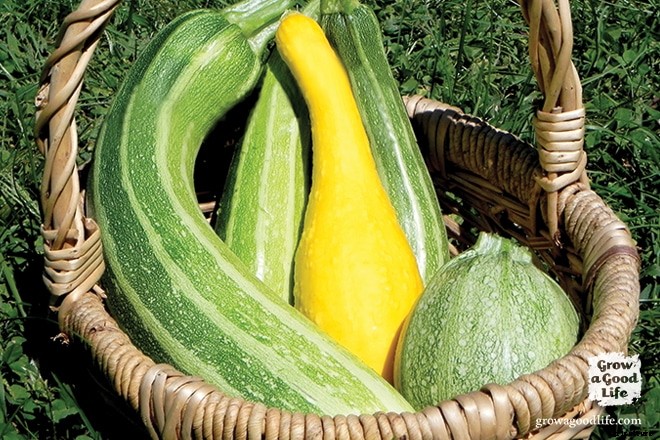
Zucchini, Yellow Crookneck, and Round Zucchini
In contrast, winter squash has a thicker rind and is harvested in the fall, cured, stored, and consumed during the winter months. Common winter squash varieties include acorn, butternut, pumpkin, and spaghetti squash. Winter squash usually grows on long, rambling vines.
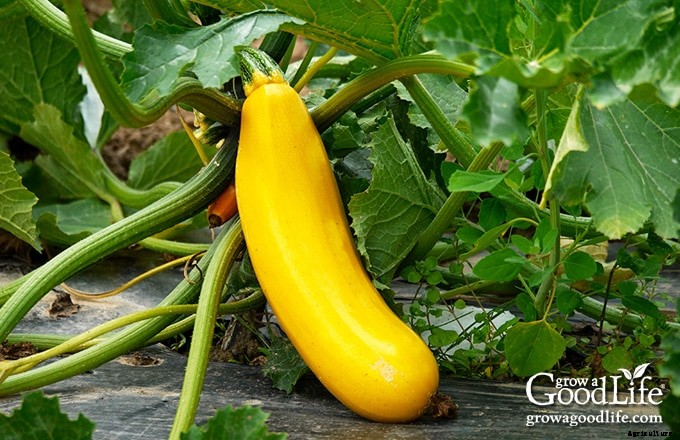
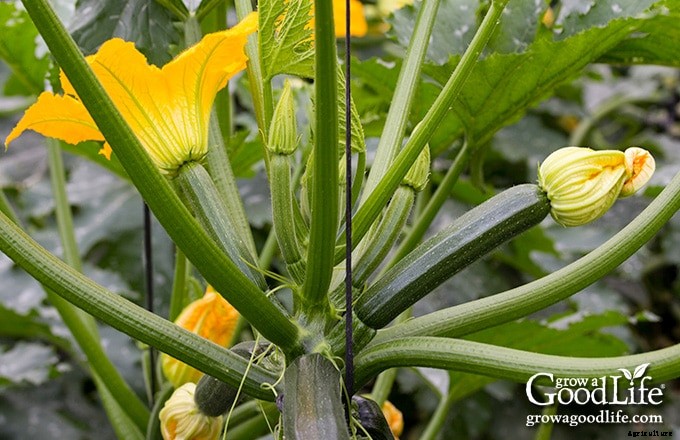
Most summer squash have a bushy growth habit. The fruit begins forming at the base of the stem and continues developing up the stalk as the plant grows. Even though summer squash plants are bush like, the stem of the plant does tend to lengthen a little as it grows.
Since I have been converting my garden to permanent raised beds that are only 3-feet wide, I had to think of some creative ways to keep the summer squash confined to the bed and prevent it from flopping out into the aisles. For me, the logical answer was to grow summer squash vertically using tomato cages to support the plant and keep it upright.
Although the reason I wanted to grow summer squash upright was to save space, I quickly discovered that growing summer squash and zucchini in tomato cages had other benefits as well.
Step 1: Plant the zucchini and summer squash. Either transplant seedlings or direct sow summer squash in a mound of soil.
Step 2: Add the tomato cage. Simply place a tomato cage securely in the ground when the zucchini and summer squash are young. Push the legs into the ground up to the first ring.
If you are using a flimsy tomato cage, hammer in a stake or long piece of rebar for extra support. Tie the tomato cage securely to the stake.
Step 3: Mulch the plants. Add organic mulch around the plants to help keep the weeds down, the roots cool, and conserve moisture. Keep the mulch a few inches away from the stem of the plant.
Step 4: Guide the zucchini and summer squash up. As the plant grows, gently direct the foliage and stem upward through the tomato cage. A few of the hollow stems do bend over the cage wires as the plant grows, but overall the benefits of growing summer squash vertically outweigh a few bent stems.
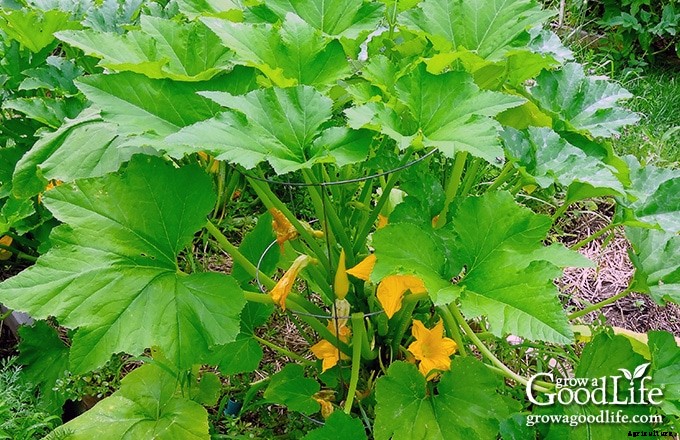
Growing summer squash vertically by trellising or in tomato cages helps to save space, encourages air circulation, and allows the squash to be more visible reducing the chance of overgrowth.


