
Welcome to Modern Agriculture!

The philodendron billietiae is a variegated vine climbing plant that is great for bright, large spaces. If you plan to grow it as a houseplant indoors or in your tropical garden, you’ll be happy to know that it’s a simple process.
This article will provide everything you need to know about the philodendron billietiae.
The philodendron billietiae is a perennial Aroid vine, which can grow up to 5 feet tall. It comes from the Araceae family and the Philodendron genus, recently discovered in the early 1980s by Frieda Billiet. It comes from tropical rainforests, a native of areas like Brazil, Costa Rica, and French Guiana.
Here are some of the notable features of the philodendron billietiae:
– Size and Structure
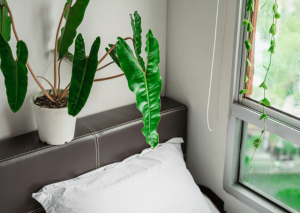
The philodendron billietiae is best for wide areas, growing to about 5 feet tall on a supporting pole. If you were to grow it outside with tall trees, they can grow even taller!
The long leaves would be supported by petioles handing down in horizontal directions.
The edges of the plant’s leaves would be fine and straight while they are still young. As they further develop, the arrow or elephant ear-shaped foliage would grow ridged borders.
How about the philodendron billietiae growth rate? Mature leaves can grow up to 3 feet long and 10 inches wide. Furthermore, it has long and prominent petioles which would grow up to one foot long when it matures. The stem of vines would grow aerial roots, helping the leaves climb on their support.
The philodendron billietiae can either be an epiphyte or semi-epiphyte. You can find the plant growing on land then climbing on nearby trees as it grows, thanks to its aerial roots. Other times, you may find that it grows around trees while its underground roots keep the plant in the ground.
The plant’s flowers bloom, though this is very rare. If it does bloom, expect to see white or off-white Aroid flowers during the warmer seasons, having spathe and spadix.
Unfortunately, toxicity would run in the genes of the genus Philodendron due to the high levels of calcium oxalate. If the plant was ingested, it may cause issues such as diarrhea and/or nausea. Furthermore, some may experience skin allergies if there was close contact.
Make sure that the plant is placed far from children and pets to reach. In case of accidents, contact your local emergency services.
If you like variegated plants and want a large one for your spacious areas, you will love the philodendron billietiae. It has long leaves with prominent patches, which enhances its attractiveness. Variegated philodendron billietiae is similar to the original variety. Its only difference is that the variegated version requires brighter light to maintain its variegation.
Now that you know more about the philodendron billietiae, what is there to know about caring for this plant properly?
Here is a guide to growing and maintaining your plant to have it mature successfully and look amazing:
The philodendron billietiae must receive bright and indirect light. Since these plants come from tropical rainforests, it requires sunlight, though it receives shade from trees and taller plants.
Do NOT expose your plant to direct sunlight. If left for too long, they will most likely burn, with the philodendron billietiae leaves developing scorch marks. However, the plant will need bright sunlight to grow well, especially those big leaves they are known for.
Giving them the appropriate light is easy. Simply place your plant in north or east-facing windows. If you give your plant artificial light, place it to the side by a few inches to ensure that the light doesn’t hit your plant directly. Do rotate the plant every 3-5 days to ensure all of its leaves get enough light.
With that said, do not place your plant TOO far away from its light source. When the plant is further away, the less light it receives.
When it comes to watering, just like all plants, the philodendron billietiae will require moist soil to grow properly, NOT saturated soil.
If your plant has saturated soil, it may come across various problems, some of which may kill the plant. One of the biggest problems is root rot, which is due to overwatering. But if you do catch root rot early on, you can save it. Unfortunately, there aren’t very obvious signs of root rot above the soil, and the signs that do appear may have gardeners mistake it for other conditions.
That’s why it’s more important to prevent such conditions from happening and water your plant correctly. You can do so by first checking its soil to see how dry or moist it is by sticking your finger in its soil. Stick a finger in the soil, up to your knuckle, or just 2 inches deep.
If you feel that the soil is dry up to the tip of your finger, you’ll have to water the plant. Do NOT water it if the few inches of soil remains moist, as this would result in overwatering. The same goes for ignoring to water your plant, as underwatering will result in similar consequences.
Similar to other Philodendron plants, this plant will require well-draining soil to grow well. It’s best to use organic materials for the plant.
Well-draining soil allows excess water to drain out of the soil while still holding moisture for your plant’s hydration needs. Too much moisture would stop oxygen from getting into the soil, resulting in oxygen not being able to head to the roots and other crucial areas. This is why balancing hydration and moisture with well-draining soil is recommended.
You can use equal parts of compost, perlite, sphagnum peat moss, and a handful of soybean meals. This is one of the suitable potting mixtures for well-draining soil for this plant.
The philodendron billietiae will grow best in temperatures that range between 18 to 27 degrees Celsius during the day, and 13 to 18 degrees Celsius come nighttime. Do not expose the plant to freezing temperatures, as it can’t take frost or temperatures below 13 degrees Celsius.
When talking about humidity temperatures, this tropical plant requires high humidity levels, as it comes from warm climates carrying moisture around. You will need to ensure that the environment your plant grows in offers high humidity levels. Fortunately, increasing the humidity at home is easy.
What you can do is to have a tray of pebbles and water, enough for it to hold a lot of water but not covering the stones. Place the plant on top of this pebble tray. The water in the tray evaporates slowly, which will create moisture around it, and your plant can absorb all the moisture.
You can also spray or mist your leaves with water from a spray bottle, but do not soak or saturate them, as this may cause fungus problems, leading to leaves covered with a lot of weird lesions. It might not work as well as the pebble tray method though. Since you can’t track the humidity levels accurately, you would need to have a strict routine.
Another option would be to have a humidifier, which gives you more control over the humidity levels.
When fertilizing your plant, it’s best to give it slow-release fertilizer. This would release fertilizer for months, so you won’t have to apply fertilizer all the time. Instead, just fertilize the plant every 2-3 months.
Additionally, make sure that you choose one that contains macronutrients, including nitrogen, potassium, and phosphorus.
Before you fertilize your plant, make sure that its soil is moist enough. If the soil is dry, then the fertilizer would burn your plant’s roots.
When you want to repot or transplant your plant, you need to do so every two years. It would take two years for the plant’s roots to outgrow the pot used currently. If ever the roots will become compacted because of the small pot, they will become stressed. As a result, the stressed roots would be more susceptible to other plant diseases and damaging conditions.
When you repot the philodendron billietiae, it should be in a pot that is only slightly bigger than its current one.
When propagating your plant, it is similar to other philodendrons.
You can propagate it using two methods:
When using this method, follow these steps:
When using this process, follow these steps:
One thing you should consider about the philodendron billietiae is if it has any common issues to watch out for. Knowing the different problems you may come across while growing the plant will help you prepare ahead.
Fortunately, the philodendron billietiae isn’t a pest or insect magnet, so you won’t have to check it every day. However, pest infestations are still possible. For example, it can come from bringing home an infested plant.
There would be two pests that like the tropical plant, aphids and mealybugs.
Aphids are bugs with soft, pear-shaped bodies that have long antennae. They are very small, so small to the point you can’t see them with a naked eye. However, they do a lot of damage!
These pests would feed off the sap in your plant, piercing through the plant’s outer layer to get to the sap. There are two important types of cells in the sap: one that carries the water the plant absorbs from the soil and the other takes the nutrients from the soil.
Plants require water and nutrients to grow. While a small infestation won’t do much damage, a larger one would take away all of what your plant needs, leading to severe problems and even death.
Mealybugs are unique insects which are covered in cotton-like substances. This is why you see cotton everywhere on an infested plant, as this cotton substance is the armor to protect mealybugs from harm. Like aphids, they feed on a plant’s sap, piercing through the plant with straw-like mouths to suck out the sap.
These pests aren’t tough to remove. One good solution is using neem oil, a natural repellent that is not harmful to plants (though it’s still best to test it out on a small area). If you are worried about its strength, you may dilute it with water and place it in a spray bottle.
The oil is very heavy, so it suffocates the pests. After a few minutes or hours, wipe down the plant to remove the dead bugs. Do this twice a week for a few weeks until there are no more signs of an insect infestation. You may have to do a bit more or use insecticide, though this depends on the severity of the bug infestation.
If your plant has droopy white leaves, then it means it’s experiencing a cold shock. As mentioned above, the philodendron billietiae can’t handle freezing temperatures. If exposed to temperatures under 13 degrees C, then there will be consequences. This may be from leaving it near a running air conditioner or leaving a window open during a cold winter day.
If this has happened, take your plant to a warmer area, away from open windows and the air conditioner. Then, prune dead leaves that came from the cold damage to encourage new and healthy leaves to grow.
Do you see your plant having V-shaped stains on its leaf tips? It may indicate a magnesium deficiency. The V-shaped colors are just the beginning, as those stains can result in brown necrosis!
Fix the magnesium deficiency right away by spraying your plant with a mix of Epsom salts and water, as Epsom salts are full of the mineral. However, this is just a temporary fix. You should purchase and apply a fertilizer that contains magnesium concentration.
If ever you see your plant leaves curling, it may indicate that you’re over-fertilizing. Change the plant’s soil and fertilize less to see if that helps.
We have talked about what it takes to grow a philodendron billietiae, and here are some key points to remember:
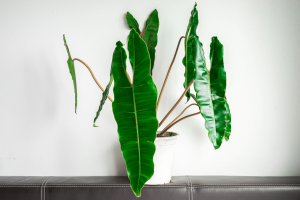 The philodendron billietiae plant and its leaves grow to a decent height so they require more space.
Hopefully, you have learned a lot about the philodendron billietiae and how you can care for it excellently. If you are planning to grow one yourself, keep all this information in mind, and you can enjoy a beautiful philodendron billietiae soon. Happy planting!

