
Welcome to Modern Agriculture!

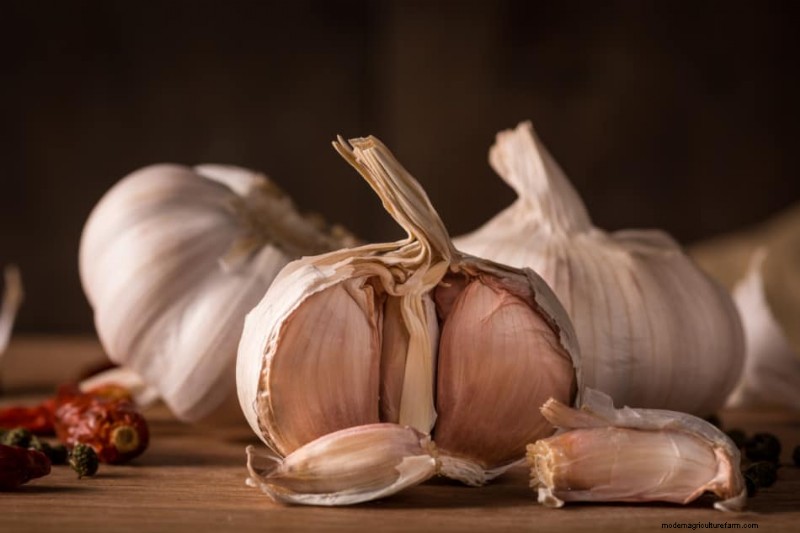
I was born and raised in Transylvania, so there can’t be a more fitting plant to write about than garlic. In my exploration of local varieties and garlic categories, I stumbled upon many interesting facts and learned more than just the basics about this hardy, miraculous bulb.
Garlic is something that we all know and use, but few first-time gardeners know that, apart from the many varieties, garlic is divided into two main categories: hardneck and softneck.
The main difference between hardneck and softneck garlic is the orientation and number of cloves. Hardneck garlic produces fewer cloves, aligned in a concentric manner around a woody stem. Softneck produces numerous cloves arranged in no particular order and missing the central stem.
Another notable difference between the two categories is their climate preference. Hardneck garlic is better suited for cold climates, as it’s incredibly hardy and needs cold weather to thrive. Softneck garlic has evolved to grow best in milder climates, and it’s also grown commercially for its excellent storage properties.
Even if they’re different in appearance and taste, hardneck and softneck garlic are very much related, and a result of adaptation over the centuries. Let’s take a closer look at the intriguing history of this plant.
Establishing the exact lineage of garlic is not an easy task. Botanists haven’t been able to agree on the exact place of origin of garlic, but what we know so far is that garlic is the descendant of a wild plant that grew in the mountainous areas of Central Asia more than ten thousand years ago.
The most ancient of the two varieties that farmers started growing thousands of years ago was hardneck garlic. In the wild, hardneck garlic reproduced in two main ways:
Farmers soon realized that selecting bulbs that had smaller scapes resulted in bigger and better bulbs for harvesting, and they maintained this practice for hundreds of years so that now, the scape no longer serves as a viable reproductive option for the hardneck variety.
The softneck garlic has evolved to have no flowering stalk at all. In the 19th century, a botanist called George Don assumed that the place of origin for softneck garlic was Sicily, while modern hardneck garlic originated in Greece.
Garlic is a highly adaptable plant, and softneck garlic has most likely evolved as an adaptation to warmer climates, where it began reproducing exclusively through cloves in the ground.
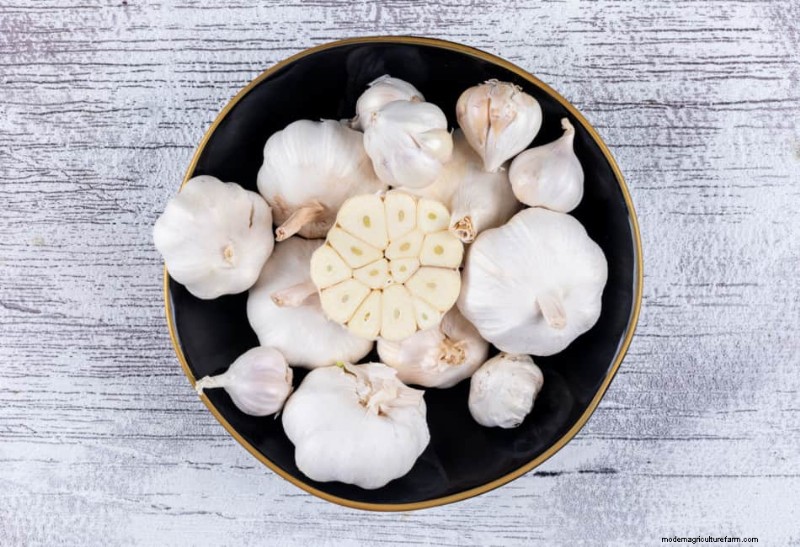
Observing the orientation of the cloves is the most obvious way of distinguishing hardneck from softneck varieties.
Hardneck garlic has a regular round shape and it can contain 6 to 11 cloves of equal size arranged around a central woody stem.
Softneck varieties can be both regular and irregular in appearance and contain many more cloves, sometimes as many as 24. The cloves come in various sizes, and sometimes the large ones are arranged on the exterior, with smaller cloves lining the interior.
Softneck doesn’t have a central woody stem. It’s called softneck because the stem of the garlic is soft, which is an advantage for braiding heads of garlic together.
Hardneck garlic is easier to peel, while softneck garlic cloves are protected by papery, thin skins that are more adherent. Soaking softneck garlic cloves in water for an hour makes the peeling process much easier.
If there’s one way to describe garlic as a plant it’s this: survivor. Garlic is highly adaptable and resistant to most weather conditions, even harsh winters or extreme heat.
But what all varieties have in common is the need for a period of cooler weather to ensure a process that’s called vernalization.
Hardneck garlic needs about 9 months to ripen and is most commonly planted in early October, a few weeks before the first frost. Don’t plant it too late in the season, or it won’t have the chance to set roots before the first frost arrives.
Softneck varieties can be planted in spring, as they need a shorter amount of time to mature. But even varieties that are suited for warm climates need the cloves to be exposed to some amount of cold in the months of January and February.
For these purposes, some gardeners recommend keeping the garlic cloves in the refrigerator for a couple of weeks before planting, to ensure vernalization is induced.
Whether you decide to plant garlic in fall or spring, don’t be afraid to experiment. You’ll get a crop either way if you know how to read the signs that it’s ready for harvest. Here’s a video I made to help you better understand the process – from planting to harvest.
Plant garlic in a sunny location, as it needs full sun to thrive and grow to a good size. Just like with tomatoes, crop rotation is advised with garlic, to avoid pest buildup in the soil. But if you’re amending your soil with good compost every year, feel free to skip this step.
Garlic needs fluffy soil and good drainage. A generous layer of at least 6 inches (15cm) of compost will easily achieve this if you amend your soil every year, either in autumn or spring.
When buying garlic for seed, you may receive garlic heads or individual cloves. Whenever possible, try buying heads, not cloves – cloves can become dehydrated or damaged. Separate the cloves carefully, so as not to tear their delicate, papery skin.
Choose the largest cloves for seeds – larger cloves will produce larger bulbs. Discard any cloves that show blemishes, spots, dehydration, or tore skins, as they may become exposed to viruses and bacteria. But don’t stress too much over this – garlic is a survivor. I’ve grown good garlic from some cloves that were small or less than ideal.
When sowing garlic, place the cloves pointy side upwards – this may be obvious to most people, but just in case you were wondering. Sow garlic directly in the ground – it’s one of the few crops that I direct sow every year.
Garlic cloves should be covered with about two inches of soil, so set them 3 inches (7.5cm) deep. In cooler climates, you can plant them even deeper than that to provide more insulation and protection from frosts. Your garlic may sprout a little slower, but it will quickly catch up.
In warmer climates, you can reverse this and plant your garlic cloves at a more shallow depth. After covering the cloves with soil, gently tap the soil with the back of a garden rake to remove any air pockets.
Plant garlic cloves 4 to 6 inches apart (10 to 15 cm) depending on how large your variety is. Keep a generous distance between rows – no less than 8 inches (20 cm) – to prevent shading.
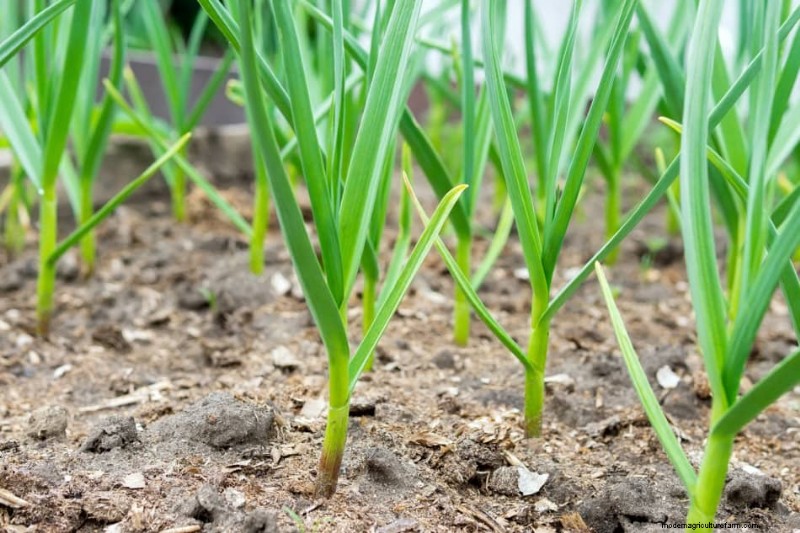
Garlic isn’t fussy about watering, but keeping the soil on the humid side is good for germination. As garlic matures, it can tolerate both long periods of rain and drought. Use common sense to water garlic during dry spells.
As you’re approaching harvest time, hold off on watering. This, along with pinching off the spade on hardneck varieties, will help the bulbs swell and mature.
Hardneck garlic is ready to harvest when about half of the leaves have turned brown, and half are still green – however, this is not a clear indication of how ready for harvest garlic is. The best way to know is to pull one out and check. Gradually, you’ll know how to appreciate harvest time for your chosen varieties.
For hardneck varieties, a few weeks before harvest, gardeners get rid of the scape by either snipping it with scissors or pinching it at the base. This gives the plant a chance to focus on the bulbs instead of shooting energy up into flower formation. Fail to do this step, and your harvest might be a third smaller.
When harvesting garlic, later isn’t always better. Leaving garlic bulbs in the ground for too long can cause cloves to separate, or the skins to crack and become susceptible to bacteria.
Certain softneck varieties take about 6 months to mature. If you plant them in spring, most of your garlic plants will be ready for harvest in mid-summer.
Softneck garlic doesn’t produce a scape, but the indicator for maturity is when all the leaves have turned brown and have fallen over. Pull the stems gently and use a fork or a trowel if the soil is too hard. Carefully remove the garlic without damaging its skin, or it will not store well.
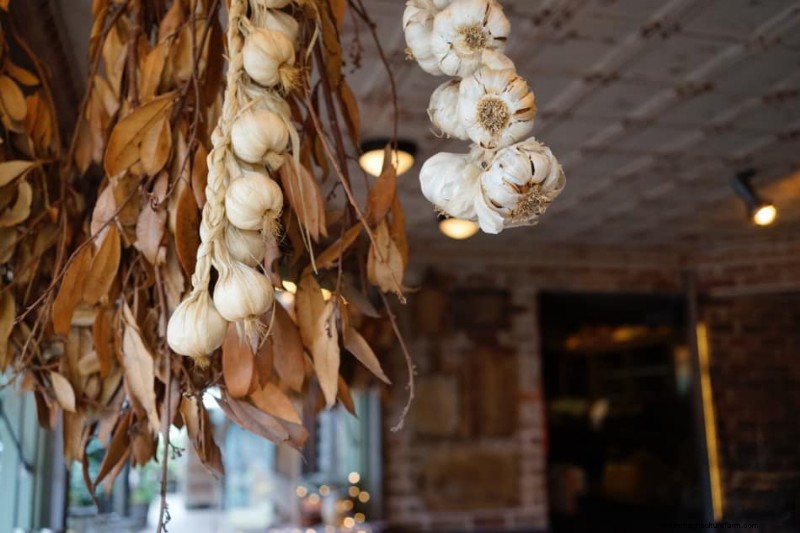
Keep the dried stems long if you want to braid your garlic for storage or decoration purposes.
Just like onions, garlic needs to be cured for at least a couple of weeks, until all the leaves and skins dry out completely. The easiest way to do this is to spread your garlic harvest on a clean surface, in a space that’s sheltered, dry, warm, and with good air circulation. If you place it in the sun, it risks being rained upon – an attic works well.
Store your garlic in a well-vented room that’s on the cool side – a dry cellar works great. Garlic needs a temperature of 56 to 59°F (13 to 15°C) and low humidity to store well. Hang your garlic in either netted bags or braids for better results.
Whatever you do, don’t store garlic in the fridge – the low temperature will trigger sprouting.
Softneck varieties store for as long as 9 to 12 months, while generally hardneck varieties don’t store as well.
Rocambole – This mellow-tasting, less sulfurous garlic is preferred by chefs worldwide. It’s easy to peel but doesn’t store for long. Choose from these varieties:
Purple Stripe – this is a striped variety that is closely related to the original garlic. It has plump cloves, needs very low temperatures to grow, and is better storing. Choose from these varieties:
Porcelain – this garlic has a strong stem and fewer but larger bulbs. Porcelain garlic has a very strong taste due to its high contents of allicin and is extremely cold hardy. Choose from these varieties:
Asiatics – they grow short spades that look like beaks. Their taste is hot and strong when raw, aromatic when cooked. Choose from these varieties:
Turbans – this early-maturing, delicate-looking garlic isn’t suited for long storage. Choose from these varieties:
Creoles – this type of garlic is originally from Spain, but Americans grow it in Louisiana and other states with similar weather. Creoles garlic has a sweet taste and grows small bulbs in red and purple colors. Choose from these varieties:
Artichoke – This type of garlic is easy to grow and adaptable. It produces large bulbs with multiple layers of cloves, and some varieties have a richer taste than others. Choose from these:
I would add to this my local, very flavorful artichoke garlic called Transylvanian Softneck.
Silverskin – This variety is most often found in supermarkets, as it stores for a very long time – sometimes even up to a year. It can be sown in spring and harvested in late summer, doesn’t bolt, and reacts well to most climates. Choose from these varieties:
I’ve been growing the same variety of garlic that has been in my family for generations, but I never quite identified its name and whether it even had one.
Prior to getting serious about gardening, I didn’t even know about the difference between hardneck and softneck garlic, but as I delved deeper into the topic, I discovered many interesting facts about Romanian garlic.
The most widely spread variety of Romanian garlic is Romanian Red, and it’s a hardneck type of garlic grown in a village called Copalau. In our country, this variety is called “Usturoi de Copalau.”
But as I closely inspected my own garlic, I realized that my garlic was a softneck, artichoke variety. This discovery was surprising, considering the tough winters this garlic endures. My parents store it in the attic that’s exposed to the elements so that both onions and garlic stored in this way experience months of temperatures well below freezing.
This goes to show that even softneck garlic can be very cold hardy.
It is said that softneck varieties are less flavourful, but Transylvanian garlic is packed with flavor. Its gloves have just the right amount of hot – not too mild, and not too strong. And even though it doesn’t grow to a generous size, and it’s harder to peel than commercial garlic, its taste more than makes up for these disadvantages.
From experience, I’ve learned that I can plant Transylvanian garlic by early March and harvest it in late July, but I can’t wait to experiment with fall planting or even pushing the spring planting date to February.
Now that you know the essentials for garlic, you have no excuses – it’s one of the easiest and most satisfying crops to grow. And if you’re ever in Romania, get your hands on some seeds from the farmer’s market!


